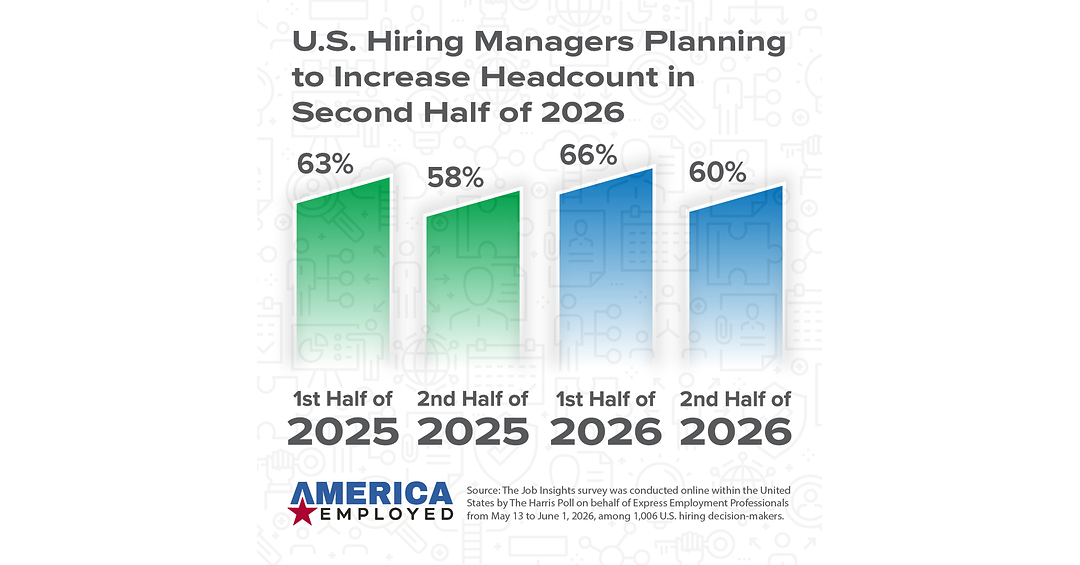
Express Employment Professionals–Harris Poll finds 84% of U.S. hiring managers are positive about hiring through end-2026, but headcount growth is slightly slower (60% plan to increase employees vs 66% in fall 2025). Job-filling friction remains elevated: 44% report open positions they cannot fill (up from 36%), the highest share since Spring 2023. Even among optimists, 9 in 10 expect hiring challenges, led by recruiting via AI-enabled processes (49%) and finding qualified candidates (42%).
The investable signal is not broad economic acceleration; it is a conversion problem. When companies have demand, backfill need, and expansion plans but cannot fill roles quickly, the margin impact shows up first in overtime, temp labor, and slower service capacity — which tends to favor HR workflow, payroll, and recruiting software more than pure headcount-dependent businesses. That makes ADP, PAYX, WDAY, and DAY better positioned than staffing intermediaries if the friction persists.
The main loser set is labor-intensive operators with thin unit economics: retail, restaurants, logistics, and light industrial employers where unfilled shifts translate directly into missed sales or elevated wage pressure. A meaningful share of firms also appears willing to trade labor for automation, which is a longer-dated headwind for low-skill hiring even if near-term job boards remain busy. In other words, this can coexist with flat-to-soft labor growth rather than a healthy broadening of employment.
Contrarian read: the consensus may be over-crediting labor demand and under-crediting labor scarcity. If open roles stay elevated but wage growth and hours worked do not improve, that is a sign of efficiency stress, not revenue expansion. The thesis is falsified if the next 1-2 payroll and job-openings prints show faster hiring conversion without wage pressure; then the staffing and temp labor names should outperform while HR tech becomes more of a slow-burn story.
AI-powered research, real-time alerts, and portfolio analytics for institutional investors.
Overall Sentiment
neutral
Sentiment Score
0.05
