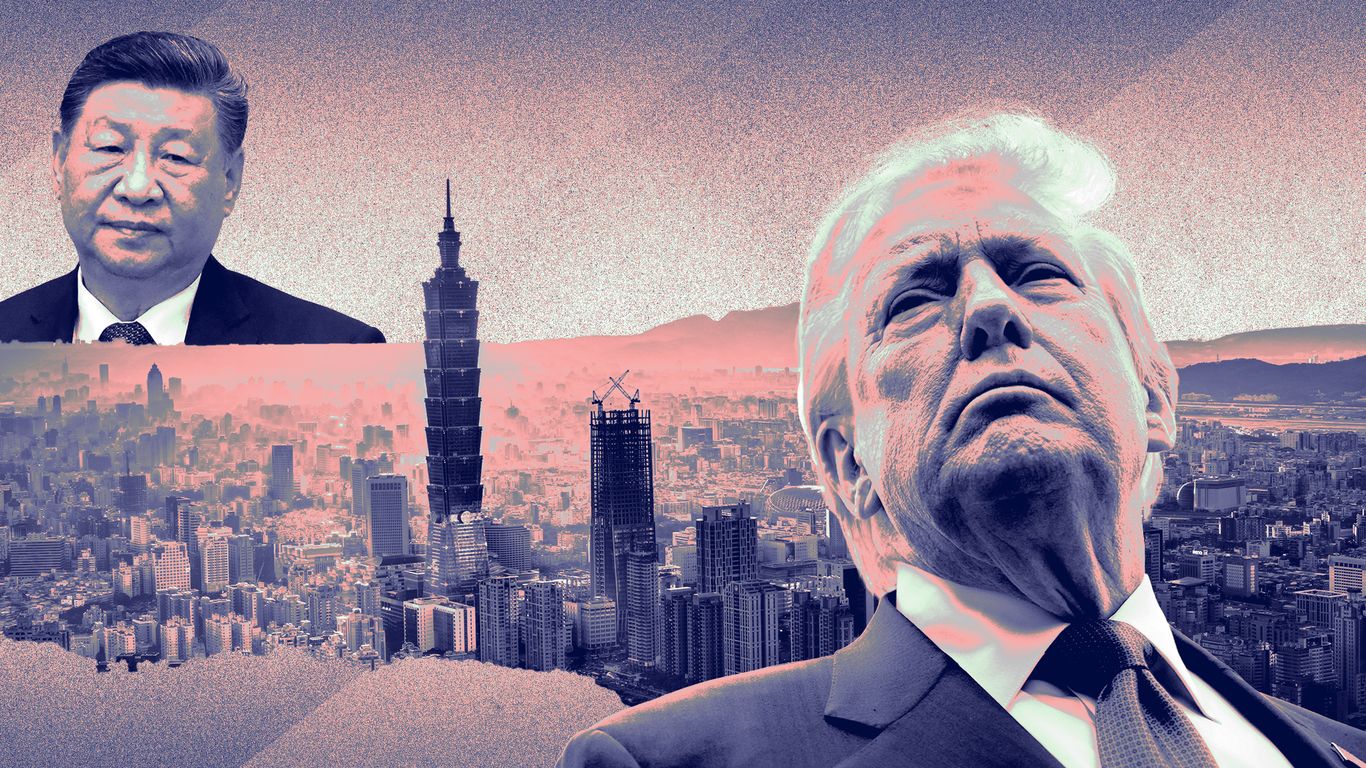
Trump said he is unsure whether he would approve a $14 billion arms package for Taiwan and suggested U.S. weapons may not deter a Chinese move, heightening concerns about cross-strait risk. Taiwan officials pushed back, reiterating the need for U.S. arms deliveries and stronger self-defense, while noting China has already intensified military pressure and drills. The article points to elevated geopolitical tension, with potential implications for defense spending, regional security, and market risk sentiment.
The market should treat this less as a binary invasion call and more as a widening of the deterrence premium in East Asia. Even without imminent kinetic risk, rhetoric that calls into question U.S. arms support forces Taipei to accelerate spend on asymmetric systems, drones, coastal defense, cyber resilience, and hardening of telecom/power nodes — a multi-year capex cycle that benefits a broader vendor base than the headline prime contractors. The second-order effect is that procurement becomes more politically sticky: once Taiwan shifts budget from legacy platforms toward survivable, distributed capabilities, cancellations become harder and domestic industrial policy gains momentum.
The biggest near-term mispricing is likely in suppliers with exposure to non-kinetic defense: communications, electronic warfare, ruggedized semis, and infrastructure security. If Taiwan assumes U.S. support could be less reliable at the margin, it will diversify suppliers and localize more production, creating incremental demand for design tools, sensors, and secure-network hardware. That argues for selective beneficiaries in the U.S., Japan, and South Korea supply chains rather than broad defense-beta, since the latter is already crowded and only modestly moves on headline geopolitical noise.
Risk is asymmetric but slow-burning: the next few days are more about sentiment, while the next 6-18 months matter for procurement, alliance posture, and insurance/re-shoring costs. A real de-escalation requires either a U.S.-China détente that restores clearer red lines or a Taiwan policy pivot toward lower-profile defense buildup; absent that, the floor under regional defense spending likely rises. The contrarian point: markets may be underestimating how much Taiwan’s internal resilience reduces the odds of a fast fait accompli, which means the optimal trade is not panic hedging but owning the companies that monetize prolonged gray-zone conflict.
AI-powered research, real-time alerts, and portfolio analytics for institutional investors.
Request DemoOverall Sentiment
mildly negative
Sentiment Score
-0.20
