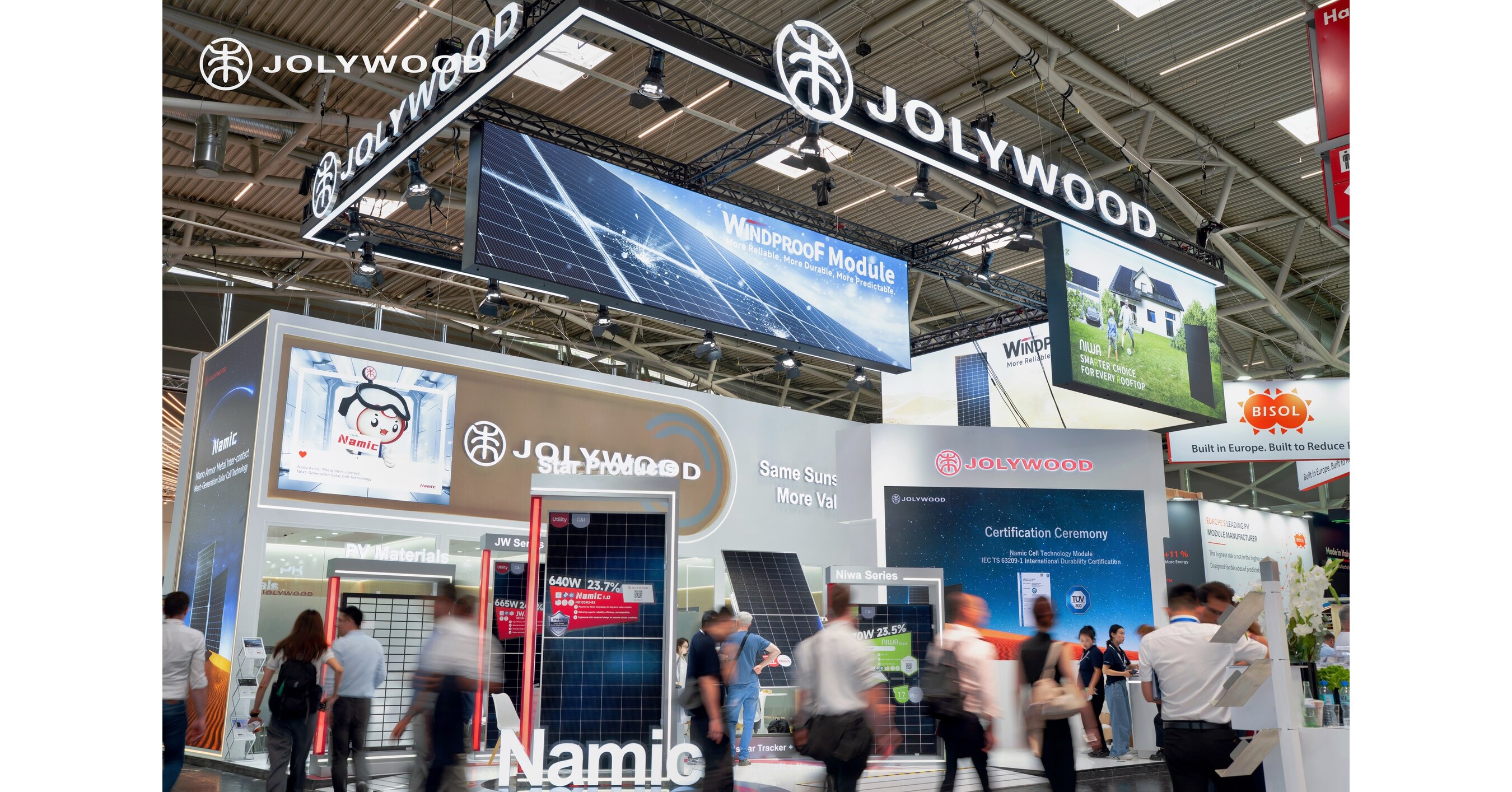
Jolywood a lancé en Europe la technologie photovoltaïque Namic (Nano Armor Metal Inter-Contact) lors d’Intersolar Europe 2026, visant une fabrication à faible teneur en argent puis potentiellement sans argent. La société affirme que la solution réduit l’exposition à la volatilité du prix de l’argent et rend les rendements d’investissement plus prévisibles, avec une validation par des organismes internationaux et une promesse de coût actualisé de l’électricité (LCOE) optimisé sur la durée de vie. En parallèle, Jolywood a présenté des modules résistants au vent et une gamme NIWA (toitures résidentielles et C&I), avec une offre “balcon PV + stockage” pour la gestion d’énergie résidentielle.
This reads as a cost-structure story, not a near-term demand catalyst. If the low-silver interconnect process scales, the first-order benefit is margin stability for module makers, but the second-order benefit is actually to project finance: lower input volatility makes bids easier to underwrite and reduces the chance that quoted module prices get repriced before shipment. That matters most in C&I and rooftop, where customers care less about lab efficiency and more about bankability, warranty, and delivery certainty.
Near term, I would not expect a broad read-through for solar equities because trade-show launches rarely convert into meaningful backlog without field data and certification. The real competitive effect is inside the supply chain: vendors still reliant on older metallization techniques may be forced to discount harder if peers can advertise similar performance with lower silver intensity. If that happens, it is more a margin-compression event for laggards than a volume boom for the winner.
Over 1-3 months, the key catalyst is not the technology announcement itself but evidence of repeat orders, third-party validation, and degradation data from real sites. A failure mode would be higher scrap rates, hotspot issues, or warranty skepticism, which would quickly turn this into a PR-only event. Over 6-18 months, if the industry adopts the process broadly, the structural loser is any high-cost c-Si producer with weak pricing power; silver miners are only a marginal loser unless penetration becomes systemic across the whole PV stack.
Consensus may be overestimating how fast this changes economics. Silver is a visible pain point, but the market often underprices the adoption friction from reliability qualification and insurance approval, so the more likely outcome is a slow share gain rather than an immediate step-function in earnings.
AI-powered research, real-time alerts, and portfolio analytics for institutional investors.
Request DemoOverall Sentiment
mildly positive
Sentiment Score
0.25
