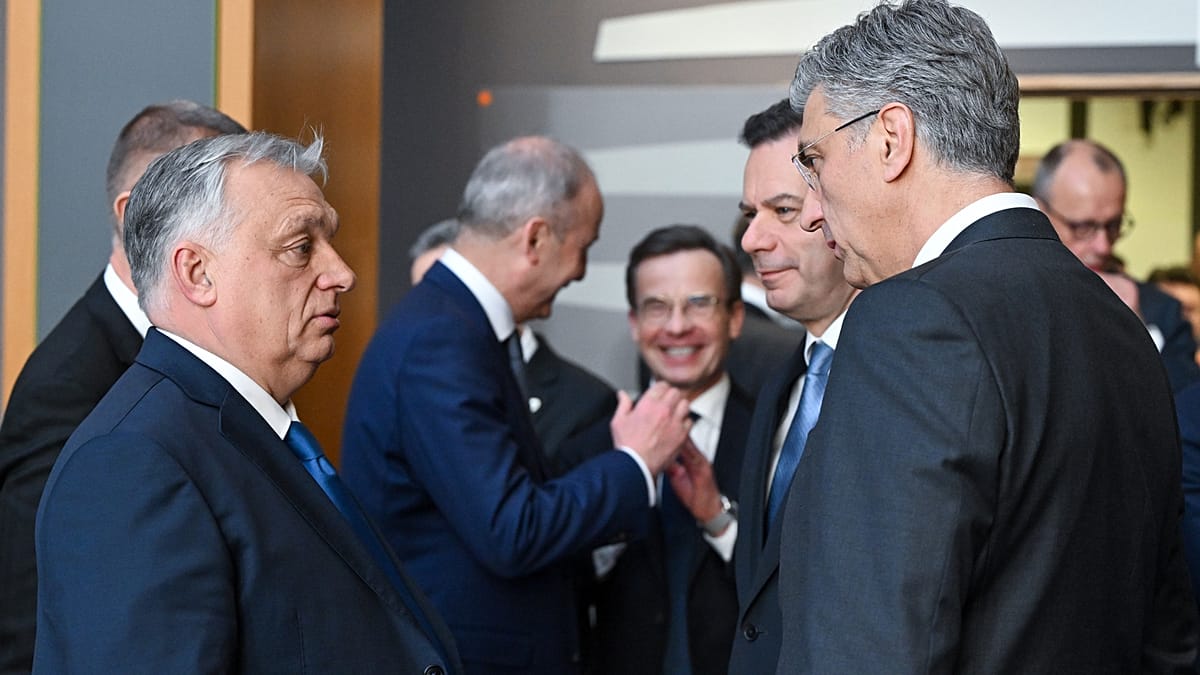
EU leaders failed to secure a €90 billion loan for Ukraine after Hungary's Viktor Orbán vetoed the package over the Druzhba pipeline dispute, leaving funding at risk unless transit is restored (estimated 4-6 weeks) or Hungary's 12 April election resolves the veto. Energy markets were hit hard after Iranian strikes on Gulf energy sites, sending natural gas prices up ~30% and prompting QatarEnergy to warn it cannot fully meet contractual LNG supplies to countries including Belgium and Italy. The summit proposed targeted state aid and lower electricity taxes, kept the EU ETS intact, and five European countries plus Japan said they would "contribute" to efforts to secure passage through the Strait of Hormuz, signaling heightened near-term market volatility and increased geopolitical risk that could divert US focus from Ukraine.
A concentrated stoppage of a major external funding channel creates near-term liquidity triage that favors suppliers able to convert orders into cash within 30–90 days (ammo, spare parts, short-lead electronics) and penalizes long-cycle capital projects (shipbuilding, heavy armor). Expect defence procurement calendars to be re‑weighted toward high-margin, fast-delivery manufacturers and subcontractors; this will compress working capital at OEMs that rely on phased milestones and widen receivable financing spreads for recipient-credit constrained governments.
Energy-route and terminal disruptions amplify freight, insurance and charter-rate dislocations before commodity price effects are fully transmitted to end-users. A 20–40% spike in war-risk premia for VLGC/LNG tanker routes can add $1–3/MMBtu to landed European gas costs within weeks via shorter supply and forced re-routing, while permitting an outsized rerating of midstream owners who control spare regas capacity.
Commodity-intensive sectors (fertilisers, chemicals, crop processing) are the fastest transmitters of an energy shock into CPI and export competitiveness; higher input costs plus an unchanged carbon-price regime create a two‑front margin squeeze for European heavy industry, increasing the probability of fiscal forbearance or targeted state aid over the next 3–9 months. That policy response is the key catalyst — targeted subsidies blunt insolvency risk but prolong structural inefficiency and support select equity plays in state-supported sectors.
Political uncertainty tied to domestic election cycles magnifies governance risk for supranational financing mechanisms and increases tail-risk for peripheral sovereign spreads. If volatility persists beyond 60 days, expect foreign capital flight into safe-haven sovereigns and commodity exporters, creating tactical windows to trade both credit and commodity exposures off transient price dislocations.
AI-powered research, real-time alerts, and portfolio analytics for institutional investors.
Request DemoOverall Sentiment
moderately negative
Sentiment Score
-0.55
