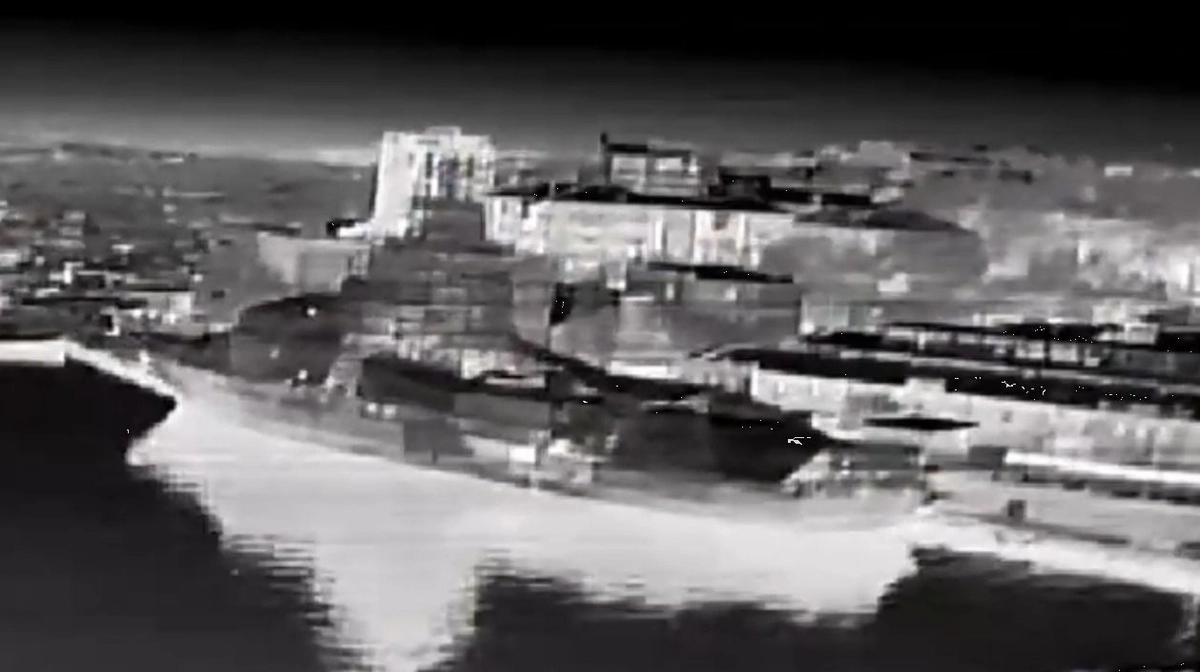
Ukrainian forces said they struck and damaged multiple Russian military assets in occupied Crimea, including three warships, a MiG-31 aircraft, and an air defence radar system during an overnight operation on 25-26 April. Targets included the Yamal and Nikolai Filchenkov landing ships, the Ivan Khurs reconnaissance ship, and facilities at the Belbek airfield and Sevastopol naval base. The attack underscores ongoing escalation in the Black Sea theatre and could affect regional defense posture and airspace control.
This is a tactical escalation that matters more for sequencing than for aggregate war headlines. Knocking out air-defense, ISR, and a strike aircraft in Crimea increases the probability that Russia must reallocate scarce high-value assets away from the front and toward rear-area protection, which lowers sortie efficiency and raises operating costs across the Black Sea theater. The second-order effect is not just military attrition; it is a persistent tax on logistics, maintenance, and command-and-control reliability that compounds over weeks rather than days.
For markets, the immediate transmission is through perceived security of Black Sea infrastructure and transport corridors, not through broad macro repricing. The most vulnerable complex is insurers/reinsurers and any shipping exposure with eastern Mediterranean/Black Sea routing, because this kind of strike pattern increases tail risk without requiring a formal expansion of the conflict. Defense supply chains may see a modest positive read-through if investors infer higher replenishment demand for air-defense interceptors, UAV countermeasures, and surveillance systems, but that tends to show up with a lag and is usually more durable than the headline move.
The key risk is overreaction: unless these strikes consistently degrade Russia’s ability to contest airspace, the market may treat them as episodic rather than structurally regime-changing. A reversal would come if Russia rapidly hardens Crimea, disperses assets, or demonstrates it can sustain operations despite losses; in that case, the near-term premium in defense and shipping-risk names should fade within 2-6 weeks. The contrarian read is that the article may be more bearish for Russia’s operational tempo than for any broad-risk basket, so the trade is to own beneficiaries of prolonged attrition rather than chase a single-day geopolitical vol spike.
AI-powered research, real-time alerts, and portfolio analytics for institutional investors.
Request DemoOverall Sentiment
strongly negative
Sentiment Score
-0.55
