






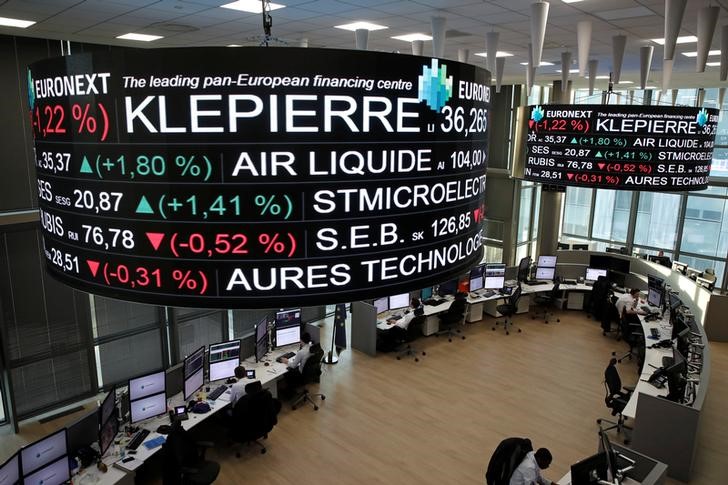
France’s CAC 40 and SBF 120 both ended slightly lower (each -0.05%) as weakness in Technology, Oil & Gas, and Utilities outweighed gains elsewhere. In Paris, STMicroelectronics fell 4.91% while Publicis Groupe (+3.07%), Pernod Ricard (+3.03%) and Michelin (+1.82%) led the upside; outside France’s broader tape, Nasdaq slid after TSMC’s spending plans offset stellar results. Market risk gauges stayed calm with CAC 40 VIX unchanged at 18.96 (new 52-week high), while gold futures (-1.16% to $4,004.70/oz) and crude oil edged down (Aug WTI -0.03% to $79.58; Aug Brent flat at $84.95), and FX was steady (EUR/USD ~1.14, unchanged).
The market is treating capex intensity as a quality filter: names that can self-fund investment and monetize AI/advanced-node demand are being viewed as comparatively resilient, while smaller European semis are getting de-rated on the fear that incremental spending does not translate into near-term margin power. That is why STM and XFABF are the cleaner pressure points than TSM itself — the former are more exposed to utilization sensitivity and have less ability to absorb a prolonged reinvestment cycle without multiple compression. The strength in JCDXY and PRNDY reads more like rotation into cash-generative, lower-duration assets than a conviction call on French domestic growth.
Over the next 1-3 months, the key catalyst is whether the spending is packaging/AI-led or simply broad capacity build. If it is advanced packaging and leading-edge capacity, the current selloff in the semi complex can reverse fast as the supplier order book gets upgraded; if not, STM and XFABF face a longer grind where any demand recovery is capped by new supply and weak pricing discipline. The rate backdrop matters too: a firmer dollar and sticky yields make long-duration industrials like Schneider/Legrand more vulnerable to further de-rating even if the index itself stabilizes.
Contrarian view: the move may be overdone because investors are conflating higher capex with weaker economics. TSMC can spend aggressively and still protect returns if the mix remains at the high end of the wafer stack; in that case, the first beneficiaries are TSM and the equipment/material chain, while the cleanest short remains the companies that need a cyclical inflection to justify their multiples. The thesis is falsified if TSMC commentary, or read-throughs from ASML/BESI, show capex is packaging-led and order visibility is improving faster than expected.
AI-powered research, real-time alerts, and portfolio analytics for institutional investors.
Request TrialOverall Sentiment
neutral
Sentiment Score
-0.10
Ticker Sentiment
