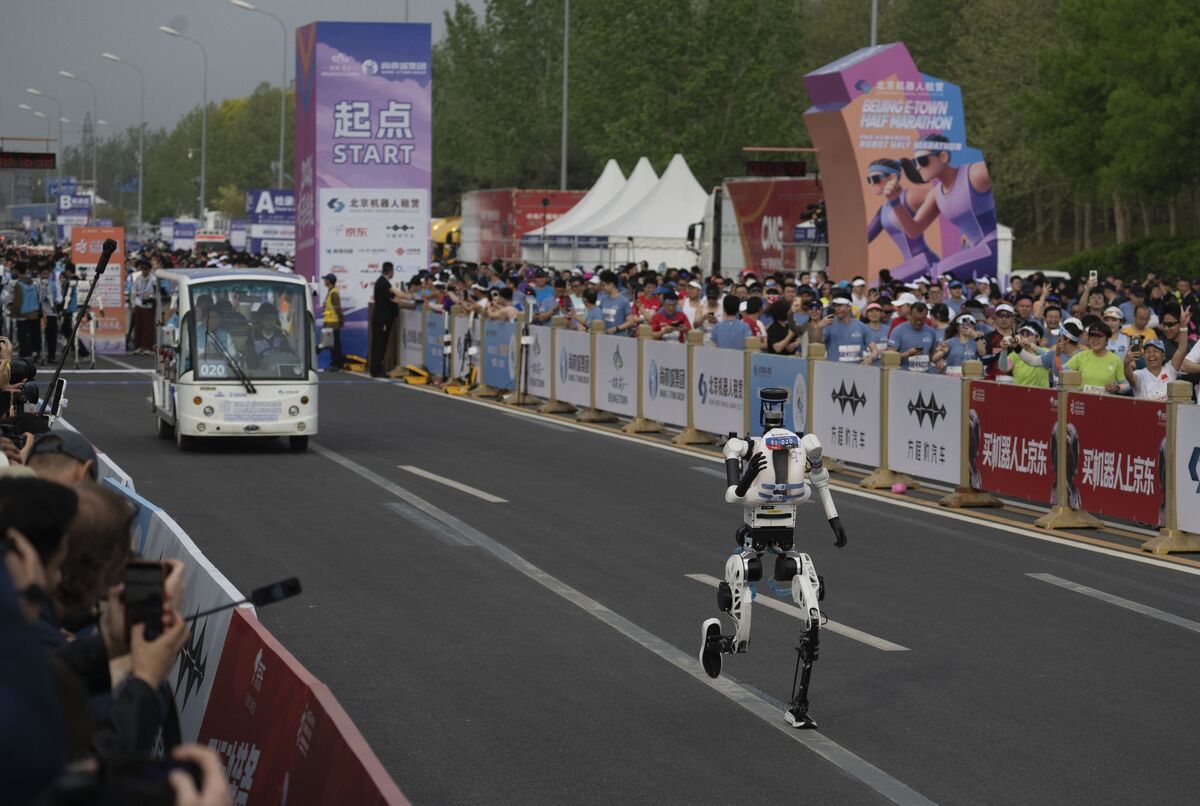
A humanoid robot completed a half-marathon in 50 minutes and 26 seconds, about seven minutes faster than the men’s world record. The result highlights rapid progress in AI and robotics, especially in physical dexterity and task execution. While notable as a technological milestone, the direct market impact is likely limited.
This is not a headline about humanoids replacing labor tomorrow; it is a signal that the integration gap between AI perception/planning and physical execution is narrowing faster than most industrial models assume. The first-order beneficiary is the enabling stack: edge inference silicon, battery systems, motor controls, machine vision, and robotics middleware, because performance gains in embodied AI tend to compound through the whole bill of materials rather than accrue to a single robot OEM.
The second-order effect is competitive pressure on low-complexity, repetitive labor services over a 2-5 year horizon, especially where wage inflation is persistent and task environments are structured. If this benchmark is directionally real, procurement teams will start treating humanoids less like demos and more like capex options, which shifts value away from pure labor arbitrage and toward platforms that can scale software updates across fleets.
The market may be underpricing how quickly “good enough” physical AI can move into logistics, inspection, and light manufacturing even if true general-purpose autonomy remains years away. The contrarian risk is that these showcase events overstate near-term monetization: hardware reliability, safety certification, maintenance cost, and unit economics still matter more than raw performance, so the adoption curve can be lumpy and far slower than the research curve.
The cleanest catalyst stack is over the next 6-18 months: new pilot deployments, OEM partnership announcements, and capex guidance from industrial automation vendors. If enterprise buyers start budgeting for humanoid pilots in FY26 planning, the repricing will likely show up first in robotics infrastructure rather than in consumer-facing AI names.
AI-powered research, real-time alerts, and portfolio analytics for institutional investors.
Request DemoOverall Sentiment
mildly positive
Sentiment Score
0.35
