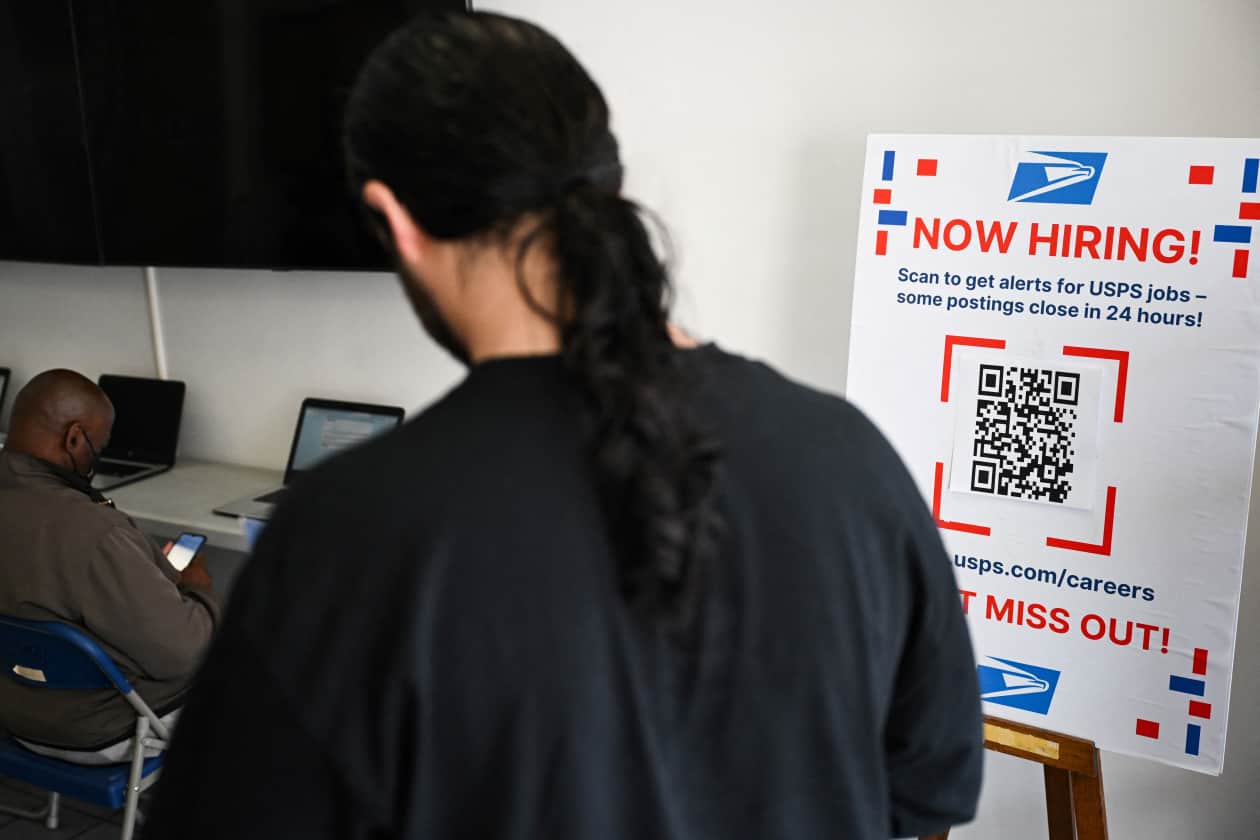
U.S. job openings increased to 7.4 million in April, up from 7.2 million the previous month, despite escalating trade tensions. However, the pace of hiring remained sluggish, indicating a potential disconnect between demand for labor and companies' willingness to fill positions amid ongoing trade wars reminiscent of the 1930s. While job postings are up, they are still down almost 40% from a record high three years ago.
U.S. job openings increased to 7.4 million at the end of April, up from 7.2 million in the prior month, a development occurring amidst heightened trade tensions following increased tariffs. Despite this rise in available positions, businesses demonstrated a cautious approach, exhibiting slowness in filling these new roles, a hesitancy linked to the prevailing trade wars, described as the most severe since the 1930s. This cautious hiring stance is particularly noteworthy given that current job postings, while showing a monthly increase, remain significantly subdued, down almost 40% from a record high registered three years prior, indicating a potential underlying cooling in labor demand or increased friction in the hiring process. The overall situation generates a "mixed" sentiment and an "uncertain" tone, reflecting the dichotomy between the increased number of openings and the reluctance of companies to commit to new hires in an unpredictable trade environment.
AI-powered research, real-time alerts, and portfolio analytics for institutional investors.
Request DemoOverall Sentiment
mixed
Sentiment Score
-0.15
