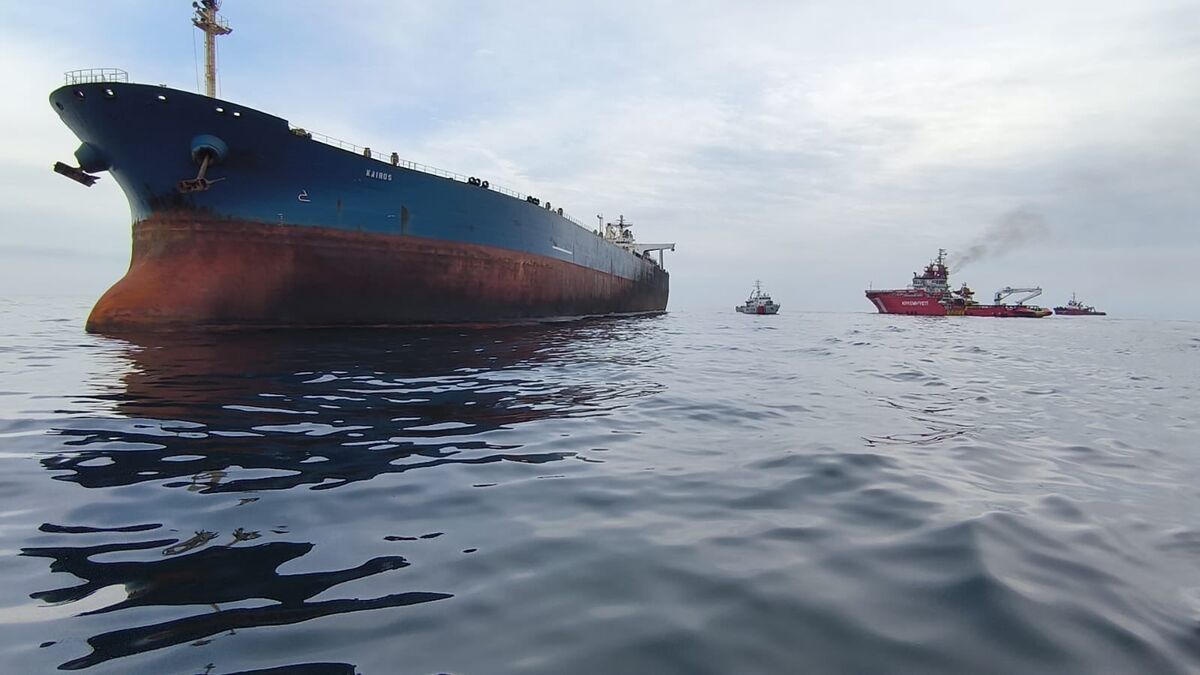
The oil tanker Kairos, struck by Ukrainian drones near Turkey on Nov. 28, was rescued in bad weather and is now positioned about one mile off Bulgaria’s coast, with Bulgaria’s Maritime Administration Agency, navy and police assisting, the Ministry of Transportation and Communications said. The episode highlights elevated maritime security risks in the Black Sea and the potential for localized disruption to oil shipping routes and logistics, although no cargo volumes, casualties or broader supply impacts were reported.
Market structure: A drone strike on a tanker near the Black Sea/import routes creates an immediate risk premium in seaborne crude logistics; winners are upstream oil producers (pricing leverage) and owners of modern Suezmax/Aframax tankers who can command higher freight (e.g., FRO, EURN), losers are short-haul logistics, insurers and ports near the incident. Expect Brent volatility +2–6% in days, compressed refining margins in the first 1–4 weeks if crude availability to Mediterranean refiners tightens, and a modest risk-off bid in FX (USD) and sovereign bonds. Cross-asset: oil up → inflationary impulse → short duration bonds and higher real yields; energy equities will see elevated IV in options markets.
Risk assessment: Tail scenarios include escalation that closes the Bosporus/Black Sea corridor (low probability, high impact — oil +$10–$30/barrel, months-long disruptions) or widened insurance war-exclusion activation leaving cargoes uninsurable. Immediate (days): freight blips and insurance inquiries; short-term (weeks–months): higher P&I premiums and rerouting costs; long-term (quarters–years): structural rerouting and capex toward onshore production and strategic storage. Hidden dependencies: timing of insurer filings, naval escorts, and OPEC spare capacity availability; catalysts: any additional strikes, insurer premium announcements in 30–60 days, or NATO naval moves.
Trade implications: Tactical: buy short-dated energy exposure (Brent futures or calls) and select upstream equities (XOM, CVX) for 1–3 month horizon while trimming exposure to ports/insurers; pair trade long tanker owners (FRO, EURN) vs short marine insurers/reinsurers if liquid. Use 1–3 month call spreads on XOM/CVX to cap cost and buy 3-month calls on RTX/LHX as a defense/technology hedge. Rotate into Energy and Defense sectors, underweight Travel/Ports for next 4–12 weeks; act within 48–96 hours for volatility trades, scale down after 4–8 weeks.
Contrarian angles: Markets often overshoot — single incidents historically (e.g., 2021 Red Sea) caused freight and oil spikes that normalized in 4–12 weeks once rerouting and insurance adjustments kicked in, so medium-term longs should be sized conservatively. The consensus may under-appreciate tanker owners who can benefit from higher rates; conversely over-allocating to pure oil longs ignores potential demand destruction if prices spike >$10. Unintended consequence: higher tanker rates can actually improve earnings for owners and weigh on refiners/consumers, so sector-relative trades matter more than directional oil alone.
AI-powered research, real-time alerts, and portfolio analytics for institutional investors.
Request DemoOverall Sentiment
mildly negative
Sentiment Score
-0.25
