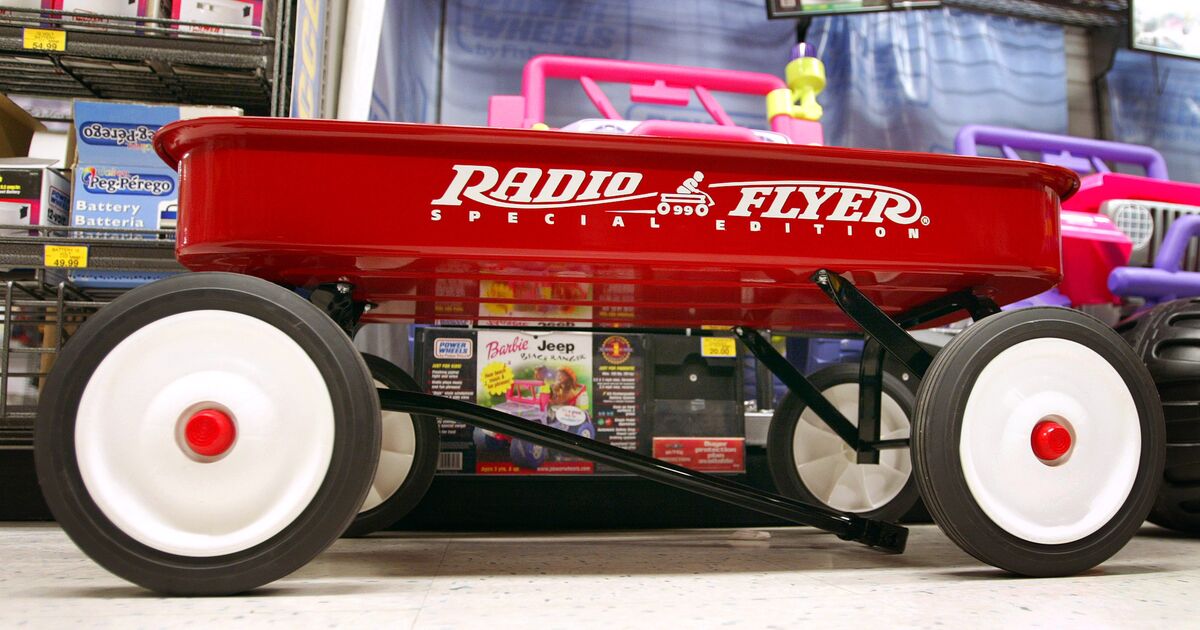
The Trump administration is advancing new tariff investigations after the Supreme Court ruled most of last year's duties illegal, with USTR public hearings set for April 28 and May 5. The proposed duties could target imports from countries accused of not enforcing forced-labor bans or of maintaining structural excess manufacturing capacity. The article signals renewed trade-policy uncertainty and potential supply-chain disruption, with implications for a broad range of imported goods including transportation staples like red wagons.
The immediate market effect is not the tariff headline itself but the re-pricing of procurement certainty. Import-heavy retailers, toy makers, industrial distributors, and auto-adjacent names with thin gross margins are vulnerable because tariffs hit them as an input-cost shock while they typically lack pricing power; the first-order hit shows up in earnings guidance, but the second-order hit is inventory distortion as firms front-load orders ahead of effective dates and then face a demand air pocket. That setup tends to reward domestic producers with local supply chains and hurts logistics providers exposed to trans-Pacific volume if retailers pull forward less efficiently and then de-stock for several quarters.
The more interesting second-order effect is geographic: if the administration broadens the policy from targeted tariffs into a forced-labor/excess-capacity framework, the winners are likely to be firms with Mexico/US or non-China production footprints rather than pure onshore names. That creates a relative-value opportunity in suppliers that can re-route production quickly versus brands locked into China-heavy bill of materials; the market usually underestimates how long certification, tooling, and QA delays persist, which means margin pressure can last 2-4 quarters even if headlines fade. Small-caps with concentrated SKU exposure are especially fragile because one tariff can wipe out a year of operating leverage.
The contrarian view is that the most obvious short targets may already be crowded, while the real upside is in names that can pass through costs but are being penalized as if tariffs are a demand destruction event. If tariffs are staged, litigated, or selectively enforced, the earnings hit may be slower and smaller than consensus fears, creating an opportunity in beaten-up importers with strong balance sheets and fast inventory turns. The key catalyst to watch is whether hearings translate into narrow, enforceable duties versus a broad list; the former is tradable but containable, while the latter would justify a more durable de-rating across consumer and industrial importers.
AI-powered research, real-time alerts, and portfolio analytics for institutional investors.
Request DemoOverall Sentiment
mildly negative
Sentiment Score
-0.15
