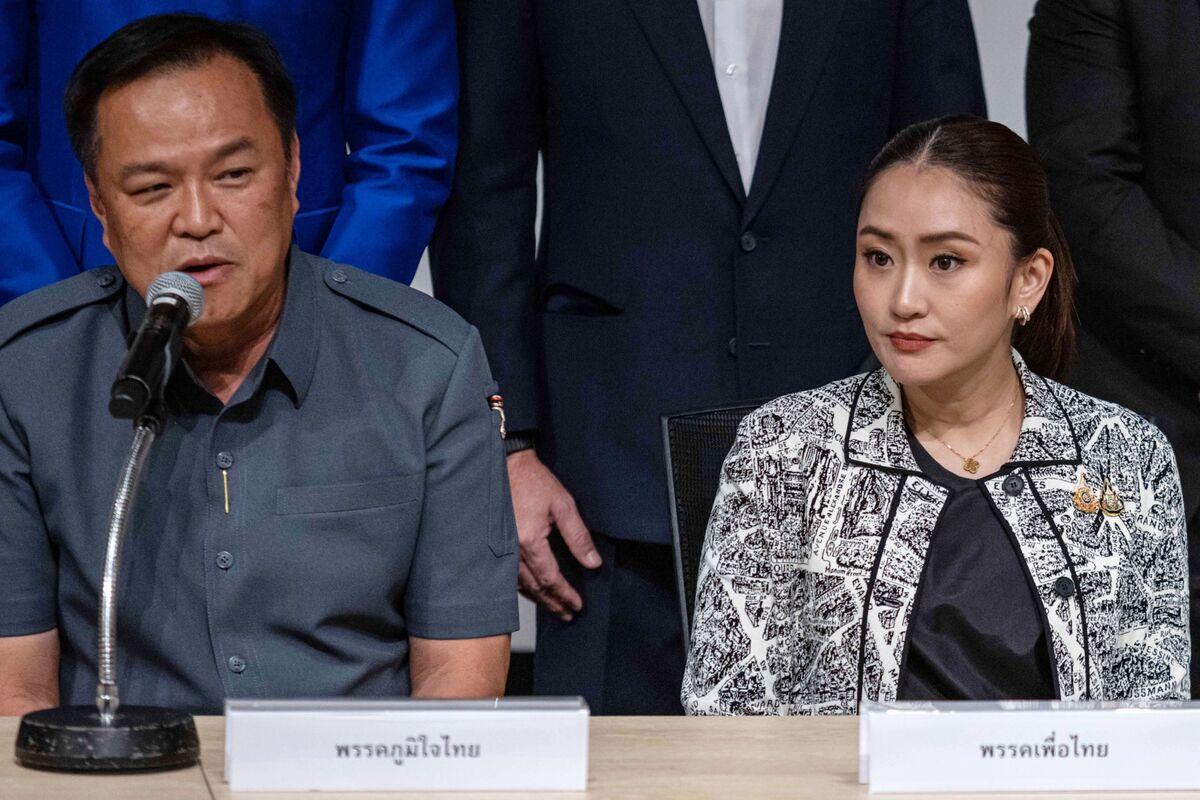
A political rift is intensifying within Thailand's ruling coalition as the Pheu Thai Party and Bhumjaithai party clash over control of the Interior Ministry post. Bhumjaithai leader Anutin Charnvirakul has threatened to leave the coalition if he loses the post, while Pheu Thai has warned it may expel Bhumjaithai if it rejects a proposed swap of posts, raising concerns about the stability of the government and potentially unsettling the conservative establishment.
Thailand's ruling coalition is experiencing escalating internal tensions centered on a dispute over the key Interior Ministry post, pitting the ruling Pheu Thai Party against its prominent coalition partner, Bhumjaithai. This conflict arises as Prime Minister Paetongtarn Shinawatra prepares for a cabinet shakeup, with Bhumjaithai leader Anutin Charnvirakul threatening to exit the coalition if he loses the ministry, while Pheu Thai has warned of potentially expelling Bhumjaithai if a proposed swap of ministerial roles is rejected. The situation carries a 'moderately negative' sentiment score of -0.6 and an 'uncertain' tone, reflecting the potential for significant disruption. The associated market impact score of 0.6 underscores the risk that this political instability could unsettle the conservative establishment, shift alliances, and negatively affect investor confidence in Thai markets.
AI-powered research, real-time alerts, and portfolio analytics for institutional investors.
Request DemoOverall Sentiment
moderately negative
Sentiment Score
-0.60
