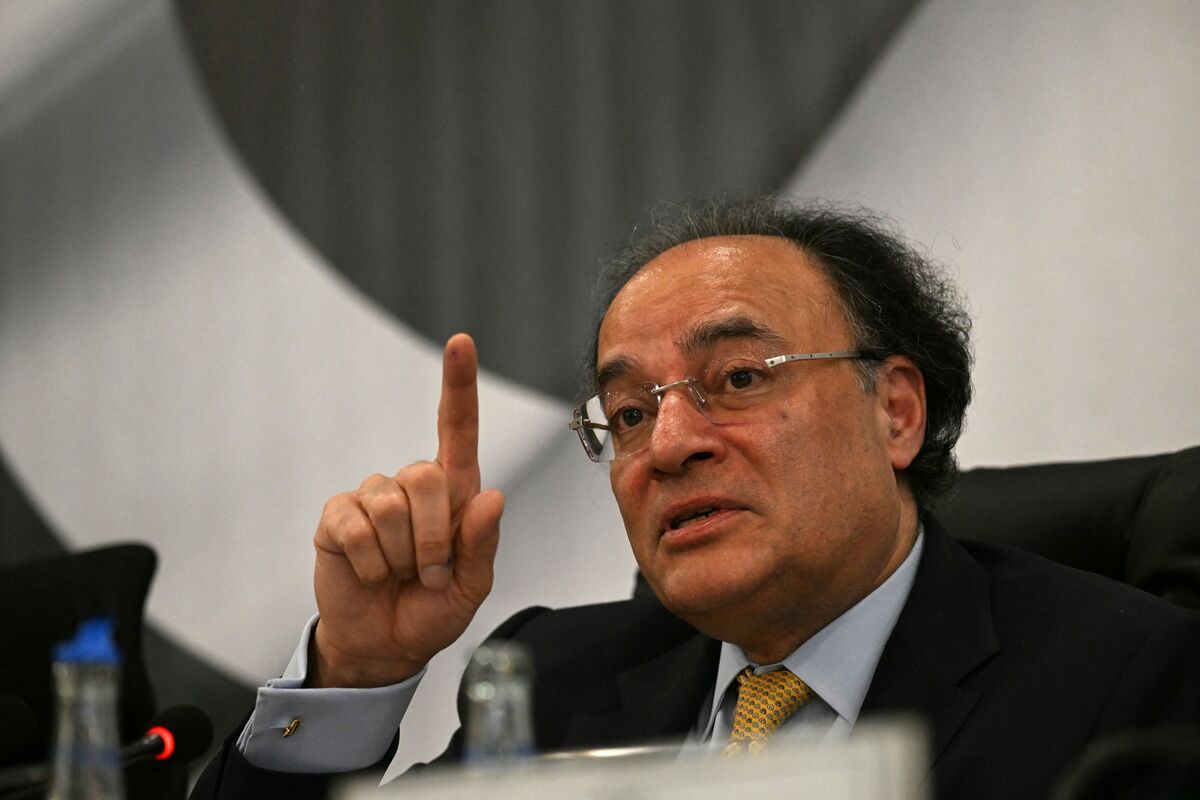
Pakistan’s finance minister said the economy is expected to grow 4% next year, while inflation is projected to ease to 8.2% from 11.7% in the current fiscal year. The outlook is improving, but the Middle East conflict remains a key upside risk that could disrupt the recovery. The article is mainly macro commentary on an emerging market economy and is unlikely to move broad markets materially.
The market is likely underpricing the asymmetry between cyclical recovery and external shock risk. A softer inflation path in a frontier/EM economy is usually a positive for duration-sensitive local assets, but the bigger second-order effect is on policy credibility: if the disinflation trend holds for only one or two prints, it can compress sovereign spreads and steepen the local curve fast; if it reverses, the unwind is violent because positioning in these markets tends to be crowded and short-horizon.
The key winner is the domestic consumer and any levered local-rate proxy, but the cleaner trade is through financing conditions rather than nominal GDP beta. Lower inflation gives the central bank room to cut or at least pause tighter policy, which should help banks with deposit beta lag and reduce stress in refiners, utilities, and rate-sensitive builders; the losers are exporters with limited pricing power if the currency strengthens on improved macro optics. A geopolitical flare-up is the main tail risk, and it matters less through direct trade channels than through imported fuel and risk premia, which would push inflation expectations back up within weeks.
The contrarian read is that consensus may be extrapolating a one-period improvement into a regime shift. In EMs, headline disinflation often reflects base effects and administrative pricing, not durable demand cooling; if growth reaccelerates to the projected level, the inflation floor can prove sticky, especially if energy or shipping costs reprice. That means the best risk/reward is to express a “better macro but not too much” view rather than a straight bullish duration bet.
For investors without direct Pakistan equity exposure, the trade is to focus on relative winners from easier local financial conditions and to keep hedges against an oil-driven reversal. The time horizon is months, not days: the data path matters more than the headline, and the first real catalyst is the next inflation print plus any escalation in the Middle East that tightens imported inflation.
AI-powered research, real-time alerts, and portfolio analytics for institutional investors.
Request DemoOverall Sentiment
mildly positive
Sentiment Score
0.25
