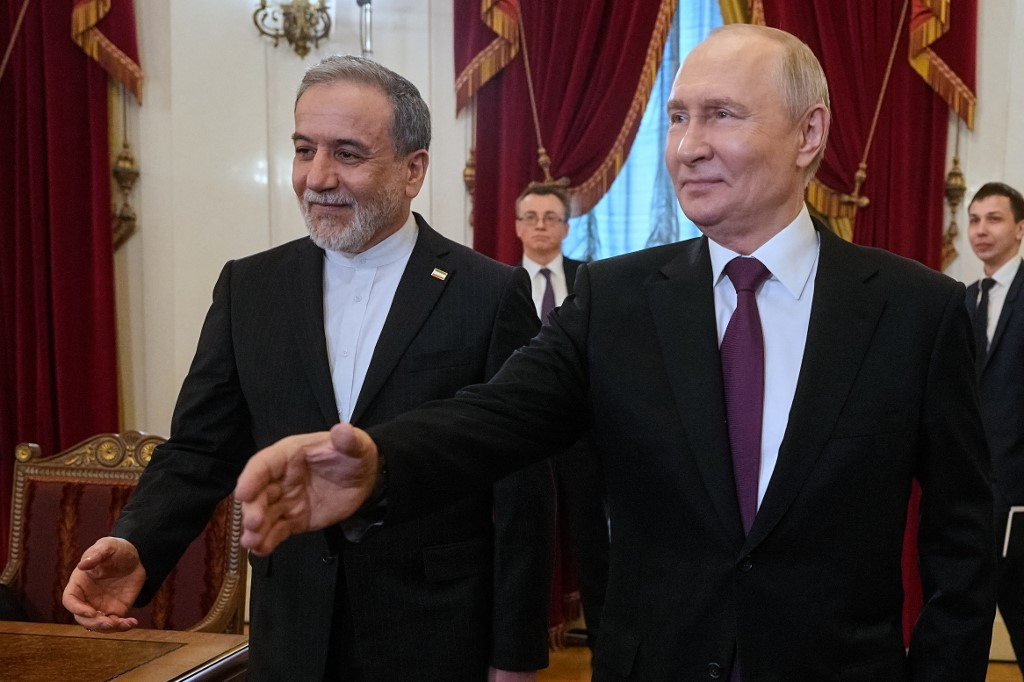
Putin reiterated strong backing for Iran during talks with Foreign Minister Abbas Araqchi, saying Russia would do everything it could to help secure peace in the Middle East while protecting Iran’s interests. The article highlights ongoing wartime cooperation, including Russian intelligence support and UN backing, as well as Moscow’s offer to store Iran’s enriched uranium to ease nuclear tensions. The geopolitical risk remains elevated as Russia warns Israel and the US may be preparing another round of attacks.
The market implication is less about the optics of a Russia-Iran embrace and more about the optionality it creates around sanctions leakage. A deeper Moscow-Tehran alignment raises the probability that Iran’s crude, condensate, and petrochemical exports keep finding routes to market through gray-channel shipping, blending, and re-documentation — a direct headwind to the effectiveness of energy sanctions and a modestly bearish input for longer-dated oil dislocations. The second-order winner is not necessarily Russia or Iran on a clean basis, but the freight, insurance, and compliance ecosystem that monetizes complexity and scarcity of risk coverage.
The more important catalyst is a tail-risk repricing around a renewed strike cycle. If diplomatic cover hardens and talks remain stalled, the market should assign a higher probability to intermittent supply shocks over the next 1-3 months, which supports crude upside skew even if spot remains range-bound. That tends to benefit defense primes, cyber/electronic warfare, and companies with sanctions-monitoring exposure, while hurting downstream users with thin crack spreads and high Middle East feedstock dependence.
The contrarian read is that the headline may be over-interpreted as immediate escalation risk. Russia’s incentives are partly transactional: it can posture as a mediator while keeping both Iran and the West uncertain, which may actually delay direct conflict rather than accelerate it. In that scenario, the more durable trade is not a pure oil spike hedge but a portfolio tilt toward businesses that gain from prolonged geopolitical friction and regulatory complexity, rather than one-off kinetic events.
AI-powered research, real-time alerts, and portfolio analytics for institutional investors.
Request DemoOverall Sentiment
mildly negative
Sentiment Score
-0.15
