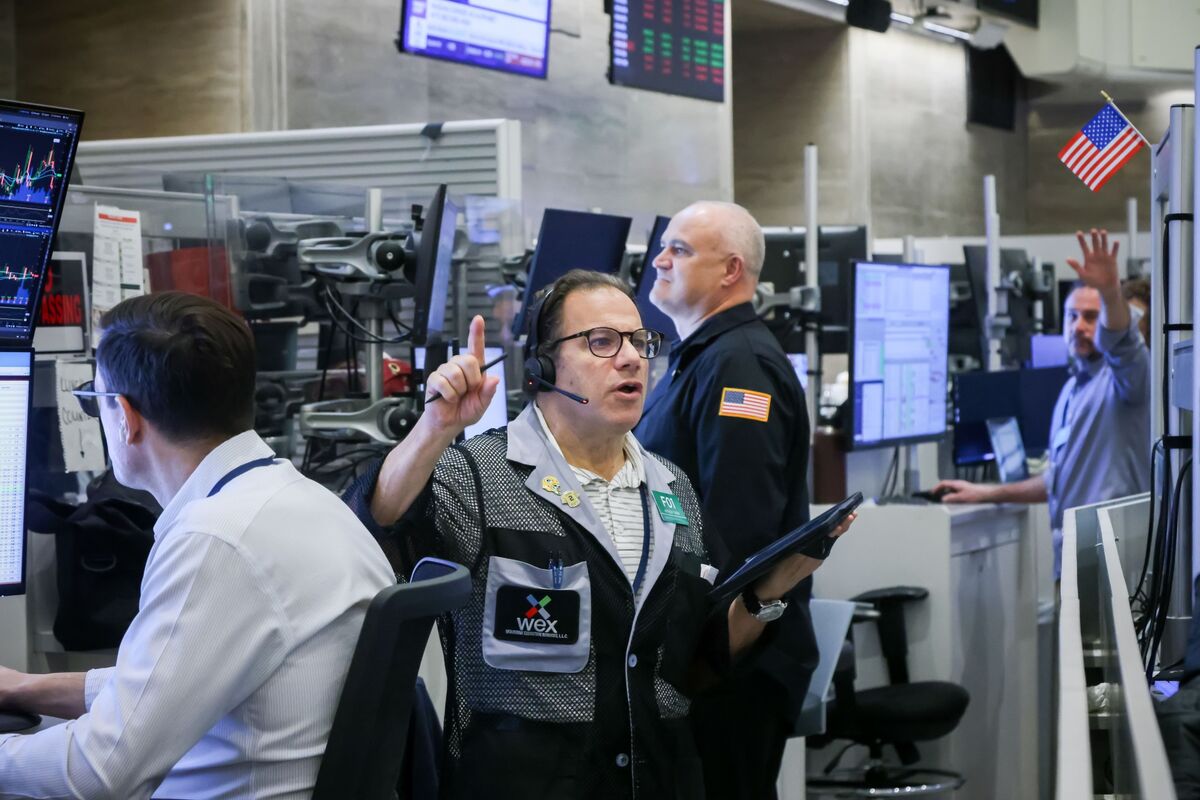
U.S. equity benchmarks rose ahead of the Thanksgiving holiday as growing expectations of an interest-rate cut at the Federal Reserve’s next meeting supported a fourth consecutive day of gains; the S&P 500 closed up 0.7% while the Nasdaq 100 gained 0.87%. The move highlights market positioning toward a dovish Fed outlook and modest pre-holiday risk-on flows that may influence short-term equity and fixed-income positioning.
Market structure: A dovish Fed expectation mechanically favors long-duration, rate-sensitive assets (large-cap tech, REITs, utilities) and penalizes net-interest-margin-dependent financials. Expect rotation into QQQ/VNQ/XLU-like exposures and outflows from XLF/KRE if the market prices a >50% cut within the next 2–6 weeks; a 20–50bp fall in 2yr yields would lift duration-heavy ETFs by mid-to-high single digits relative to cyclicals.
Risk assessment: Key tail risks are (1) no-cut/inflation surprise forcing yields up (equity drawdown >8% within days), (2) recession shock widening credit spreads, and (3) liquidity gaps around holidays amplifying moves. Near-term (days) volatility is elevated due to thin liquidity; short-term (2–8 weeks) depends on incoming CPI/payrolls and Fed commentary; long-term (3–12 months) depends on realized cuts versus growth, which will reprice multiples materially.
Trade implications: Favored trades are long growth/duration and hedged short financials; add tactical Treasuries as hedge. Use defined-risk options to play a cut (buy 1–3 month call spreads on QQQ, buy put spreads on XLF) and limit directional exposure to 2–4% of portfolio; trim 25–50% into the Fed decision and rebalancing if 2yr yield moves >30–40bp.
Contrarian angles: Consensus may be underestimating Fed caution and overpricing an immediate cut—if futures-implied cut probability >70% the rally is vulnerable. Historical pivots (2019) show initial rallies can reverse when forward guidance tightens; unintended consequences include leverage-fueled risk appetite and widening credit spreads if growth weakens, so keep asymmetric protection (puts) sized to 1–2% risk.
AI-powered research, real-time alerts, and portfolio analytics for institutional investors.
Overall Sentiment
mildly positive
Sentiment Score
0.30
