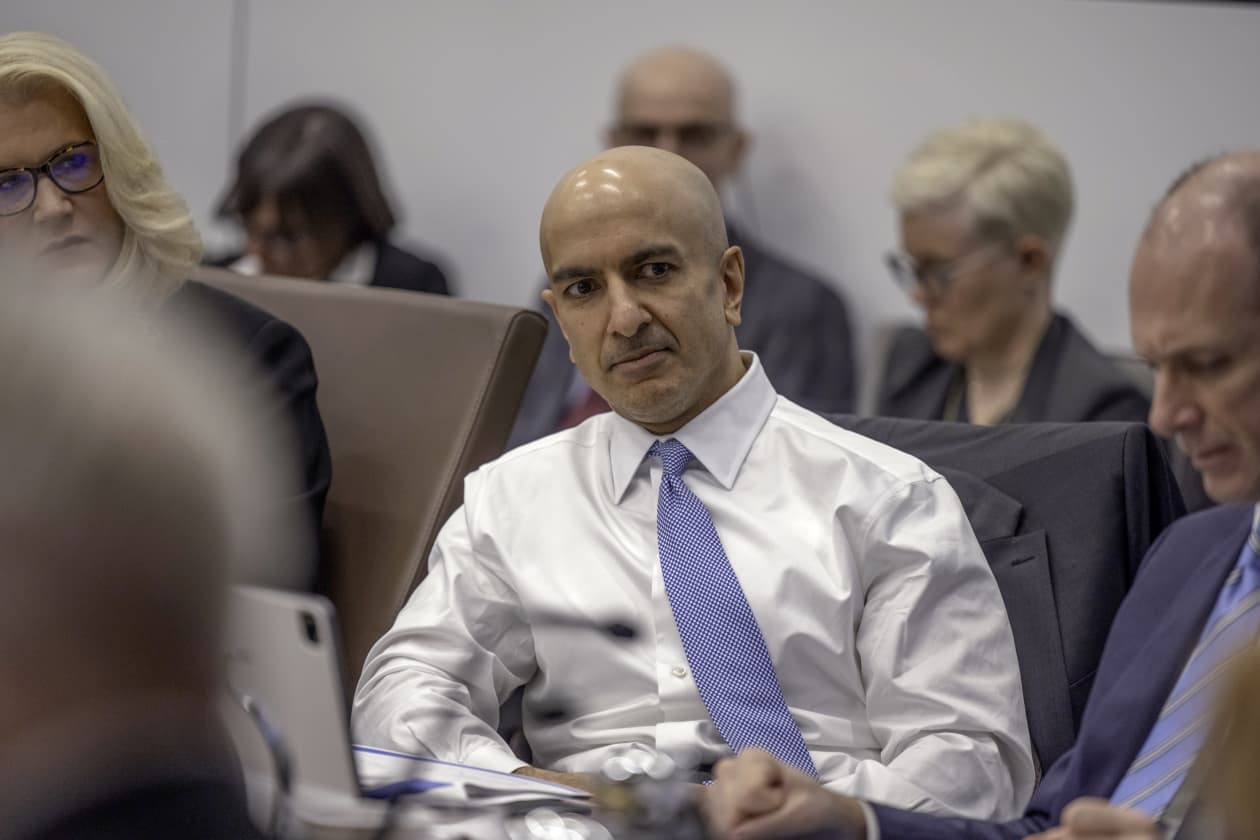
Minneapolis Fed President Neil Kashkari now sees one interest-rate hike this year, reversing his March view that the Fed might cut rates by 25 bps. He cited doubts over the U.S.-Iran peace deal and an AI-driven buildup as factors making a hike possible. The shift is notable for rate expectations and Treasury yields, though it reflects commentary rather than an official Fed decision.
A single additional hike matters less for the policy rate itself than for the distribution of terminal-rate outcomes. The market should treat this as a signal that the Fed’s reaction function is becoming more asymmetric: upside inflation surprises tied to energy/geopolitics or investment-led demand can now provoke tightening even if growth is mediocre, which raises the convexity of rate volatility. That is bullish for short-duration cash flows and bearish for long-duration equity multiples, especially where valuation support has been built on a fast easing path.
The most important second-order effect is on the “AI capex trade.” If the cost of capital stops falling, the market will start discriminating between AI enablers with real near-term cash generation and the long-tail beneficiaries priced off 2026–2028 revenue ramps. That argues for winners inside semis and infrastructure to shift from the highest-multiple optics names toward firms with backlog, pricing power, or balance-sheet flexibility; the rest of the ecosystem is vulnerable to multiple compression even if the secular demand story remains intact.
Geopolitics is the cleaner catalyst than inflation data here. Any renewed Middle East risk can tighten financial conditions through oil, shipping, and risk premia faster than core CPI reacts, which is why the market may reprice higher-for-longer before the Fed even moves. The contrarian point is that one hike could mark a late-cycle signaling event rather than the start of a new hiking regime: if labor softens or credit stress widens, the Fed will have very limited appetite to follow through beyond one token move.
AI-powered research, real-time alerts, and portfolio analytics for institutional investors.
Overall Sentiment
neutral
Sentiment Score
-0.05
