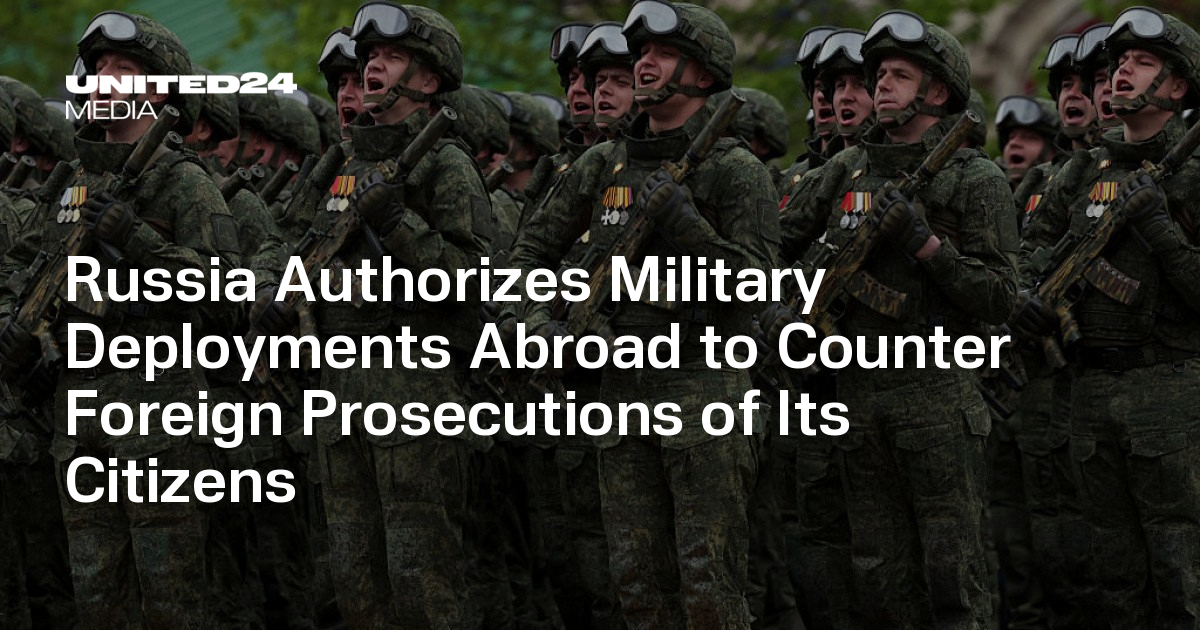
Russia’s State Duma unanimously passed legislation expanding Vladimir Putin’s authority to deploy troops abroad to protect Russian citizens facing foreign arrest or prosecution, with 384 votes in favor and none opposed. The move raises geopolitical risk as NATO agencies warn the Kremlin is preparing for possible conflict with European states, while reports also describe escalating Russian hybrid operations and proxy-led sabotage across Europe. The combination of broader military powers and intensifying covert activity is materially negative for regional risk assets and defense/security expectations.
This is less about near-term battlefield utility than about formalizing a legal wrapper for cross-border escalation. The key second-order effect is optionality: Moscow is lowering the threshold for selective, deniable force projection under the banner of “citizen protection,” which broadens the set of pretexts that can be used to justify asymmetric pressure on the Baltics, Nordics, and judicial targets in Western Europe. That raises the probability of episodic incidents that are calibrated to stay below NATO’s Article 5 tripwire, which is precisely the kind of gray-zone environment where risk premia widen before realized damage shows up.
For markets, the most durable transmission is through defense spending expectations and infrastructure hardening, not an immediate commodity shock. Europe’s procurement cycle should extend, not just for munitions and air defense, but for counter-sabotage, counter-UAS, secure comms, and physical security around energy, rail, ports, and data centers. The beneficiaries are less the headline primes alone and more the second-order suppliers with exposure to C4ISR, EW, perimeter security, cyber resilience, and critical infrastructure monitoring; these names can re-rate on budget visibility even if headlines fade.
The contrarian point is that the move may be underpriced because it looks redundant versus existing Russian behavior. In practice, codifying the authority can reduce execution friction and signal internal preparation for broader coercive campaigns over the next 6-18 months. The main reversal risk is not de-escalation rhetoric but operational failure or Western countermeasures that make deniable operations costlier, especially if Europe tightens attribution, sanctions proxy networks, and hardens borders and facilities faster than Moscow can scale incidents.
AI-powered research, real-time alerts, and portfolio analytics for institutional investors.
Request DemoOverall Sentiment
strongly negative
Sentiment Score
-0.65
