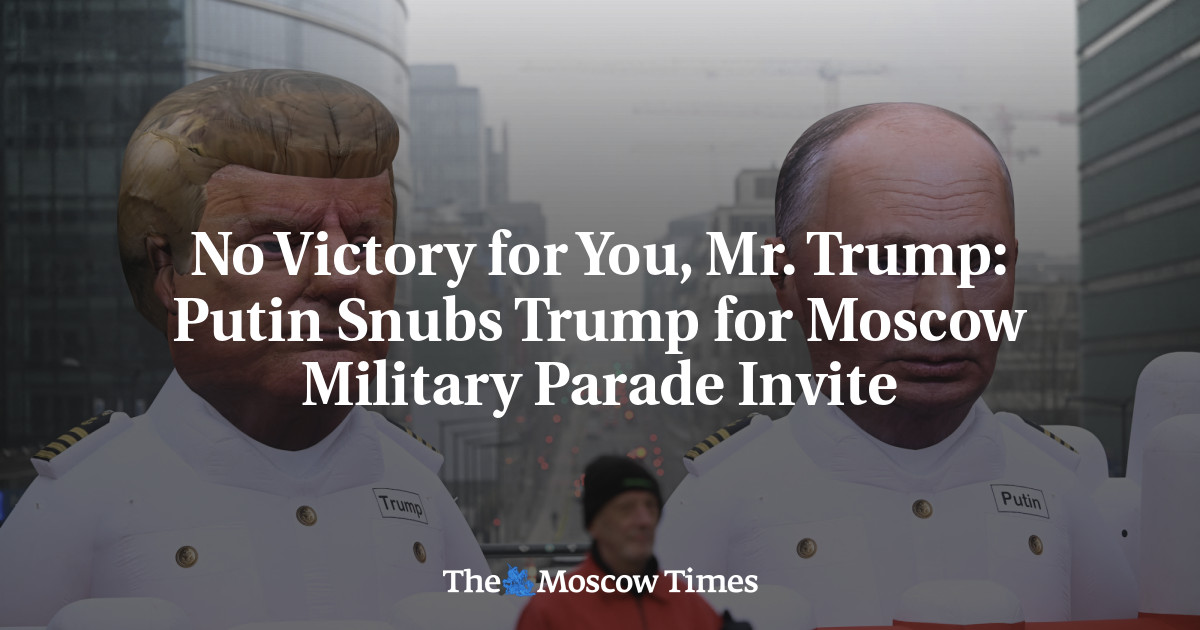
Putin did not invite Donald Trump to Moscow’s May 9 Victory Day parade, while the Kremlin said the event will not feature military vehicles for the first time in nearly two decades due to security concerns from Ukrainian drone attacks. Putin and Trump discussed Ukraine and Iran by phone, and Putin floated a May 9 ceasefire proposal that Zelensky said Ukraine would review but prefers to use for a longer-term truce. The piece is primarily geopolitical and ceremonial, with limited direct market impact.
The market-relevant signal is not the parade optics; it is that Moscow is trying to reframe the May 9 window as a de-escalation asset while simultaneously tightening physical security around the capital. That combination usually implies higher near-term spending on air defense, counter-drone systems, and logistics protection, which is supportive for Russian defense-adjacent procurement but more importantly signals persistent deterioration in the security environment that prolongs wartime capex and delays any normalization trade in the region.
The ceasefire language is best viewed as a diplomatic option on a very short fuse, not a durable pathway. If any pause materializes, it is likely to be hours-to-days and narrowly scoped around ceremonial risk management, which means the probability-weighted impact on energy, rates, and defense markets is low unless it evolves into a broader negotiation framework over the next several weeks. The real second-order effect is that even a symbolic pause could temporarily reduce headline risk premia in European assets, but that compression would likely reverse quickly if Ukraine treats it as tactical cover rather than a substantive concession.
For equities, the cleaner expression is in defense and cyber/security names rather than broad macro hedges. The upside is modest if the event remains contained, but the tail risk is that an unsuccessful security posture or a rejected ceasefire offer reinforces the need for higher replenishment spending across air defense, EW, and drone interception inventories in Europe and the U.S. over the next 2-4 quarters. The contrarian read is that the market may be underestimating how much repeated short ceasefire theatrics can desensitize risk assets; each failed pause reduces the odds of meaningful diplomatic repricing and makes the war a structural budget item instead of an event-driven trade.
AI-powered research, real-time alerts, and portfolio analytics for institutional investors.
Request DemoOverall Sentiment
neutral
Sentiment Score
-0.10
