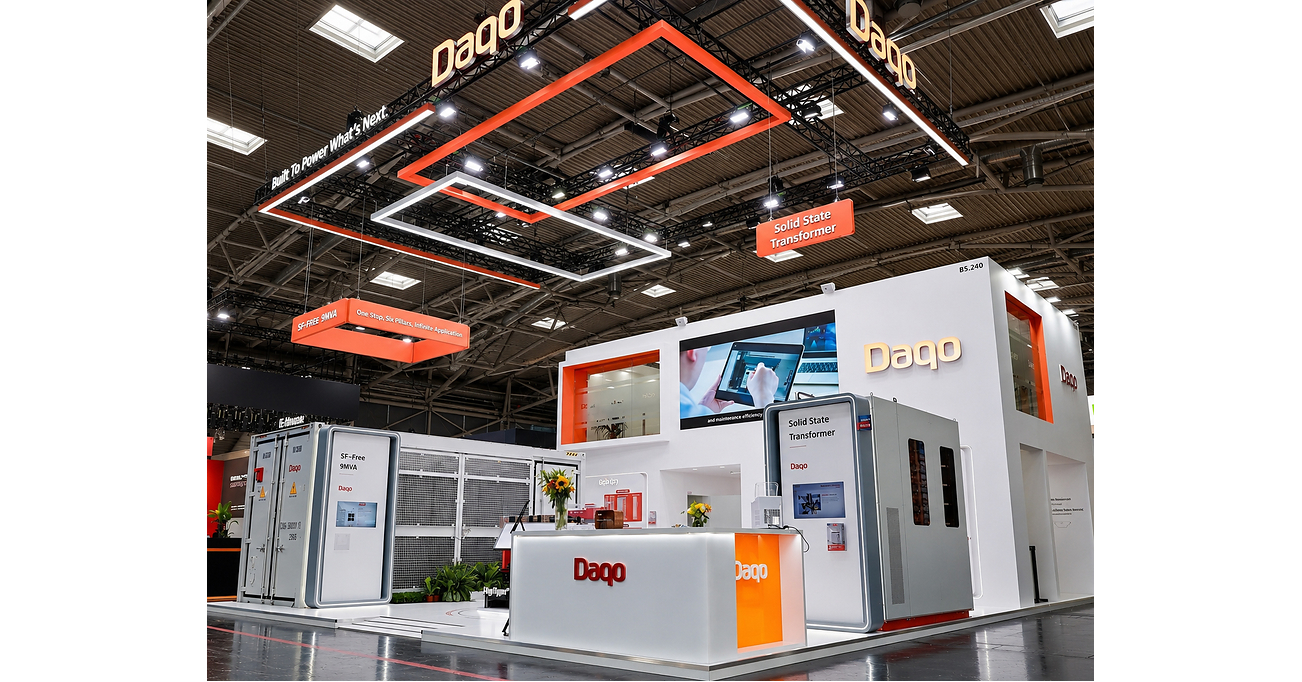
Daqo présente à The smarter E Europe 2026 des solutions de distribution et d’alimentation sans SF6 (cellules RMU « DQS Air » et RMU isolés à l’air/sans SF6) ainsi que des sous-stations PV et des systèmes BESS en conteneurs, visant des délais de raccordement au réseau plus courts. L’entreprise met aussi en avant DQMpower 2.0 pour centres de données (alimentation modulaire intégrant distribution BT/UPS et supervision qualité), et une technologie de transformateurs à semi-conducteurs orientée interaction flexible avec réseaux, charges et stockage DC. Le message est globalement positif sur la demande d’équipements plus sûrs et plus “verts”, avec impact boursier limité car il s’agit principalement d’une annonce produit/salon.
This reads more like a product-positioning signal than a hard earnings catalyst, so the market impact is likely to show up first in sentiment around European grid capex rather than in any one quarter’s numbers. The investable takeaway is that standardized, SF6-free, prefab electrical architectures are pushing procurement toward vendors that can bundle equipment, software, and service; that favors scaled platforms with certification breadth and after-sales reach, and it penalizes fragmented panel builders that live on customization and project execution fees.
The second-order winner set is broader than the company in the release: ABB, Schneider Electric, Eaton, and Vertiv sit closer to the demand pool that benefits from faster interconnection, data-center power density, and modular substations. If prefab adoption gains share, margin mix should improve for OEMs with repeatable designs, while EPCs and local integrators lose some pricing power because fewer interfaces means less room to monetize engineering complexity. The counterpoint is that this can also commoditize hardware faster than the market expects, so gross margin expansion may lag revenue growth if competition intensifies.
The real catalyst window is 1-3 quarters, not days: watch for EU utility tenders, backlog conversion, and whether SF6 replacement is being translated into booked orders rather than conference visibility. The thesis breaks if utility capex slips on rates/permitting, if non-SF6 solutions fail qualification, or if European local-content politics slow Chinese suppliers’ access. Over 6-18 months, the structural bull case is intact, but it is already well understood, so the trade is probably in the quality names that can self-fund growth rather than in the promotional story itself.
AI-powered research, real-time alerts, and portfolio analytics for institutional investors.
Request DemoOverall Sentiment
mildly positive
Sentiment Score
0.18
