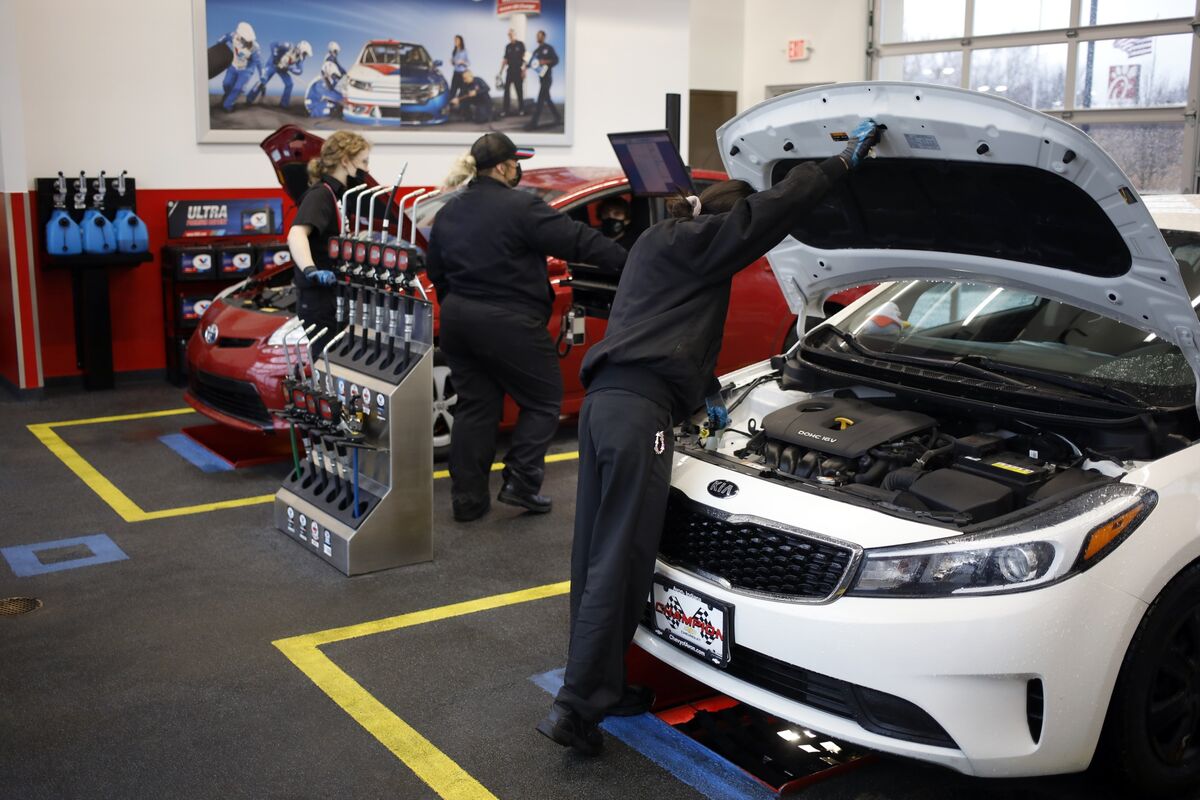
The Iran war is disrupting base oil supply chains, leaving broad industrial lubricants in very short supply with no clear easing ahead. The fallout is adding to already elevated gasoline and diesel prices, intensifying U.S. energy inflation and pressuring automotive maintenance and industrial sectors. The article points to a market-wide cost shock driven by geopolitics and commodity dislocations.
The immediate market implication is not just higher input costs, but a lagged margin squeeze across every business that cannot reprice fast enough. Base oils sit low in the P&L but high in operational criticality, so the pain shows up first in distributors, maintenance-heavy fleets, and industrial users before it reaches headline CPI. That creates a second-order inflation impulse: higher maintenance costs feed into trucking, construction, and manufacturing service rates with a 1-2 quarter lag, which is more persistent than a spot fuel spike.
The winners are likely upstream or vertically integrated players with flexible refining and blending capability, while the losers are niche lubricant blenders, independent auto service chains, and fleet operators locked into fixed-price contracts. If shortages persist, substitution will favor lower-grade or lower-performance formulations, which can raise equipment wear and downtime—an underappreciated earnings risk for industrial end-markets with high utilization. The broader equity read-through is bearish for consumer discretionary and transport margins even if headline energy equities benefit less directly.
Catalyst risk is asymmetric over months, not days: once inventories normalize lower, replenishment becomes self-reinforcing and price spikes can persist even if crude stabilizes. The reversal triggers would be a rapid diplomatic de-escalation, emergency export rerouting, or a sharp demand slowdown that destroys lubricant demand rather than easing supply. Near term, the biggest mistake is treating this as a temporary commodity blip; in specialty inputs, shortages often persist longer than the initial shock because formulation and qualification bottlenecks slow substitution.
The contrarian view is that the market may be underestimating margin pass-through in the auto aftermarket and fleet services, which can offset some of the cost pressure if consumers accept higher service prices. But the more likely error is assuming low-ticket maintenance is too small to matter; in aggregate, it is a broad tax on miles driven and machine uptime. That makes the inflation impulse broader and stickier than the initial oil headlines suggest.
AI-powered research, real-time alerts, and portfolio analytics for institutional investors.
Request DemoOverall Sentiment
strongly negative
Sentiment Score
-0.55
