Back to News
Market Impact: 0.08

SpaceX springs forward with another Starlink launch from California (video)

Technology & InnovationProduct LaunchesInfrastructure & DefenseTransportation & Logistics
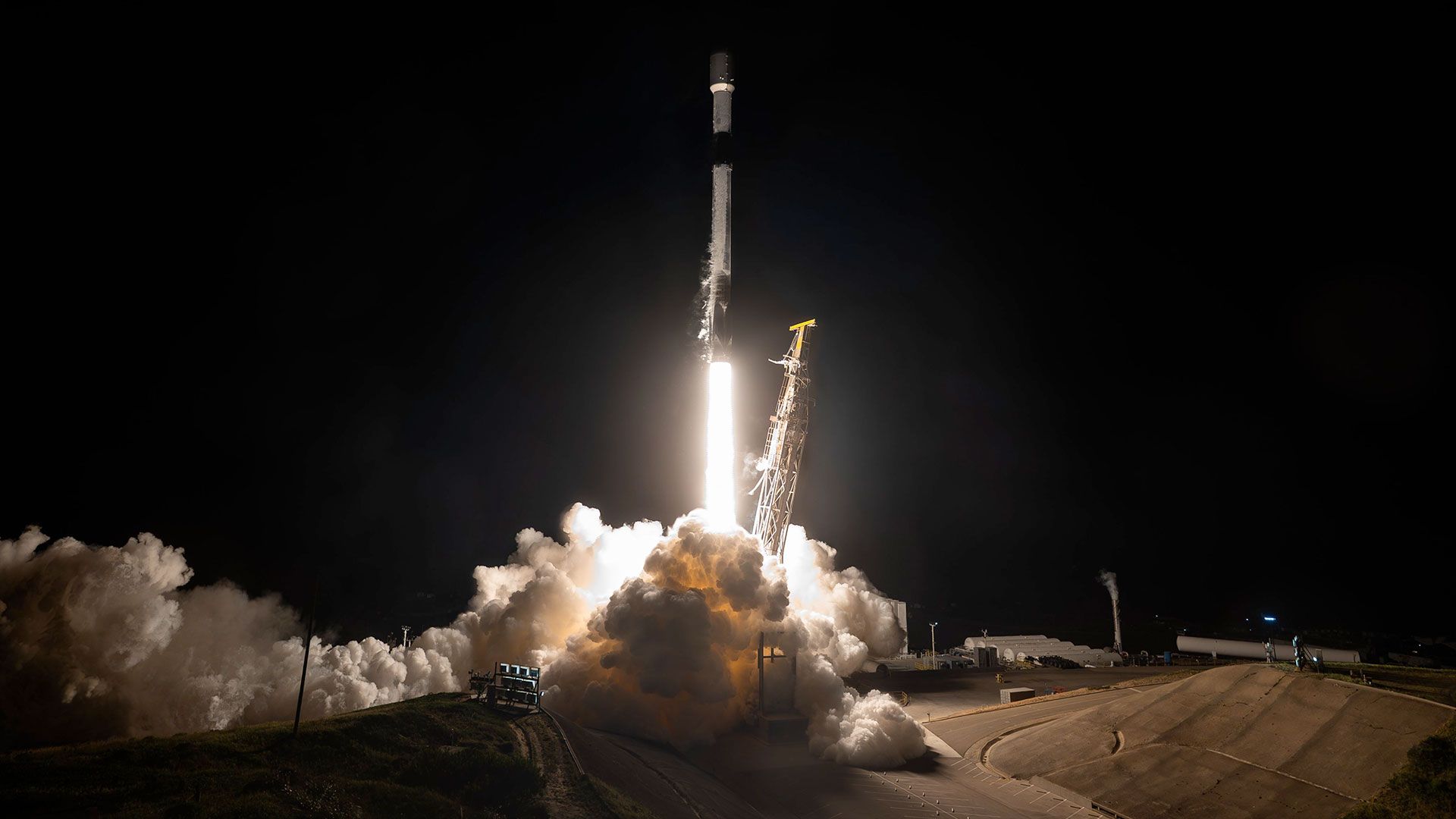
SpaceX springs forward with another Starlink launch from California (video)

SpaceX launched a Falcon 9 from Vandenberg at 7:00 a.m. EDT on March 8, successfully deploying 25 Starlink satellites (Group 17-18) and increasing the active Starlink fleet to 9,915. Booster 1097 completed its seventh flight and landed on the droneship 'Of Course I Still Love You'; the mission was SpaceX's 29th of the year and 639th overall.

Analysis

The continuing scale-up of LEO broadband networks is shifting economic value away from bespoke GEO ground infrastructure toward commodity RF front-ends and mass-produced user terminals. As unit economics for terminals improves, price elasticity of demand for consumer and mobility broadband increases, compressing ARPU for legacy satellite operators and forcing them to migrate to niche, higher-margin use cases. A less-visible second-order effect is rising operational friction from orbital density: collision avoidance, frequency coordination, and incremental insurance premiums are a growing line-item for all LEO operators and launch providers. Expect episodic regulatory windows and temporary launch slowdowns as national agencies tighten deconfliction rules—these are 3–18 month catalysts that can temporarily widen launch spreads and spike shorter-term insurance costs. Reusable-launch and mass-manufacturing efficiencies are creating winners in two categories: component suppliers that can scale silicon RF/phased-array production, and defense/ground-systems contractors that convert national resiliency budgets into procurement for terminals and gateway infrastructure. Conversely, GEO-focused service vendors and niche high-ARPUs incumbents face accelerating margin compression unless they pivot to specialized enterprise or government verticals within 6–24 months.

AllMind AI Terminal

AI-powered research, real-time alerts, and portfolio analytics for institutional investors.

Request Demo

Market Sentiment

Overall Sentiment

neutral

Sentiment Score

0.05

Key Decisions for Investors

  • Long QRVO (Qorvo) — buy shares or 12-month calls (e.g., 0.5–1.0x notional in calls). Rationale: RF/phased-array content is the bottleneck as LEO networks scale; expect revenue multiple expansion if design wins accumulate. Timeframe: 6–12 months. Risk/reward: target +30–50% vs downside -25% on cyclic semiconductor demand shock; hedge with 6-month put if concerned about macro.
  • Long LHX (L3Harris) — accumulate over 3–18 months via shares or 9–12 month calls. Rationale: ground station, gateway integration, and defense-spill procurement provide predictable revenue streams as governments prioritize resilient satellite comms. Risk/reward: target +20–35% over 12 months; downside -15–20% tied to budget execution or contract delays.
  • Short VSAT (Viasat) or buy 3–6 month puts as a hedge against LEO consumer/mobility erosion. Rationale: incumbents with GEO-heavy portfolios face ARPU/margin degradation absent rapid product pivot. Timeframe: 3–12 months. Risk/reward: asymmetric — a 20–30% move lower is plausible if competitive pressure accelerates; primary risk is successful enterprise repositioning or large contract wins that restore confidence.
  • Pair trade: Long QRVO / Short VSAT — size ~1:1 dollar exposure, rebalance monthly around regulatory or launch-cadence news. Rationale: captures hardware content share gains while hedging market/systematic risk. Timeframe: 3–12 months. Risk/reward: expected net positive if hardware adoption continues; monitor for semiconductor cycle risk and binary corporate events.