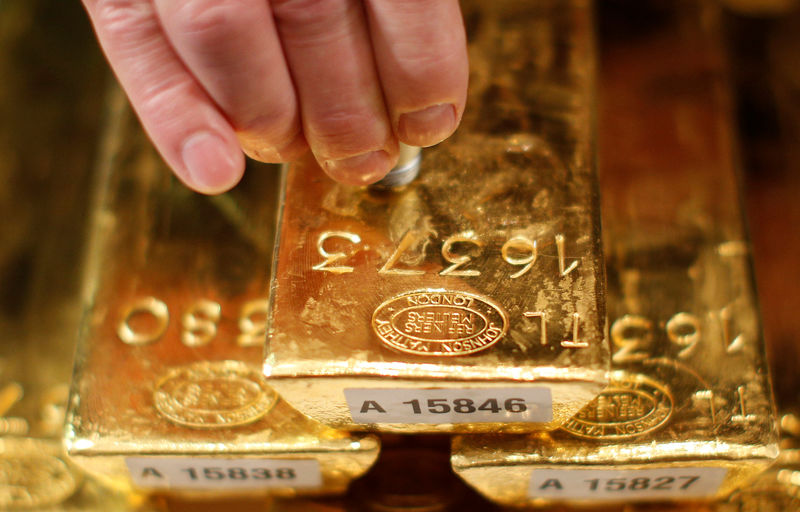
Gold was little changed at $4,336.90/oz, with U.S. August gold futures flat at $4,361.82/oz, as Iran and Israel halted strikes and eased some inflation concerns. Markets are now focused on Wednesday's U.S. CPI and Thursday's PPI for clues on the Fed path, after stronger payrolls data pushed expectations toward at least one rate hike this year. Oil pulled back after the truce, while silver rose 0.1% to $68.24/oz and platinum was flat at $1,760.60/oz.
The immediate beneficiary of de-escalation is not gold itself but rate-cut expectations: when headline war risk fades, the market can refocus on the growth/inflation mix, and that still argues for a higher real-yield regime if incoming data stay firm. That is structurally negative for non-yielding hedges and positive for the dollar/short-duration complex; the bigger tell is that gold has been unable to hold safe-haven gains even during a geopolitical shock, which suggests the dominant macro factor is still policy pricing rather than risk aversion.
Energy is the main second-order transmission channel. If crude keeps giving back the conflict premium, the next leg lower in inflation breakevens could be faster than consensus expects because energy is the most visible input feeding into consumer psychology, freight, and margin assumptions. That creates a short window where cyclical defensives like airlines, transports, chemicals, and retail can outperform if the truce holds for weeks, but the setup is fragile: any renewed strike cycle would likely reprice the whole curve within days, not months.
The contrarian view is that the market may be over-interpreting the ceasefire as durable while underestimating how much inflation is already embedded in wage and services momentum. If CPI/PPI are hot, gold can still drift lower even with lower oil because the rates impulse dominates; if CPI/PPI are soft, the truce matters more for crude than for bullion. In other words, gold is now a rates trade in disguise, not a geopolitics trade.
Tail risk is asymmetric: a failed truce would quickly restore the energy-inflation bid and punish duration-sensitive assets, while a clean de-escalation plus soft inflation prints could trigger a fast unwind in both oil and gold vol. The key timing is this week’s U.S. data; the next 2-3 sessions likely decide whether this is a temporary pause in safe-haven selling or the start of a broader reversal in the inflation-risk premium.
AI-powered research, real-time alerts, and portfolio analytics for institutional investors.
Request DemoOverall Sentiment
neutral
Sentiment Score
-0.05
