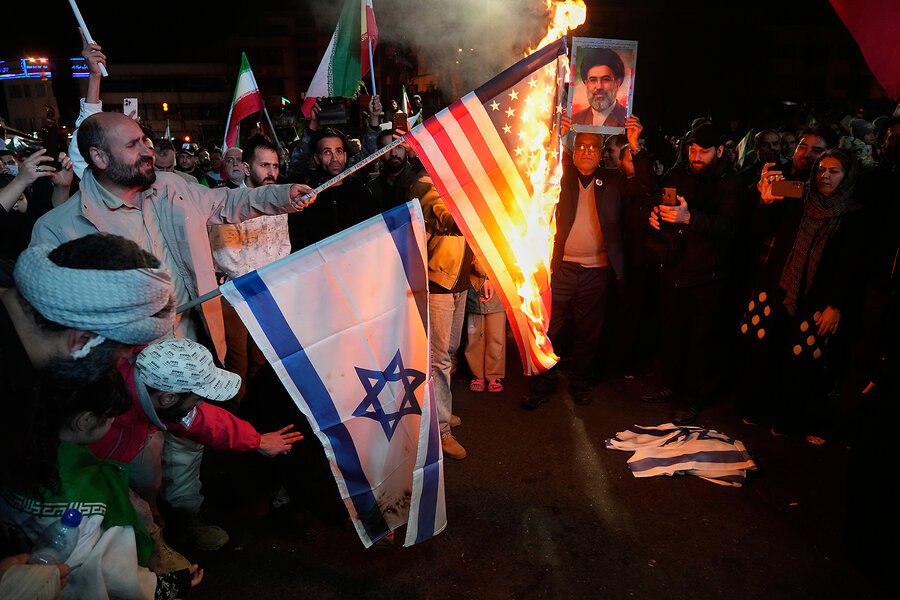
The article argues that Trump’s war with Iran has weakened perceptions of U.S. power, exposed strategic missteps, and increased uncertainty around global security and supply chains. The conflict has implications for the Strait of Hormuz, transatlantic alliances, and Asian geopolitics, while also highlighting the effectiveness of cheaper asymmetric warfare such as drones and missiles. Market risk is elevated because the war could disrupt global trade flows, energy logistics, and investor confidence in U.S. leadership.
The market implication is not just higher geopolitical risk premium; it is a credibility discount on US strategic commitments. That tends to bleed first into non-US risk assets that rely on steady American security guarantees—most notably European defense planning, Asian supply-chain capex, and EM external financing—because investors start pricing a higher probability of policy lurches, sanctions volatility, and emergency shipping disruptions. The second-order effect is a stronger case for regional self-insurance: more defense spend in Europe and Asia, more redundancy in logistics, and more FX hedging demand in countries exposed to Gulf energy flows.
The most immediate asset-channel is not oil beta alone but shipping, industrial inputs, and EM current accounts. Even if the Strait remains technically open, the mere demonstration that a single chokepoint can be weaponized forces insurers, freight forwarders, and manufacturers to price persistent route friction; that is a months-long margin headwind for import-dependent economies and a tailwind for naval-capability, missile-defense, cyber, and satellite firms. For US equities, the risk is that the administration’s preference for unilateral force lifts defense names tactically while simultaneously compressing multiples in sectors exposed to trade disruption, weaker consumer sentiment, and higher input-cost uncertainty.
The contrarian read is that the reputational damage may be overstated if the market focuses only on optics. If policymakers conclude the episode actually forces adversaries back into negotiations, then risk premia can fade quickly over a 4-8 week window, especially if energy transit normalizes and any headline deal resembles a verifiable pause rather than a lasting settlement. But absent a durable diplomatic off-ramp, the larger lesson for investors is that US policy uncertainty itself has become a tradable macro factor, not just a political headline.
The cleanest tactical expression is to own beneficiaries of rearmament and resilience while fading the most exposed cyclicals. The better medium-term trade is a pair that captures persistent security re-pricing without making a big directional oil call: long defense/infrastructure names with backlog visibility, short shippers/import-sensitive industrials, and keep optionality on energy only as a hedge against a renewed choke-point event. For EM, the risk is particularly acute for countries with large fuel-import bills and thin reserves, where one more disruption can become a balance-of-payments problem rather than a temporary growth slowdown.
AI-powered research, real-time alerts, and portfolio analytics for institutional investors.
Request TrialOverall Sentiment
mildly negative
Sentiment Score
-0.35
