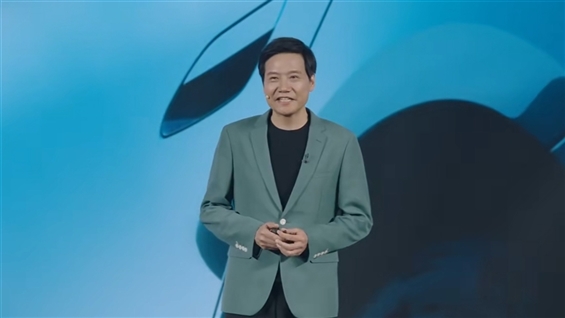
Sheikh Khaled bin Mohamed bin Zayed Al Nahyan met with leaders of major Chinese firms, including Xiaomi founder Lei Jun, and said the UAE and China will deepen cooperation across energy, tech, investment and renewable energy. The article signals ongoing UAE-China strategic ties rather than any new transaction or earnings development. A separate note said Spain's prime minister also visited Xiaomi's headquarters this week.
The strategic signal is less about a single company and more about where China wants to source “trusted” industrial capacity outside the West. UAE engagement with leading Chinese tech firms suggests a channel for capital, distribution, and deployment that is politically cleaner than Europe and less encumbered than US markets; that should favor firms with exportable hardware, enterprise software, and onshore/offshore manufacturing flexibility. The second-order effect is that Gulf capital could increasingly act as a demand-stabilizer for Chinese tech vendors facing uneven domestic consumption.
For hardware names with global consumer exposure, the benefit is real but likely underestimated on the supply-chain side rather than on near-term revenue. If Gulf sovereign-linked procurement and public-private partnerships broaden, it can support component demand, localization of assembly, and AI/IoT infrastructure buildout over 6-18 months; the catch is that margin expansion may be limited because these deals often come with pricing pressure and policy-driven local content requirements. That means the best relative winners are firms with strong ecosystem lock-in and high software/services attach, not just low-cost device makers.
The Europe angle is more important than it looks: a high-profile Spanish visit to Xiaomi implies the company is still trying to normalize its brand and distribution path in the EU despite geopolitical scrutiny. If European channel partners interpret this as a green light for broader consumer acceptance, Xiaomi could gain shelf space and premiumization, but any tightening of EU-China tech policy would quickly cap that upside. The market may be overreading “diplomatic visibility” as durable earnings power; the more durable signal is access to diversified end markets, which reduces single-region demand risk rather than necessarily improving profitability.
Contrarian view: consensus may be too focused on headline geopolitics and not enough on the practical constraint that China-to-Gulf tech cooperation still runs through US-controlled semiconductor, cloud, and software chokepoints. Without a credible path to stack autonomy, these partnerships improve narrative and optionality more than they change intrinsic value. The cleanest trade is therefore relative-value, not outright beta: own firms with genuine overseas monetization pathways and short those whose earnings depend on China-only demand inflection.
AI-powered research, real-time alerts, and portfolio analytics for institutional investors.
Request TrialOverall Sentiment
neutral
Sentiment Score
0.15
