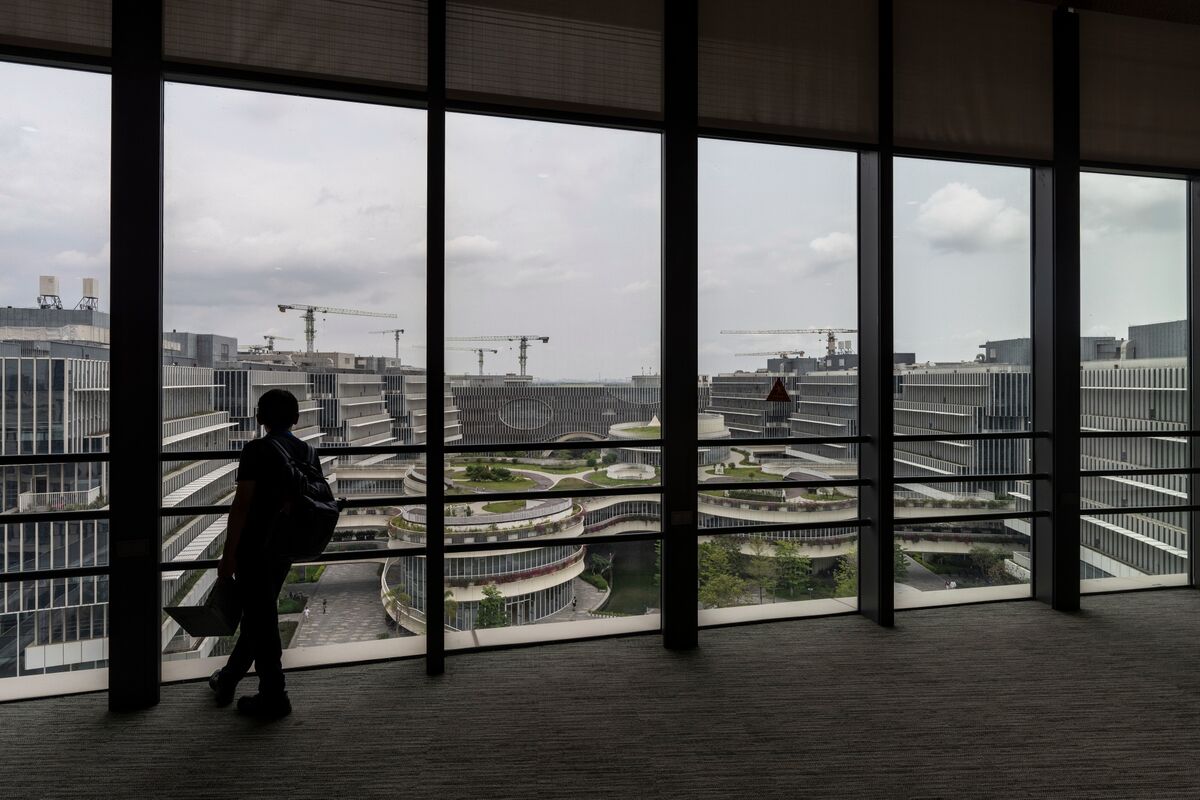
Power brokers in Guangdong are moving to cancel or default on long-term supply contracts as war-driven spot power prices surge and compress margins. The forced shift from contracted supply to the higher-priced spot market raises counterparty risk for factories and signals stress in one of China’s key industrial regions. The issue is tied to geopolitics and energy-price volatility and could pressure broader power-market reliability if defaults spread.
The immediate losers are not just the power brokers, but any factory whose electricity procurement was implicitly outsourced to a thin-margin intermediary. When spot prices rip higher, the broker model becomes a short-volatility trade with no natural hedge: they are forced to cover fixed obligations at variable costs, which can quickly turn a manageable spread into a solvency event. The second-order effect is that industrial customers will start self-insuring by shortening contract tenors, demanding pass-through pricing, or re-intermediating through state-linked suppliers, which compresses broker liquidity even if prices later mean-revert.
The broader risk is a localized credit shock masquerading as an energy shock. If brokers default, the contagion channel is trade finance and working capital, not just power availability: factories may lose access to cheap credit lines tied to utility contracts, causing production interruptions that lag the spot spike by 1-3 months. That argues for looking past headline energy moves and focusing on downstream EM industrials with tight gross margins and limited pass-through ability, especially exporters competing on price rather than differentiation.
The contrarian view is that the dislocation may be self-correcting faster than consensus expects if brokers unwind en masse and factories cut load. That would pressure spot prices lower within days to weeks, creating a violent mean reversion trade rather than a prolonged supercycle. The key question is whether the war premium persists long enough to force structural renegotiation; if not, the best short is not energy itself, but the broker ecosystem and any beneficiary of temporary scarcity pricing.
For investors, the highest-conviction expression is a short on Chinese power-market intermediaries or platform-like utilities with merchant exposure, paired against regulated/contracted utilities if accessible, for a 1-3 month window. If direct names are unavailable, use bearish exposure to China industrial cyclicals with poor pricing power and high power intensity, since margin compression should show up before volume losses. Risk/reward improves on any further spike in spot prices, but the trade should be sized for gap risk because policy intervention could abruptly cap prices or force contract support.
AI-powered research, real-time alerts, and portfolio analytics for institutional investors.
Request DemoOverall Sentiment
strongly negative
Sentiment Score
-0.55
