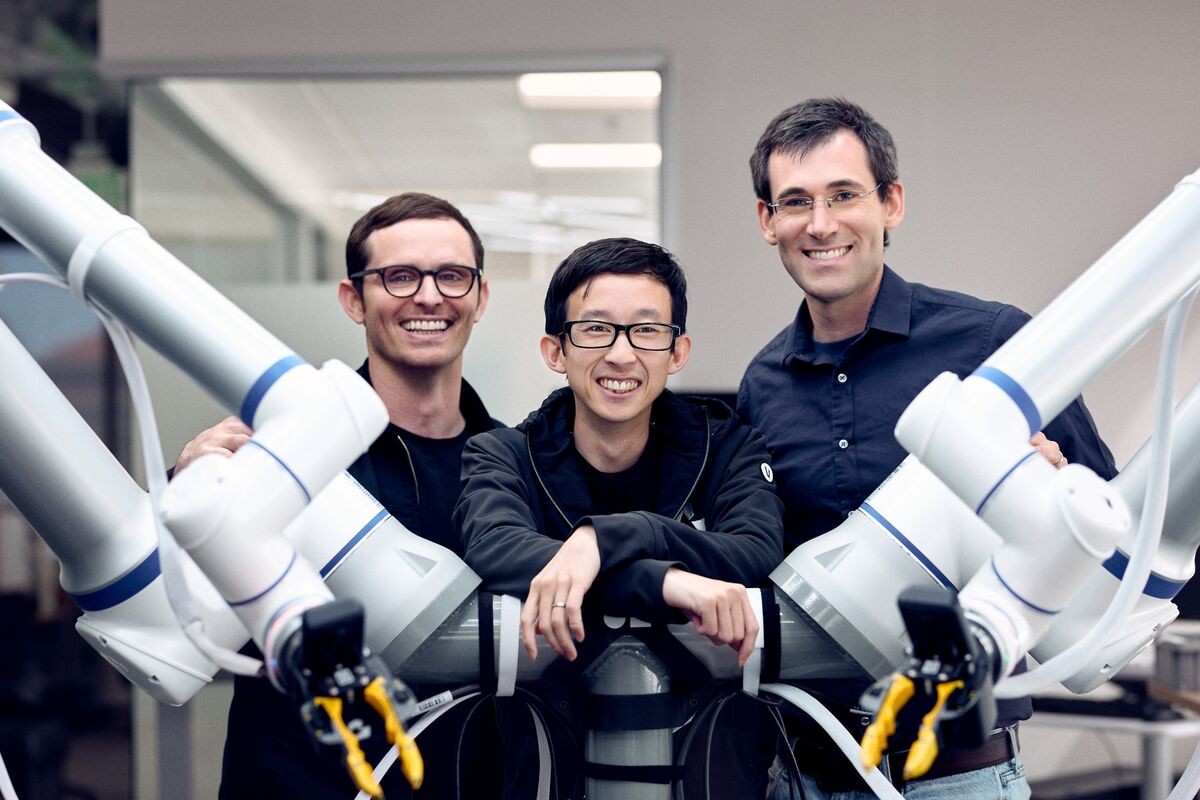
Generalist AI raised $400 million in a new funding round, valuing the robotics startup at $2 billion including the fresh capital. The round was led by Radical Ventures with participation from 8VC, Union Square Ventures, Hanabi Capital, Nvidia Corp., and Bezos Expeditions. The financing highlights continued investor appetite for AI-enabled robotics, though the direct market impact is likely limited to the private tech sector.
This is less a direct revenue signal for NVDA than a validation of the capex stack that ultimately feeds its ecosystem. The important second-order effect is not the startup itself, but the willingness of capital to fund longer-duration robotics model development despite still-immature unit economics; that supports continued demand for training infrastructure, simulation, and edge deployment tooling over the next 12-24 months. The market should view this as incremental evidence that physical AI remains one of the few adjacent verticals capable of extending AI spend beyond chat/software saturation.
The competitive implication is that robotics winners will likely be determined by access to data, deployment channels, and compute efficiency rather than raw model quality. That favors firms with closed-loop distribution and manufacturing relationships, while pressuring legacy industrial automation names whose software stacks are optimized for deterministic tasks, not adaptive behavior. It also creates a potential squeeze on smaller robotics startups: more funding means higher expectations, but commercialization cycles are still measured in years, so multiple compression is a real risk if the path to recurring revenue is slower than the market is currently underwriting.
For NVDA, the near-term equity impact is modest, but the signal matters because robotics is one of the few narratives that can justify a longer terminal growth period for accelerator demand. The contrarian concern is that the market is extrapolating funding into adoption too quickly: most of these models will need expensive real-world iteration, and any safety/regulatory incident could freeze deployments for 1-2 quarters. If that happens, the winners will likely be the infrastructure providers with diversified exposure, while pure-play robotics names could de-rate sharply on delayed commercialization.
The best setup is to treat this as a medium-term thematic confirmation rather than a catalyst trade. Near term, the trade is in names with leverage to robotics capex and inference demand, while fading speculative beneficiaries whose valuation already discounts broad deployment. Over 6-18 months, the key variable is whether enterprise and industrial buyers convert pilot spending into scaled fleet orders; if they do, the whole physical AI basket gets a second leg up.
AI-powered research, real-time alerts, and portfolio analytics for institutional investors.
Request DemoOverall Sentiment
moderately positive
Sentiment Score
0.62
Ticker Sentiment
