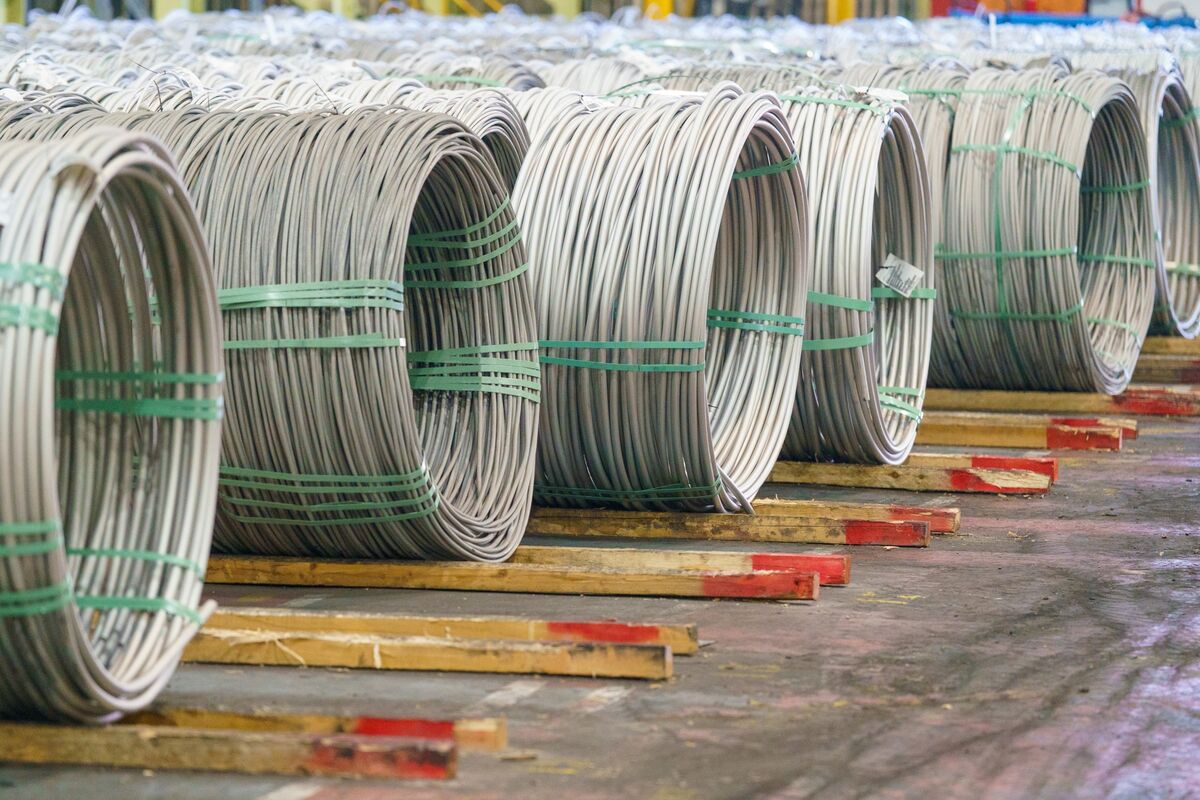
The London Metal Exchange plans to launch a hot rolled coil steel futures contract in October, giving global investors exposure to Shanghai prices via settlement against the Shanghai Futures Exchange’s monthly U.S. dollar HRC benchmark. The move further internationalizes Chinese commodities futures and could improve price discovery and hedging access in steel markets. The article is mostly structural and market-architecture focused rather than a direct price catalyst.
This is less a direct steel market catalyst than a monetization step for China’s price discovery regime. If Shanghai-settled steel pricing becomes easier for non-Chinese allocators to express, the marginal impact is likely on hedging behavior first: producers, traders, and commodity funds can now warehouse China policy risk without needing onshore access, which should compress basis dislocations between Asian steel and globally traded ferrous contracts over time.
The biggest second-order winner is likely the liquidity stack around Chinese industrials rather than steelmakers themselves. More offshore participation can deepen the feedback loop between Chinese domestic policy signals and global inventory positioning, which may amplify moves around stimulus, property-support headlines, and export controls; that creates more volatility for miners and steel distributors even if spot demand is unchanged.
The contrarian read is that internationalization does not automatically mean meaningful open interest. If settlement is tied to a monthly USD benchmark that remains heavily influenced by Chinese domestic conditions, global users may treat it as a hedging instrument only during stress windows, leaving adoption modest until a catalyst like trade friction, Chinese stimulus, or a sharp restocking cycle makes basis risk worth paying for. Timeline-wise, expect the real test in months, not days: initial launch optics are supportive, but liquidity and credibility will be determined by one or two volatile macro episodes.
From a risk standpoint, the main failure mode is fragmentation: if the new contract trades thinly, it can widen rather than narrow pricing inefficiencies and increase hedging slippage for non-Asian participants. Conversely, if it gains traction, it should improve the transmittion of China steel weakness into global ferrous sentiment faster than before, pressuring high-cost producers and traders with inventory exposure.
AI-powered research, real-time alerts, and portfolio analytics for institutional investors.
Request DemoOverall Sentiment
neutral
Sentiment Score
0.15
