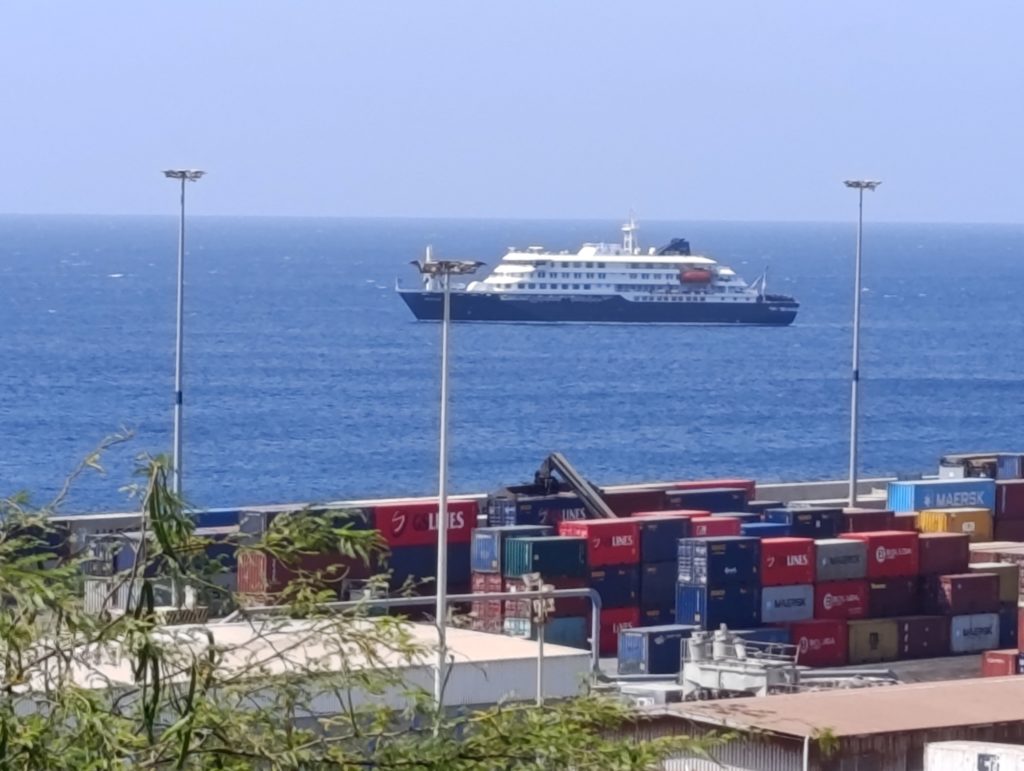
Three people have died and about 150 passengers remain quarantined on a cruise ship off West Africa as the WHO investigates a suspected hantavirus outbreak, including two confirmed and five suspected cases. The agency believes there may be a rare instance of human-to-human transmission, though the public risk remains low. The article is primarily public-health focused and is unlikely to have broad market impact beyond travel and cruise-related sentiment.
This is not a broad pandemic event; it is a narrow, high-visibility biosafety incident with the potential to create a short-lived but real demand shock in cruise, long-haul tourism, and certain African travel corridors. The first-order market impact is reputational, but the second-order effect is operational: one confirmed human-to-human transmission case, even if rare, pushes operators to tighten boarding protocols, medical screening, and quarantine procedures, which can lift turnaround times and raise per-passenger costs across the sector.
The asymmetric risk is to names with the most elastic discretionary demand and the weakest ability to absorb a perception hit. Cruise lines, online travel agencies, and select airline routes tied to safari/expedition travel are the most exposed over the next 2-8 weeks, while the broader transportation complex should see minimal fundamental bleed-through unless media coverage sustains a “new outbreak” narrative. A more interesting second-order beneficiary is healthcare logistics and diagnostics, since any escalation usually drives incremental spend on rapid testing, medical staffing, and onboard containment services.
The contrarian point: the market may over-penalize consumer travel because hantavirus is not structurally transmissible like flu/COVID, so the probability-weighted downside is mostly sentiment-driven rather than a true capacity constraint. If public messaging stays disciplined and no further clustered cases appear over the next 7-14 days, the trade can mean-revert quickly. The real tail risk is not a global spread story but a second vessel or airport-linked case that validates wider operational exposure and extends the headline cycle into peak booking season.
AI-powered research, real-time alerts, and portfolio analytics for institutional investors.
Overall Sentiment
moderately negative
Sentiment Score
-0.42
