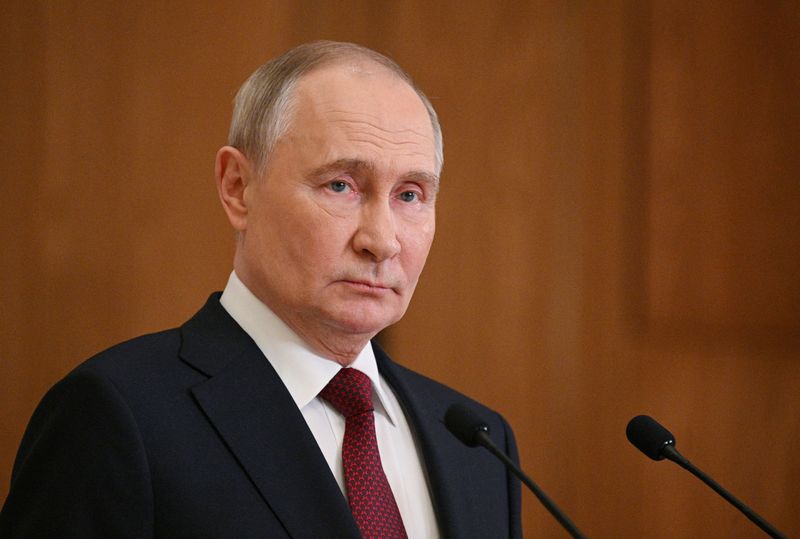
Putin publicly reaffirmed Moscow’s support for Iran, but Iranian reports that Russia has provided "little real help" raise geopolitical uncertainty. Japan is considering minesweeping in the Strait of Hormuz, signaling elevated risks to shipping lanes and likely upward pressure on maritime insurance premiums and regional supply-chain costs. A continued Russian reluctance to provide a robust "northern buffer" would increase vulnerability to sanctions-driven disruptions and could strain energy flows and trade stability in the Middle East.
A regional minesweeping operation that stabilizes transits through the Strait of Hormuz would compress recently elevated maritime insurance and spot freight premia within weeks, reversing a near-term cost shock for Asian hardware assemblers. Historically, comparable security improvements drop marine insurance surcharges by ~15-30% and reduce container spot rates by 10-25% inside 1-2 months; that flow-through shortens component lead times (8→12+ weeks back toward baseline) and restores gross margin dynamics for server OEMs.
For AI-server specialists, demand is structurally inelastic but margin is semi-elastic to logistics cost and component lead times; that creates asymmetric outcomes over 3–12 months — sustained shipping disruption trims realized margins by mid-teens, while normalization allows a >2x earnings re-rate if ASPs stay elevated. Mobile-ad names face a different mechanism: short-term ad-budget cuts from macro uncertainty can depress CPMs by 10-20% over 1–3 quarters, but programmatic share gains and cheaper customer acquisition during a correction offer a 12–18 month recovery path.
Key catalysts to watch are: (1) signs of coordinated minesweeping success (insurance price indices and spot freight down >15% within 30 days), (2) any expansion of conflict or state-backed convoy protection that prolongs disruption for months, and (3) a rapid pivot by insurers or shippers re-routing away from Suez/MENA that would lock in higher structural costs. Contrarian angle: the market may be over-penalizing AI-capex exposed names on headline geopolitics — a short-lived stabilization in sea lanes produces a quick earnings upside while consensus waits for protracted dislocation.
AI-powered research, real-time alerts, and portfolio analytics for institutional investors.
Overall Sentiment
mildly negative
Sentiment Score
-0.25
Ticker Sentiment
