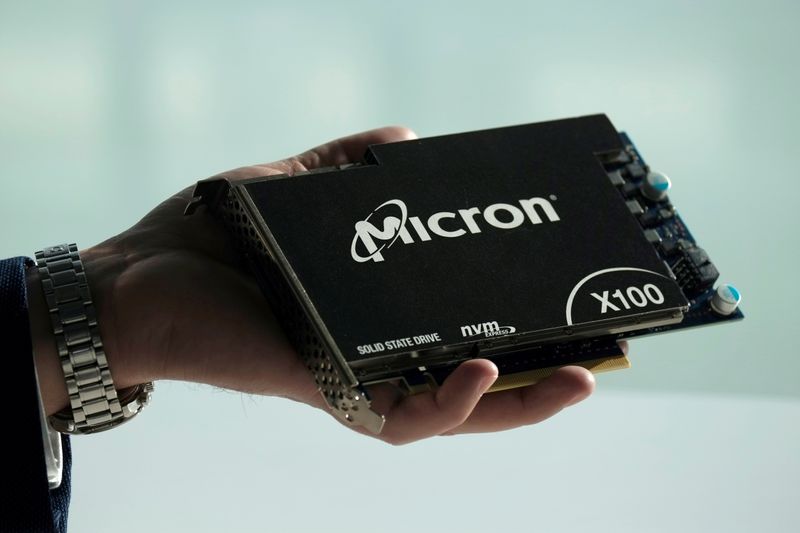
TD Cowen raised Micron’s price target to $660 from $550 and sees May/August quarter EPS at $23 and $27, about 20% and 18% above consensus. The firm also highlighted a long-term gross margin framework around 60% at the floor and the high-80s at the ceiling, while noting near-term headwinds in the second half of the year as margins normalize. Separately, the article cites additional bullish analyst coverage and Micron’s push for tighter U.S. export restrictions on Chinese chip equipment under the proposed MATCH Act.
The key read-through is that the market is no longer valuing MU on the next quarter; it is pricing the shape of the memory cycle several years out. That makes this a duration trade on AI memory scarcity, not a simple earnings beat story. If long-term supply agreements are indeed anchoring margins, the biggest upside is not from higher near-term EPS but from a lower probability of the classic boom-bust derating that usually arrives once the market starts to fear peak margins.
The second-order effect is that a sustained AI memory upcycle tends to crowd capital into the whole HBM/DRAM supply chain, but the winners are not equal. Equipment, substrates, and packaging names should remain supported as long as customers keep signing multi-quarter capacity commitments; however, any hint that AI demand is being front-loaded rather than structurally expanding would hit second-tier semicap harder than MU itself because their order books are more levered to incremental wafer starts. NVDA is the cleaner sentiment proxy on the downside: if AI software expectations keep getting questioned, memory names can still outperform semis because memory demand can be supported by server refresh and inventory rebuilding even when accelerator multiples compress.
The contrarian point is that the crowd may be underestimating how much of this move is already a margin-normalization bet rather than an outright growth bet. At these levels, MU can still work if the market believes 2027 earnings are sticky, but the risk is a fast reset if spot pricing and contract tone signal that the high-80s margin ceiling is aspirational rather than base case. That reversal risk is most acute over the next 1-2 earnings prints, where guidance credibility matters more than headline EPS beats.
AI-powered research, real-time alerts, and portfolio analytics for institutional investors.
Request DemoOverall Sentiment
mildly positive
Sentiment Score
0.35
Ticker Sentiment
