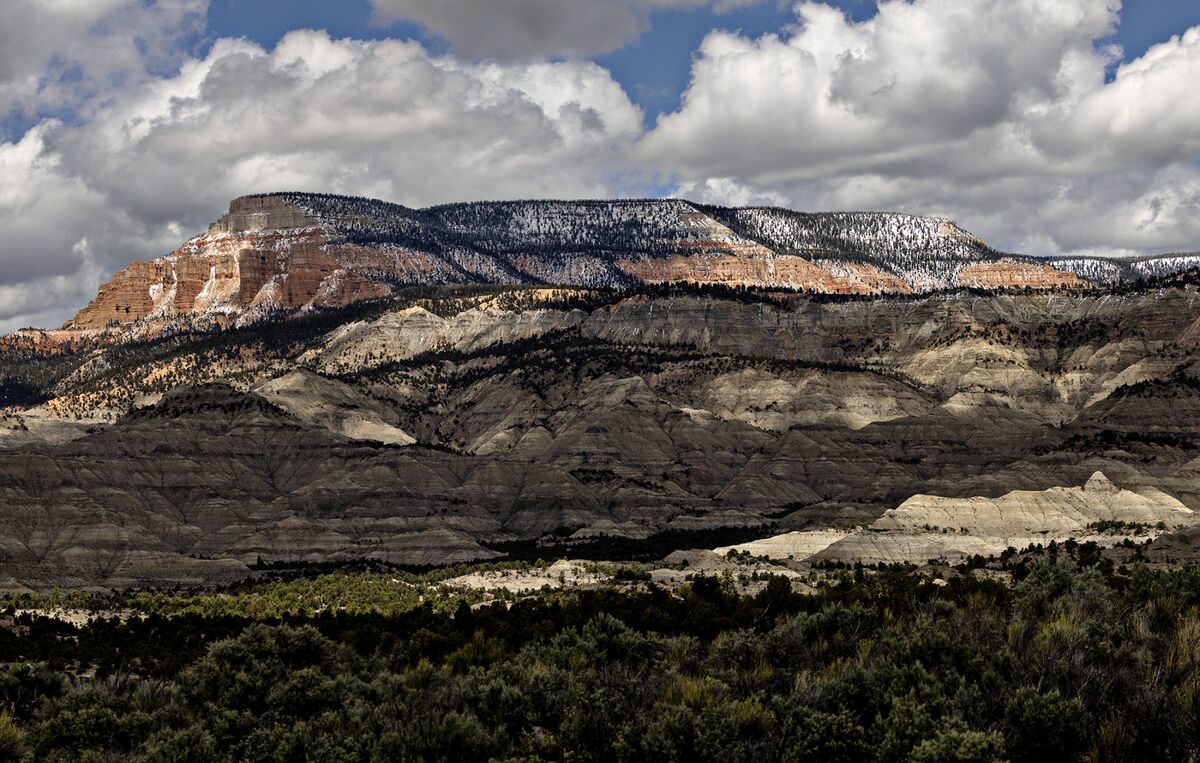
The article highlights a policy fight over federal public lands in Utah, with the Trump administration preparing to move the US Forest Service to the state and potentially expand state and local control over land use. Garfield County and local ranching interests are pushing for more grazing, logging, and other industry uses on land currently under federal protection since the 1996 Grand Staircase-Escalante National Monument designation. The issue is primarily a political and regulatory dispute with limited immediate market impact, though it could affect tourism and resource-use policy in the region.
The market implication is not the road itself, but the legal precedent: if state and county actors can expand de facto control over federally managed land, the value stack shifts away from conservation economics and toward extraction optionality. That creates a second-order bullish setup for regional operators with leases, permits, or adjacent mineral rights in the Intermountain West, while pressuring outdoor recreation, hospitality, and conservation-oriented land trusts that rely on stable access rules and protected status.
The key catalyst is administrative rather than judicial, so the first move may come in the form of permitting cadence, enforcement discretion, or budget reallocation rather than a clean statutory change. That means the tradeable window is likely months, not days: local headlines can re-rate sentiment quickly, but durable asset impacts require either a formal transfer of authority or precedent-setting litigation outcomes. The real tail risk is that a broader federal-state compromise becomes a template for other public land corridors, expanding beyond Utah and raising the probability of incremental approvals for grazing, logging, road access, and utility buildouts.
Consensus likely underestimates how little direct acreage matters versus control of access points and infrastructure chokepoints. Even if the land remains federally owned, ownership of the “gate” can create economic rents for counties and private operators, especially where tourism and extraction compete for the same landscape. The more interesting contrarian point is that this is not just a resource trade; it is also a governance trade that could reduce regulatory uncertainty for infrastructure-rights-of-way, benefiting select utilities, transmission developers, and midstream names with western expansion plans.
The biggest reversal risk is litigation: a preliminary injunction or adverse ruling would likely unwind any re-rating in local extraction and infrastructure beneficiaries within weeks. Politically, a change in federal administration would also slow or reverse the trend on a 6-18 month horizon, so the exposure should be treated as event-driven rather than structural until actual rule changes are enacted.
AI-powered research, real-time alerts, and portfolio analytics for institutional investors.
Request DemoOverall Sentiment
neutral
Sentiment Score
-0.05
