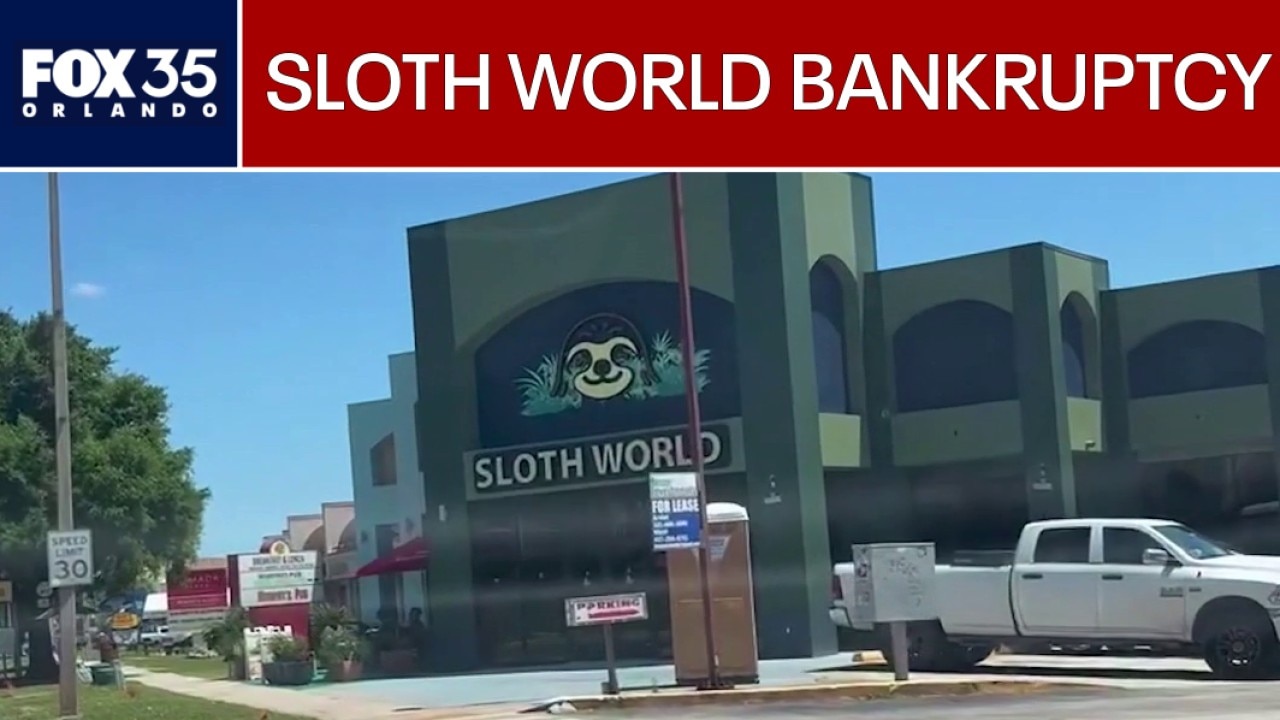
Sloth World Orlando’s owner said he plans to file for bankruptcy protection and will no longer open the attraction, citing no other options after the sloth population was transferred to the Central Florida Zoo. The zoo has taken temporary ownership of 13 sloths, including one pregnant animal, and will quarantine and assess them for at least 30 days before seeking long-term AZA-accredited placements. The news is materially negative for the business, but the broader market impact is limited.
This is not just a one-off operating mishap; it is a balance-sheet event that likely forces a full wind-down rather than a restart. Once an animal-focused concept loses regulatory credibility and cannot demonstrate continuity of care, the asset base becomes highly illiquid: the real value is in licenses, animals, and reputational salvage, not the physical venue. That typically means creditors recover through asset transfers and controlled placement rather than any meaningful equity value, which is negative for the broader niche-attraction model.
The nearest economic winners are the receiving accredited zoo operators and vendors that can absorb displaced animals and any associated care contracts. There is also a second-order benefit to established tourism operators in Central Florida: negative press around an unsafe or unstable animal attraction raises the hurdle rate for speculative experiential concepts, pushing visitor spend toward incumbent parks and trusted institutions. For mall landlords and small-format entertainment REIT tenants, this is another data point that novelty attractions can fail abruptly when execution and compliance risk collide.
The main risk is that the damage spreads beyond the operator into litigation, permitting, and financing conditions for similar concepts over the next 3-12 months. If any animal welfare or disclosure claims escalate, bankruptcy may only be the start; legal costs and settlement uncertainty could suppress any residual recovery. Conversely, the contrarian view is that the closure may actually improve the economics of the surviving ecosystem by clearing out a weak competitor and shifting demand toward premium, regulated experiences rather than depressing the entire category.
For public markets, the cleanest expression is not a direct single-name short but a relative-value tilt away from small-format experiential operators and toward high-quality zoo/theme-park operators with strong balance sheets. This is a small absolute event, but it is a useful signal on governance: concepts that depend on unique animals, permitting, and public trust can reprice to zero very quickly when operating risk becomes visible. The trade is about avoiding downside blowups, not chasing a large headline-driven move.
AI-powered research, real-time alerts, and portfolio analytics for institutional investors.
Request DemoOverall Sentiment
strongly negative
Sentiment Score
-0.82
