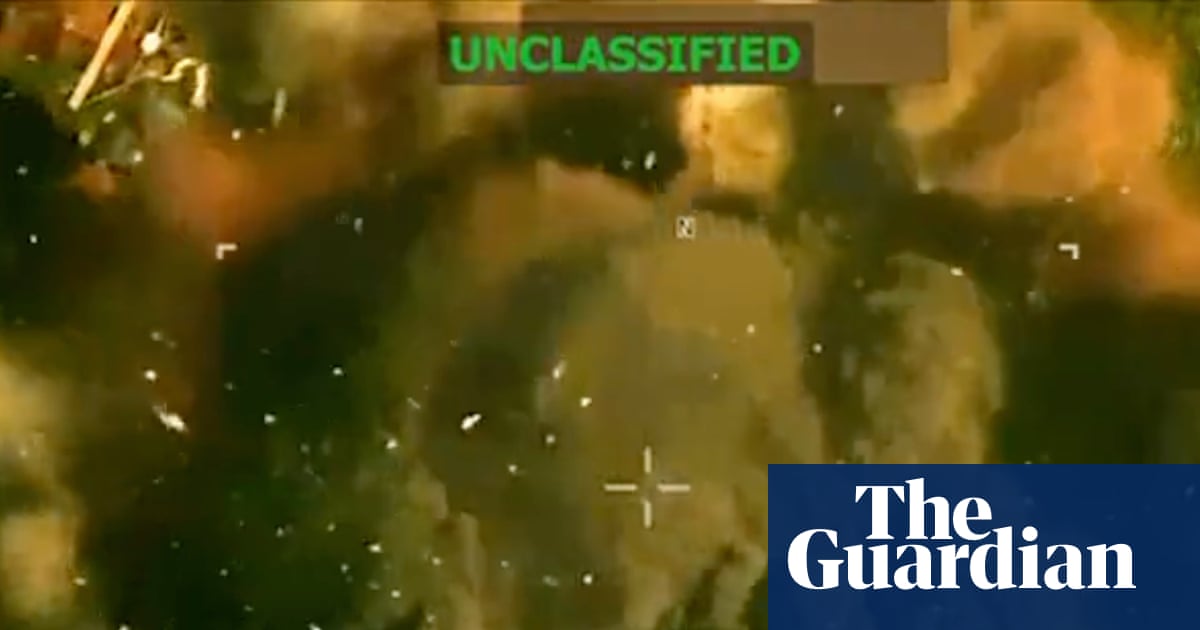
The US says it killed Hector Rusthenford Guerrero Flores, leader of Tren de Aragua, in a coordinated strike with Venezuela, and Venezuela confirmed he was neutralized during a joint operation. The article also highlights prior US terrorism charges, a $5M reward, and Trump’s use of the announcement to attack Biden and immigration policy. The event is geopolitically significant but does not directly imply a broad market move.
The market read-through is less about the gang itself than about how far the administration is willing to blur counter-narcotics, immigration, and election messaging into one national-security regime. That raises the probability of additional cross-border strikes, sanctions, and enforcement actions that create intermittent headline risk for Mexico-, Colombia-, and Venezuela-exposed assets, even if the direct economic channel is small. The bigger second-order effect is a higher political premium on anything tied to border security, defense procurement, surveillance, and detention capacity.
For EM, the key issue is not the event but the precedent: if Washington is willing to coordinate lethal action with Caracas while publicly escalating rhetoric, then policy volatility around Venezuela can remain high even when tactical de-escalation appears possible. That tends to keep a ceiling on risk appetite for sovereign and quasi-sovereign credits, because the market cannot cleanly separate human-rights optics, oil diplomacy, and security cooperation. Energy and shipping exposures near the Caribbean also face episodic disruption risk if enforcement broadens to maritime interdiction.
The contrarian angle is that this is likely more useful for domestic political positioning than for durable security outcomes. If the administration needs recurring visible wins, the probability rises that future actions will be symbolic and episodic rather than part of a sustained campaign, which means the initial market reaction may overstate the persistence of policy change. That makes the best trades those that monetize volatility and headline dispersion, not outright directional bets on a long conflict arc.
Short-term tail risk is a misfire, civilian casualty, or conflicting narration from Caracas, which could reverse any temporary diplomatic benefit within days and spike EM risk premia. Over a 1-3 month horizon, the more important catalyst is whether this becomes a template for broader operations or remains a one-off; if broader, expect a step-up in sanctions and border-related defense spending rhetoric. If it remains isolated, the trade fades quickly and the main beneficiary becomes the political narrative rather than any asset class.
AI-powered research, real-time alerts, and portfolio analytics for institutional investors.
Request DemoOverall Sentiment
neutral
Sentiment Score
-0.10
