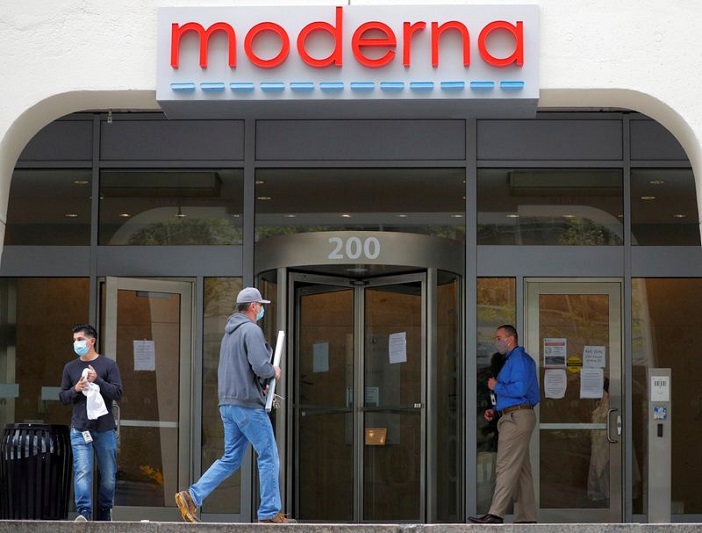
Moderna’s Q1 2026 COVID-19 revenue of $352 million beat consensus at $232 million, driven by international sales and a UK payment recognized early. The company reaffirmed full-year guidance for up to 10% revenue growth, $3 billion of R&D spending, and $1 billion of SG&A, though cash outlook was reduced after a $950 million IP settlement charge. RBC lifted its price target to $38 from $35, while noting the risk/reward remains balanced given the stock’s strong 69% six-month rally.
The market is starting to price Moderna less as a binary vaccine story and more as a self-funded biotech platform with multiple shots on goal. That matters because the balance sheet gives management optionality to keep pushing late-stage programs without returning to capital markets, which supports a higher floor than a typical single-asset biotech even if sentiment stays lukewarm. The real equity debate is not revenue momentum; it is whether the pipeline can convert capital intensity into durable operating leverage before the current cash burn narrative reasserts itself.
Second-order, the international COVID mix suggests pricing power and partner/sovereign procurement remain a stabilizer, but also a warning sign: the P&L is still vulnerable to timing noise and one-off collections, so headline beats can mask underlying normalization risk. The settlement-related cost step-up is important because it compresses the window in which the market can underwrite multiple expansion from “cleaner” margins; if the next two quarters do not show clearer ex-COVID product traction, investors may fade every beat as non-recurring. In other words, the stock can keep grinding, but it needs a pipeline event path, not just vaccine seasonality, to justify materially higher multiples.
The contrarian takeaway is that the stock may be less overbought on fundamentals than on expectations of a near-term catalyst cascade. The August flu decision is the first hard checkpoint, but the more important inflection is whether oncology and norovirus create enough probability-adjusted revenue to offset the market’s discount for execution risk. If those programs slip, the recent rally becomes vulnerable to a multiple reset rather than a simple earnings miss, because the street is already paying for optionality that has not yet been de-risked.
AI-powered research, real-time alerts, and portfolio analytics for institutional investors.
Request DemoOverall Sentiment
mildly positive
Sentiment Score
0.35
Ticker Sentiment
