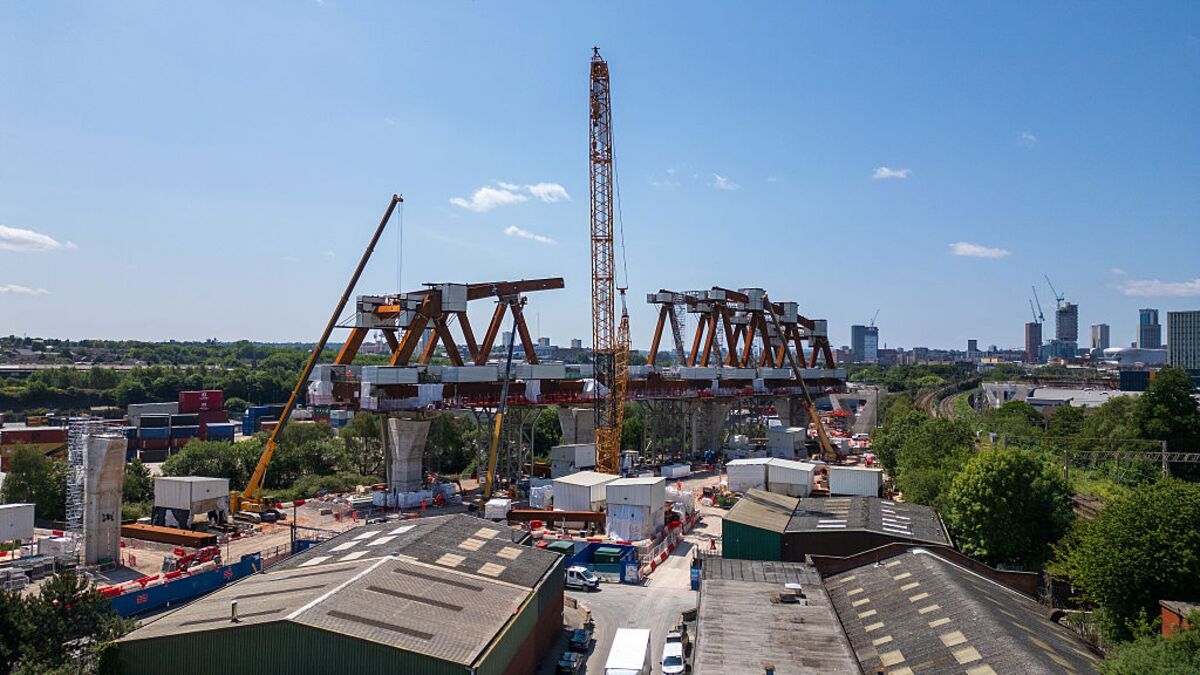
Britain's HS2 high-speed rail project continues to face significant delays and cost overruns, with the latest review by the Labour government pushing back the service start target beyond 2029-2033, likely into the late 2030s. The project's final cost is now projected to exceed £100 billion ($135 billion), a substantial increase from its initial £35 billion estimate in 2010 for a more extensive network. This ongoing fiscal challenge highlights persistent issues in large-scale public infrastructure development and raises concerns about public spending efficiency.
Britain's HS2 high-speed rail project represents a critical case of fiscal mismanagement and failed infrastructure execution, with significant negative implications for UK public finances. The project's cost is now projected to exceed £100 billion, a stark increase from the £35 billion estimate in 2010, which notably was for a more extensive network. Compounding the financial strain, the latest government review has pushed the operational start date beyond the 2029-2033 window into the latter half of the 2030s, without providing a firm new target or cost estimate. This persistent lack of control and transparency, described in the article with extremely negative sentiment, casts a shadow over the UK's ability to manage large-scale public works. The situation highlights a substantial opportunity cost, diverting massive capital away from other sectors, and serves as a symbol of policy failure that could damage investor confidence in future UK infrastructure initiatives.
AI-powered research, real-time alerts, and portfolio analytics for institutional investors.
Request DemoOverall Sentiment
extremely negative
Sentiment Score
-0.90
