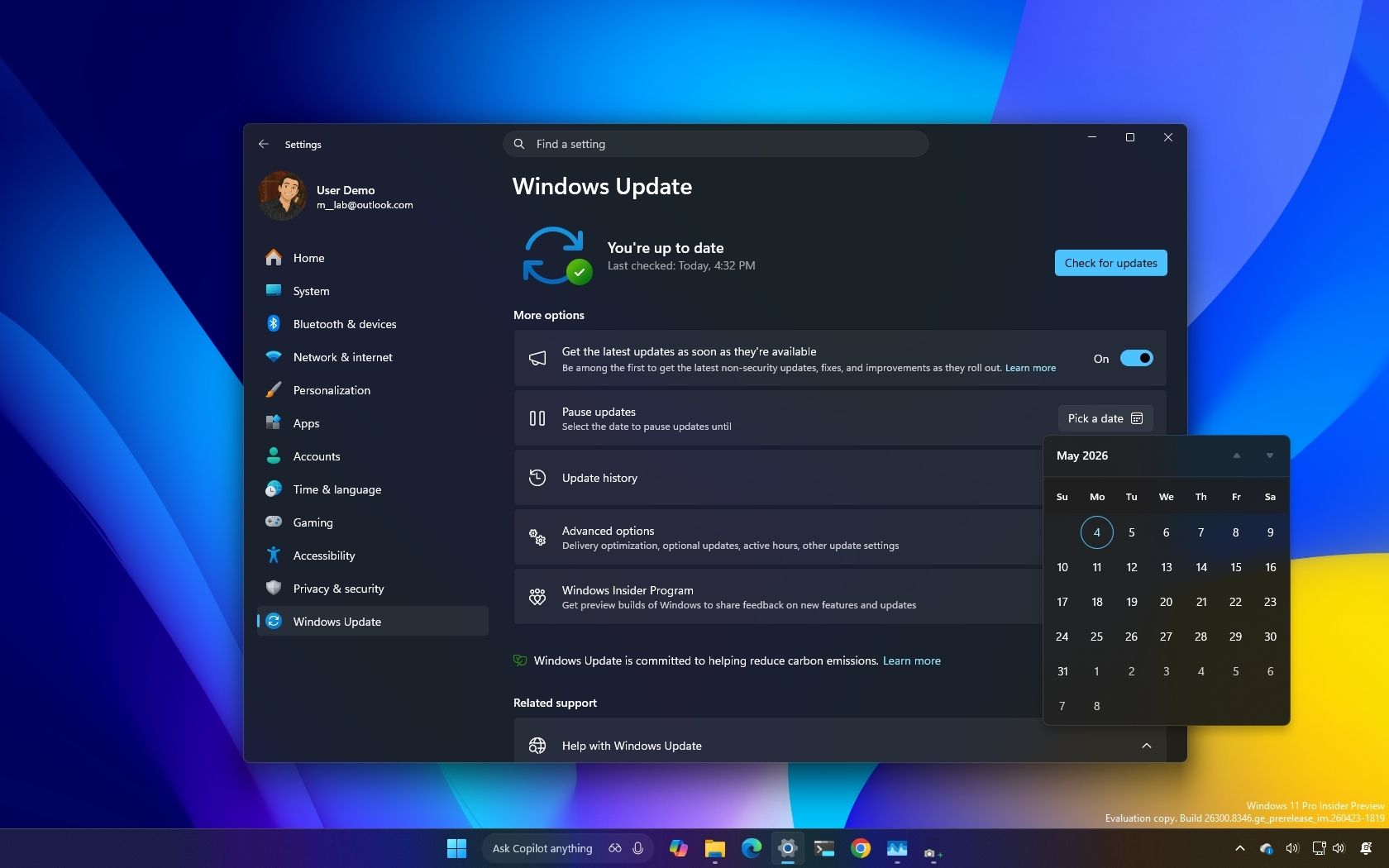
Microsoft is rolling out Windows 11 update changes in the Experimental channel for version 25H2, including indefinite update pausing with a 35-day renewal cycle, a redesigned Power menu, clearer update labels, and background recovery for failed installations. The company also plans to bundle firmware, driver, and product updates into a single monthly reboot, cutting restarts to one per month. Overall, the changes should reduce user frustration and improve transparency, but they remain incremental and are not yet broadly available.
This is a small but meaningful margin-of-error reduction for Microsoft’s consumer and endpoint ecosystem, not a revenue catalyst in itself. The main second-order effect is lower support friction: fewer forced restarts and clearer update state should reduce help-desk load, uptime loss, and user frustration across managed fleets, which matters more to enterprise IT purchasing than the average consumer realizes. It also reinforces Windows’ moat versus “good-enough” alternative operating systems by making the platform feel less punitive without changing the security model.
The direct beneficiary is MSFT’s device and cloud stack, but the bigger read-through is to endpoint management and security vendors: anything that reduces reboot chaos and failed patch rollbacks lowers operational pain, yet also makes native Windows controls slightly more capable, which can compress low-end differentiated value in basic patch-orchestration tools. Over time, if Microsoft keeps bundling drivers/firmware into a single cadence, third-party OEM utility software and some niche driver-update utilities lose relevance as the OS absorbs more of their function.
The market likely underestimates how much this is about enterprise procurement optics. A more predictable update cadence reduces one of the few recurring user-experience negatives that CIOs can quantify in lost productivity minutes, potentially improving Windows 11 adoption velocity inside laggard corporate environments over the next 2-4 quarters. The contrarian risk is that these changes are still only controls, not true policy delegation; if admins still have to babysit pauses and users still encounter forced-path defaults, the improvement may be dismissed as cosmetic and fade quickly from consideration.
From a trading perspective, the setup is low-beta bullish for MSFT and mildly negative for ancillary PC-support software names if the cadence of Windows-native automation improves further. The key catalyst window is the next 1-3 quarterly Windows/Intune and OEM commentary cycles: any mention of reduced restart-related incidents or smoother feature-rollout telemetry would validate this as a durable enterprise hygiene upgrade rather than just a consumer UI tweak.
AI-powered research, real-time alerts, and portfolio analytics for institutional investors.
Request DemoOverall Sentiment
mildly positive
Sentiment Score
0.20
Ticker Sentiment
