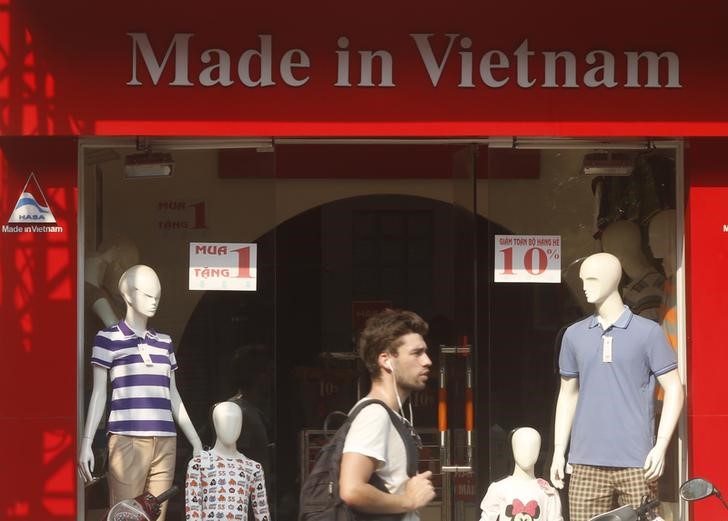
Japanese new investment pledges into Vietnam fell 75% year on year to $233 million in Q1, underscoring softer capital flows even as bilateral trade rose 12.3% to $13.7 billion. Prime Minister Sanae Takaichi is pressing Hanoi on business-climate issues, including delayed payments, infrastructure barriers, and a reconsideration of Hanoi's petrol-motorcycle ban that has drawn opposition from Honda. The visit also highlights Japan's push to reinforce its regional economic and security influence in Southeast Asia.
This is more a signal about Southeast Asian capex discipline than a Japan-Vietnam headline. The sharp pullback in Japanese pledges suggests a growing gap between strategic rhetoric and executable projects, which usually shows up first in infrastructure, industrial automation, and cross-border logistics names that depend on committed FDI rather than trade flows. The trade side is still holding up, so the immediate read-through is not recessionary for Vietnam, but it does imply a slower conversion of announced manufacturing migration into actual equipment orders and construction spend.
The second-order beneficiary is not obvious: local and regional firms that can operate with less dependence on large Japanese greenfield projects may gain share, while Japanese incumbents with exposed Vietnam supply chains face more friction from permitting, payment delays, and policy uncertainty. If Hanoi softens the motorcycle restriction, that would be a small but useful tell that the government is prioritizing investor retention over social-policy signaling; that favors Honda over rivals only marginally, but more importantly reduces the probability of broader policy surprises for multinational operators. For equity markets, this kind of visit tends to support “stay the course” rather than create an immediate rerating unless a concrete reform package is announced.
The mild negativity is because capital formation is the key leading indicator, and the decline in new pledges can persist for multiple quarters before trade weakens. The contrarian angle is that investors may be underestimating how much of the Japan-to-Vietnam manufacturing story is already fully priced in; if the business environment does not improve, the market could be overallocating to the assumption that supply-chain diversification is automatic. Conversely, any credible policy concessions from Hanoi could trigger a fast rebound in industrial-order sentiment over the next 1-2 quarters, especially in names tied to factory build-outs and automation.
AI-powered research, real-time alerts, and portfolio analytics for institutional investors.
Request DemoOverall Sentiment
mildly negative
Sentiment Score
-0.15
Ticker Sentiment
