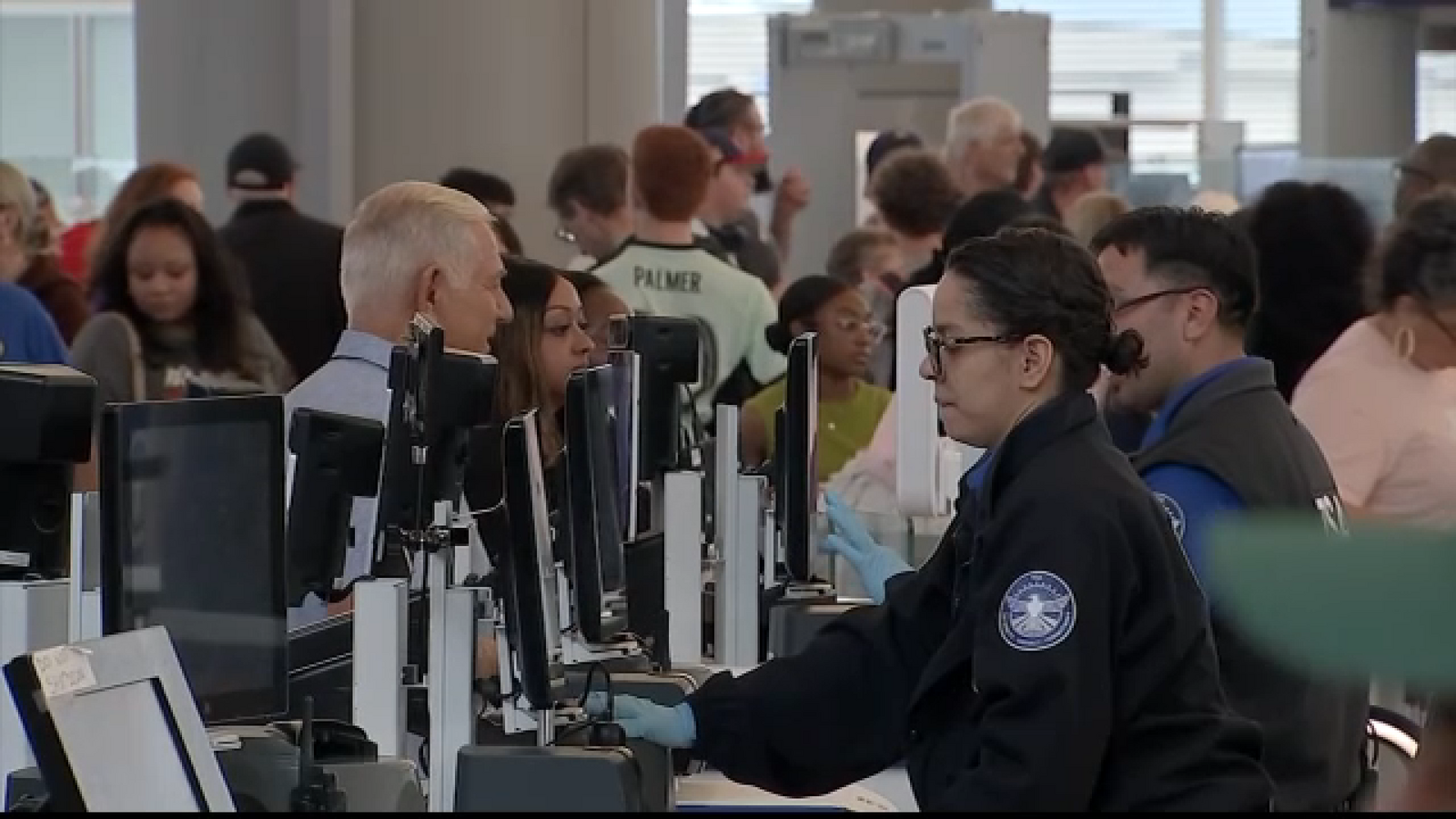
TSA employee callouts tied to the partial government shutdown have produced hours-long security lines at Houston's Bush Intercontinental and Hobby airports, causing some passengers to miss flights; airports now advise arriving 3 hours for domestic and 4 hours for international departures. The staffing shortfall—compounded by spring-break and Houston Rodeo crowds—raises the risk of further deterioration while unpaid TSA workers remain off the job, prompting advice to monitor flights and use flexible or backup fares.
This is a narrow, operational shock with outsized near-term costs that cascade into airline unit economics: missed flights force re-accommodations, incremental fuel and crew repositioning, and off-cycle hotel/meal payouts that hit margin in the following 7–30 days. Carriers with larger high-margin loyalty and corporate segments can absorb these episodic costs more easily and can monetize last‑minute backups; conversely, point‑to‑point, low‑fare operators face both higher incremental costs and greater reputational/market‑share risk if repeat events occur.
A second‑order beneficiary is the online travel distribution layer and ancillary fee structures: demand for refundable or flexible bookings and paid rebooking tools spikes, temporarily boosting per‑booking revenue and backend service attach rates for OTAs and corporate travel platforms over a 1–3 month window. Travel insurers and underwriters who can rely on policy language excluding government shutdowns may see lower payouts on these specific claims, but they incur reputational and potential litigation risk which could pressure underwriting margins over quarters.
Policy and labor mechanics create the largest idiosyncratic catalyst risk: a rapid shutdown resolution (days) materially reduces the economic damage; a prolonged shutdown (weeks) forces carriers into structural decisions—permanent capacity cuts, hedged fare resets, or lobbying for reimbursement—that would shift earnings estimates for the next 1–4 quarters. The consensus risk is that markets treat this as purely transitory; if recurring political brinkmanship becomes common, investors should reprice airline operating leverage and ancillary revenue assumptions over multi‑quarter horizons.
AI-powered research, real-time alerts, and portfolio analytics for institutional investors.
Request DemoOverall Sentiment
mildly negative
Sentiment Score
-0.30
