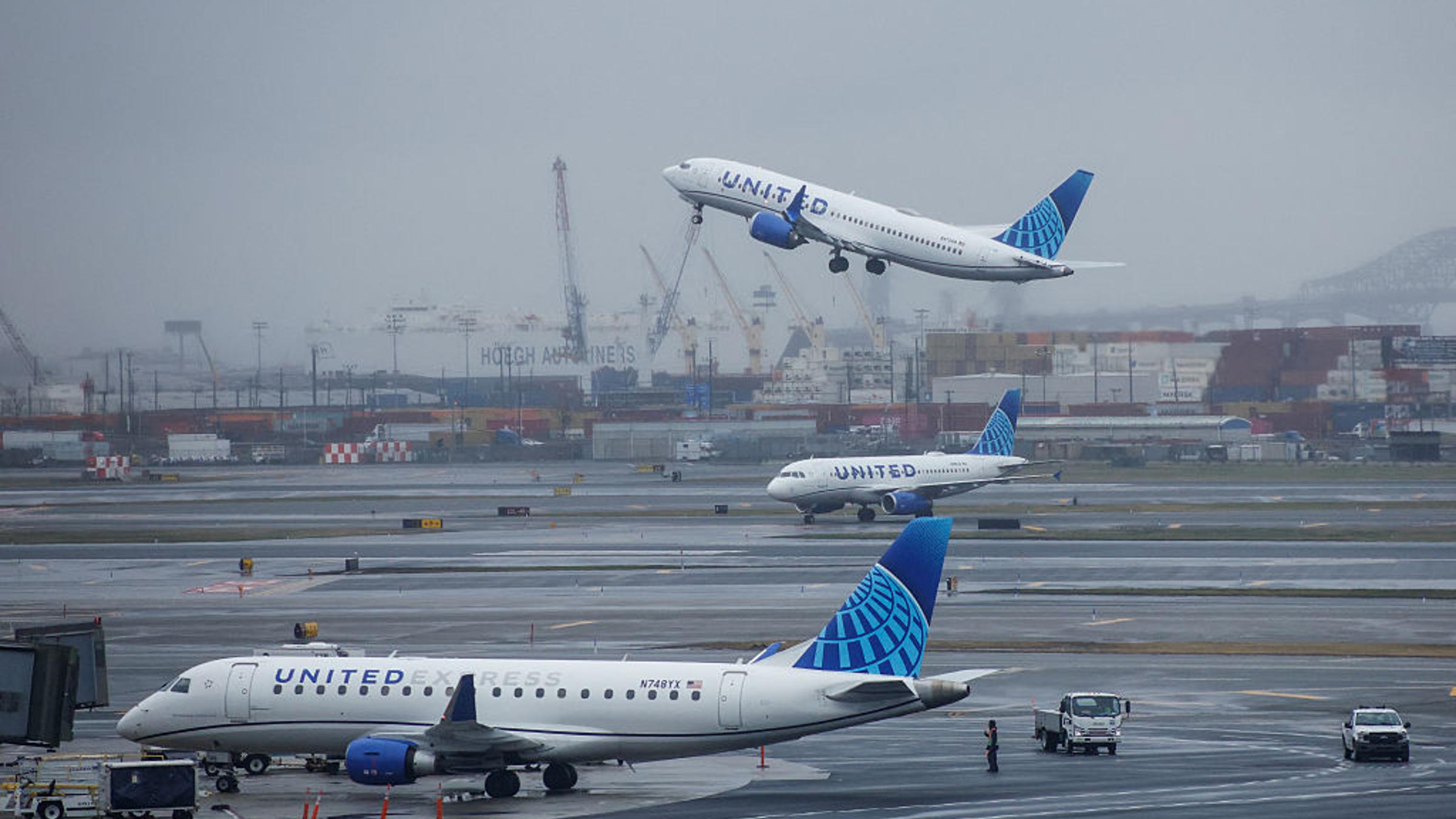
The Trump Administration is reportedly considering halting international flight processing at airports in sanctuary cities, a move that could disrupt major hubs including JFK, LAX, Newark, O'Hare, and San Francisco. The policy would likely trigger flight cancellations rather than simple rerouting, potentially causing material economic damage to airlines and tourism across both blue and red states. The proposal is not yet being implemented, but it has already drawn strong criticism and controversy.
The market should treat this less as a policy headline and more as a potential temporary capacity shock to the U.S. air transport system. International gateways operate with highly concentrated slot, customs, and crew rotations; if even a subset of those airports lose processing capacity, the first-order effect is not rerouting but outright flight cancellations, which means revenue leakage for carriers and immediate spillover into hotels, airport retail, and local service demand. The biggest losers are not just the obvious blue-city airport ecosystems but any airline network that uses those hubs as international connection banks, because missed inbound waves can cascade into same-day domestic misconnections and next-day aircraft repositioning issues. Second-order, this is a margin event more than a demand event if it remains localized and brief: airlines can preserve yield by trimming frequency, but they cannot easily replace international arrival banks without destroying network utility. That favors low-cost carriers with more point-to-point domestic exposure over legacy carriers with larger transatlantic/transpacific exposure, and it hurts airport-adjacent REITs, concession operators, and hospitality names tied to gateway traffic. The timing matters: a credible implementation threat over the next 1-3 months would pressure summer booking curves and corporate travel budgets before it shows up in hard macro data. The contrarian view is that this is more likely to be used as negotiating leverage than executed at scale, because the operational and legal complexity is enormous and the political blowback would be bipartisan once cancellations hit red-state travelers too. That makes the trade setup asymmetric: the downside for travel equities is sharp on headline risk, while the upside if the plan is walked back is slower and more diffuse. If implemented, the most important market reaction may be a widening in airline dispersion rather than a sector-wide selloff: network carriers and airport-dependent hospitality names underperform, while domestic leisure and non-gateway exposed operators hold up better.
AI-powered research, real-time alerts, and portfolio analytics for institutional investors.
Request DemoOverall Sentiment
mildly negative
Sentiment Score
-0.35
