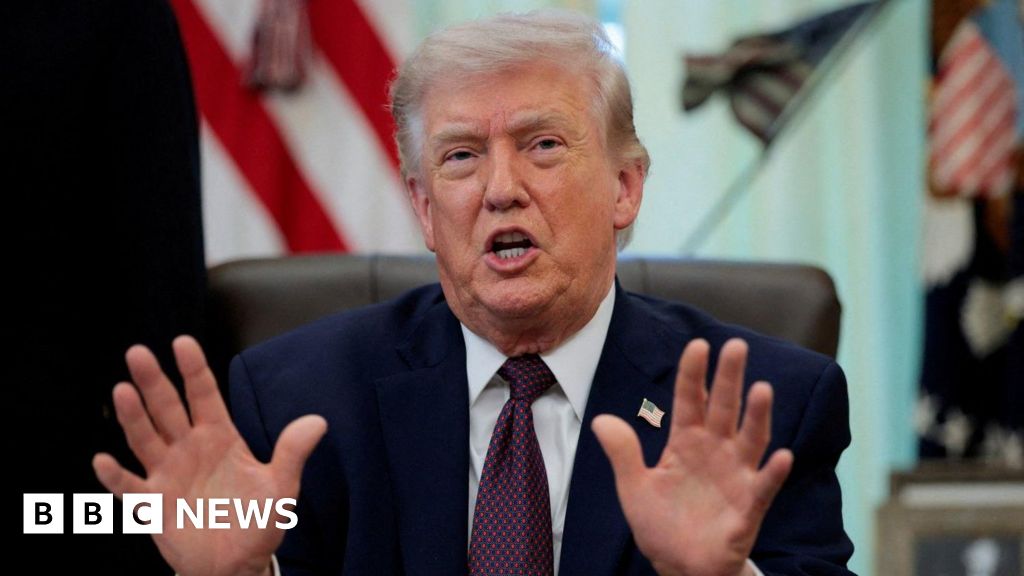
Trump said he will speak with Taiwan President Lai Ching-te ahead of a possible U.S. arms sale, breaking with long-standing protocol and raising geopolitical tension with China. The proposed package is reportedly worth $14bn, while China has warned it firmly opposes official U.S.-Taiwan exchanges and arms sales. The article highlights heightened risk around Taiwan, U.S.-China relations, and future defense procurement decisions.
This is less about the bilateral call itself than about the sequencing leverage it gives Washington: once the White House publicly engages Taipei before deciding on a package, the negotiation shifts from a routine arms-sale review to a signal of strategic alignment. That raises the probability of a larger, higher-end deterrence package, but it also increases the odds Beijing responds asymmetrically first via trade frictions, customs delays, or administrative pressure rather than immediate military escalation. The market should treat the next 2-6 weeks as a headline-driven risk window for anything exposed to China/Taiwan shipping lanes, semis, and defense procurement cadence.
The second-order winner is not just the obvious defense primes; it is the broader anti-drone, air-defense, and electronic-warfare supply chain, where incremental orders can meaningfully stretch already-constrained production slots. If Taipei’s defense spending accelerates again, the bottleneck becomes munitions, sensors, and power-management components rather than platform assembly, which favors suppliers with high mix, low China revenue, and limited export-control friction. Conversely, firms with meaningful mainland sales face a classic offset risk: even a modest Chinese response can impair orders or delay customs clearances faster than U.S. revenue can ramp.
The underappreciated contrarian is that more overt U.S.-Taiwan contact may actually make an eventual deal easier, not harder, if Beijing decides it wants predictability more than punishment. In that case, the market overprices near-term escalation while underpricing a rapid return to managed ambiguity once Trump locks in a trade/arms understanding with Xi. The real tail risk is not invasion; it is a prolonged coercive gray-zone campaign that keeps defense spending elevated for years, benefiting selected contractors without creating a full-risk-off regime.
For timing, the highest edge is to fade any initial Asia risk-off move if there is no immediate Chinese retaliation beyond rhetoric, because the first 48-72 hours are usually sentiment-driven while procurement implications take months. If the package is approved, the defense trade can re-rate over a 3-9 month horizon as backlog and guidance revisions show up; if it is shelved, that is bearish for Taiwan-specific defense names but bullish for semis and global cyclicals via reduced geopolitical premium.
AI-powered research, real-time alerts, and portfolio analytics for institutional investors.
Request DemoOverall Sentiment
mildly negative
Sentiment Score
-0.15
