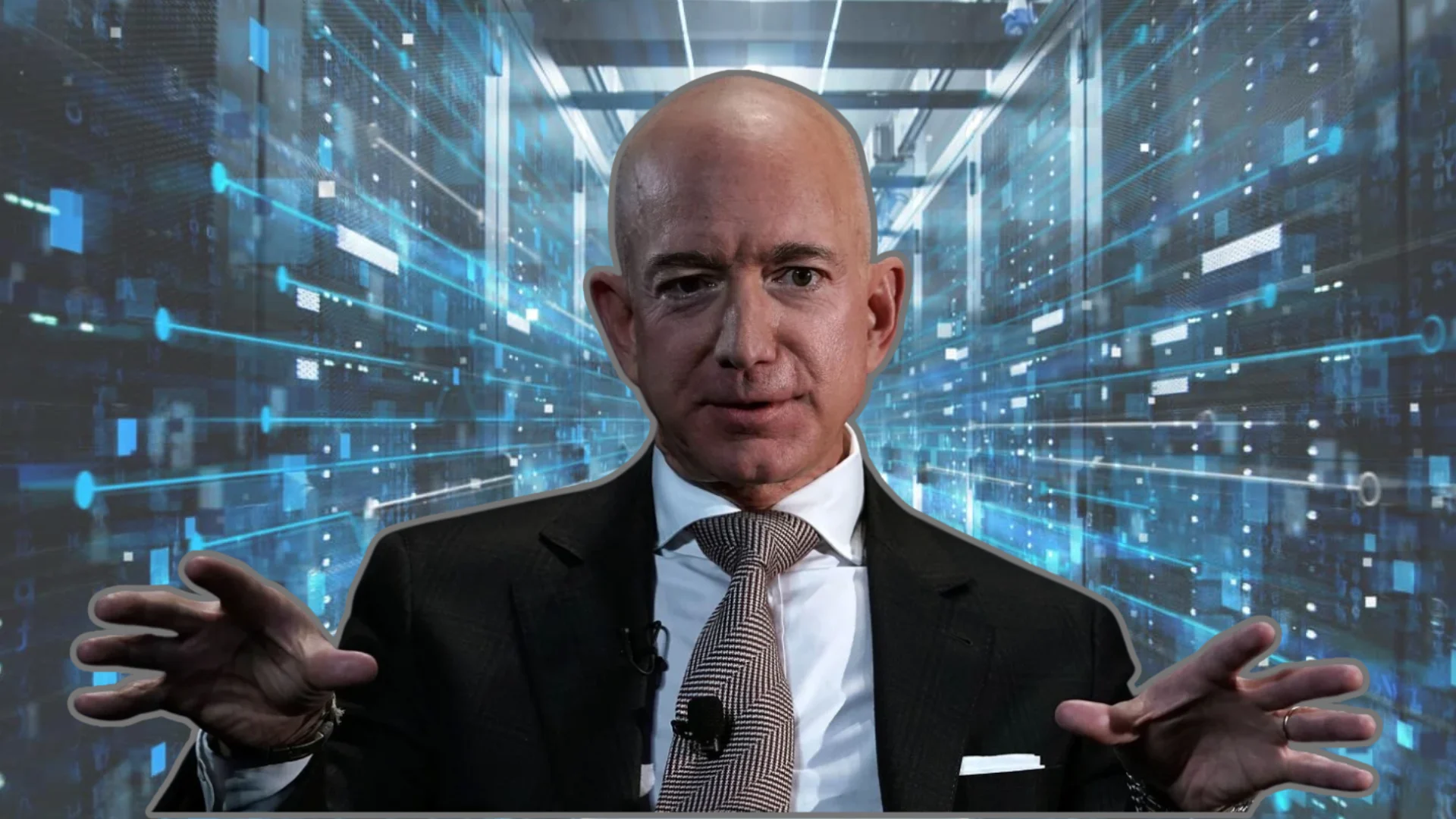
Bezos Expeditions (Jeff Bezos’ family office) made five direct AI startup investments in June, representing 10% of all family-office dealmaking that month, making it the most active family office investor of 2026. The article frames the move as an “all-in” bet on AI startups that could drive long-term wealth creation. While venture flows may influence sentiment, it’s likely more of a niche signal than an immediate market-wide price mover.
This is less a fundamental update than a capital-allocation signal: one of the highest-status allocators is effectively saying the marginal dollar still wants exposure to AI, which tends to pull forward follow-on rounds and keep the private market bid alive. The first-order beneficiaries are not the startups themselves but the infrastructure layer that monetizes every incremental experiment: NVDA, AVGO, MSFT, AMZN, GOOGL, ANET, VRT, EQIX, and DLR. If this behavior broadens, it supports a longer runway for capex-heavy names even if end-app monetization remains uneven.
The second-order risk is that aggressive private-market sponsorship can actually worsen public-market dispersion. More money chasing the same set of AI themes inflates late-stage valuations, raises the hurdle for new entrants, and shifts eventual value capture toward incumbents with distribution, compute, and balance-sheet scale. That means application-layer startups may look “hot” on funding headlines while public software comps can lag if revenue realization does not catch up within 1-3 quarters.
The contrarian view is that this is not uniformly bullish for the broader AI basket; it may be a sign of narrowing, not broadening, opportunity. When elite capital concentrates this hard, the best near-term return is often in picks-and-shovels rather than the next private name, and the trade can reverse if AI revenue growth or cloud spend growth decelerates in the next 1-2 earnings cycles. The clean falsifier is any evidence that hyperscaler AI capex or model-training demand is flattening while private funding remains elevated, which would pressure the entire narrative and multiple support.
AI-powered research, real-time alerts, and portfolio analytics for institutional investors.
Overall Sentiment
mildly positive
Sentiment Score
0.25
Ticker Sentiment
