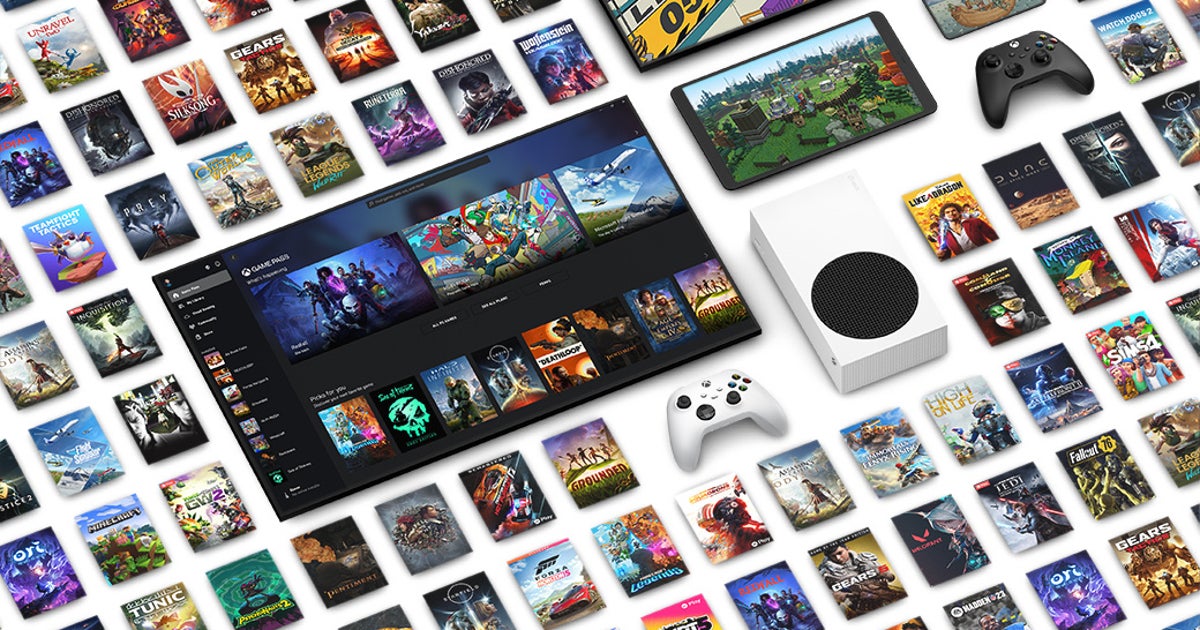
A reported global shortage of RAM driven by AI/data‑centre demand — including an OpenAI-related agreement to create 900,000 RAM wafer starts per month — may force Microsoft to raise Xbox console prices again, potentially marking a third US price increase in 2025. Sony is reported to have secured GDDR6 inventory earlier and is able to cut PlayStation 5 pricing for Black Friday, highlighting divergent supply positioning that could pressure Xbox sales, margins and competitive dynamics in the gaming hardware market.
Market structure: Memory suppliers and semiconductor-capex beneficiaries (Micron, Samsung, ASML/SMH exposure) are the immediate winners as unit pricing power shifts from consoles to DRAM/GDDR suppliers; consumer-hardware OEMs with earlier inventory (Sony) gain tactical retail share and margin flexibility. Competitive dynamics favor manufacturers who secured GDDR6 — expect Sony to use price elasticity to grow holiday unit share by low- to mid-single-digit points, pressuring Xbox ASPs and mix. Cross-asset: rising memory input costs lift semiconductor equities and commodity-sensitive capital goods while exerting modest upward pressure on financing spreads for consumer hardware inventory-funded programs; FX moves in KRW/JPY will amplify supplier margin swings.
Risk assessment: Tail risks include a demand shock (AI capex accelerating DRAM absorption beyond current estimates) or regulatory export curbs that disrupt wafer routing — either could move prices ±20-50% in 3-9 months. Immediate (days) risk centers on retail promos; short-term (weeks–months) on holiday sell-through and inventory reseating; long-term (quarters–years) on structural AI-driven DRAM demand vs. capex response. Hidden dependencies: software attach (Game Pass) can offset hardware share losses for MSFT, and OEM bundling or supply prioritization clauses could reallocate scarce dies. Key catalysts: OpenAI wafer cadence confirmations, DRAM spot-index movements, and end-of-November Black Friday sell-through metrics.
Trade implications: Direct plays — overweight SONY (equity or 3–6 month calls) for holiday share/mix; overweight Micron/SMH for DRAM price upside with a 3–9 month horizon. Pair trade — long SONY vs short MSFT hardware exposure (dollar-neutral) to isolate console margin pressure. Options — buy 3–6 month MU calls or MU call spreads if DRAM spot rises >10% QoQ; hedge MSFT downside with 2–3 month put spreads keyed to any price-hike announcement.
Contrarian angles: Consensus underestimates MSFT’s service-revenue buffer and potential for higher console ASPs to improve short-term gross margins; a price rise could compress unit growth but raise per-device contribution, limiting MSFT equity downside. Memory capex will respond; expect DRAM price normalization in 2–4 quarters — long semis may be mean-reversion losers if buildouts accelerate. Historical parallel: GPU/DRAM cycle 2020–22 showed rapid overshoot after capex repricing; avoid one-way bets without capex-watch triggers.
AI-powered research, real-time alerts, and portfolio analytics for institutional investors.
Request DemoOverall Sentiment
moderately negative
Sentiment Score
-0.35
Ticker Sentiment
