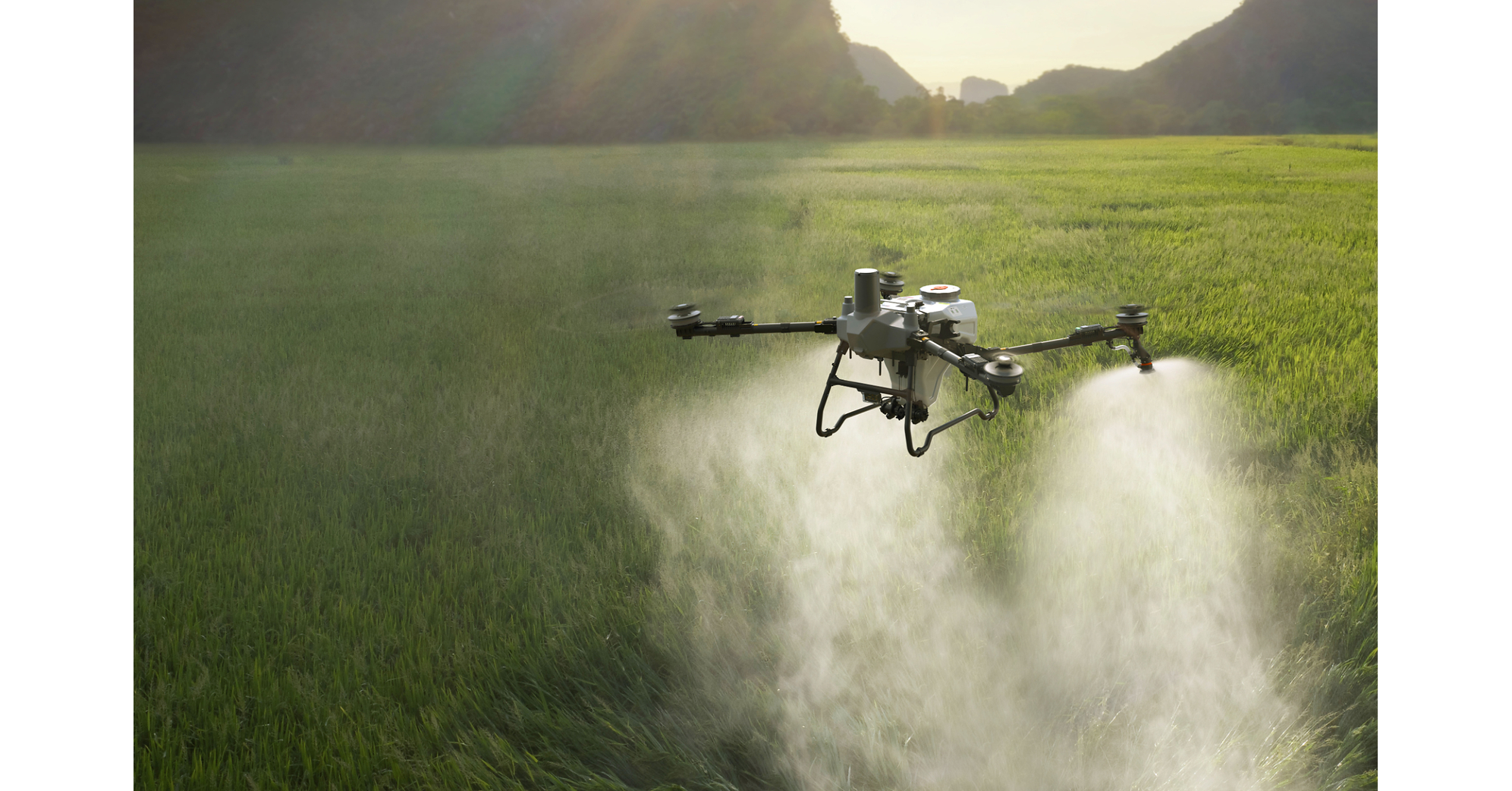
DJI Agriculture launched the global DJI Agras T55 and DJI Agras T100 dual-battery spraying system aimed at expanding precision-farming capability. Key upgrades include T55’s 50L payload for spraying (50L/min) and millimeter-wave radar with point-cloud density up to 250,000 points/sec, while the T100’s dual batteries improve hover time by 50% at equal payload and feature a 90L tank for larger-scale runs. The release also cites 600,000 DJI agricultural drones in use across 100+ countries, but provides no financial guidance—making impact more limited to the company/product cycle than to markets broadly.
This is less about a single product cycle than about a widening adoption curve for drone-based application in agriculture. The economic winner is the grower segment that is labor-constrained, terrain-constrained, or specialty-crop heavy; the loser is the incremental dollar spent on conventional ground spraying, outsourced application services, and some dealer attach on traditional sprayer hardware. For public markets, Deere (DE) is better positioned than pure-play equipment peers because it can monetize the autonomy stack and dealer/service network, while more commoditized names like AGCO and CNH face greater risk of slower replacement cycles if drones take share at the margin.
Near term, the stock impact is likely muted because the launch is private-company execution, not a verifiable change in industry demand. The real catalyst path is 1-3 months: dealer checks, regional pricing, and evidence that utilization rates justify capex in Brazil, China, and specialty-crop geographies. Over 6-18 months, the structural risk is that improved payload, safety, and all-weather capability makes drone spraying an accepted default in orchards/vineyards and smaller plots, compressing the value of legacy spray equipment and shifting spend toward batteries, software, service, and training.
The contrarian miss is that this probably does not replace large-scale row-crop spraying quickly; the throughput ceiling and battery logistics still matter. If regulators tighten drift/safety rules or if farmers balk at payback periods, adoption could stall, making this an incremental rather than disruptive trend. That means the setup is better for an alert than a conviction macro trade unless channel data shows a meaningful inflection in orders or utilization.
AI-powered research, real-time alerts, and portfolio analytics for institutional investors.
Request DemoOverall Sentiment
mildly positive
Sentiment Score
0.25
Ticker Sentiment
