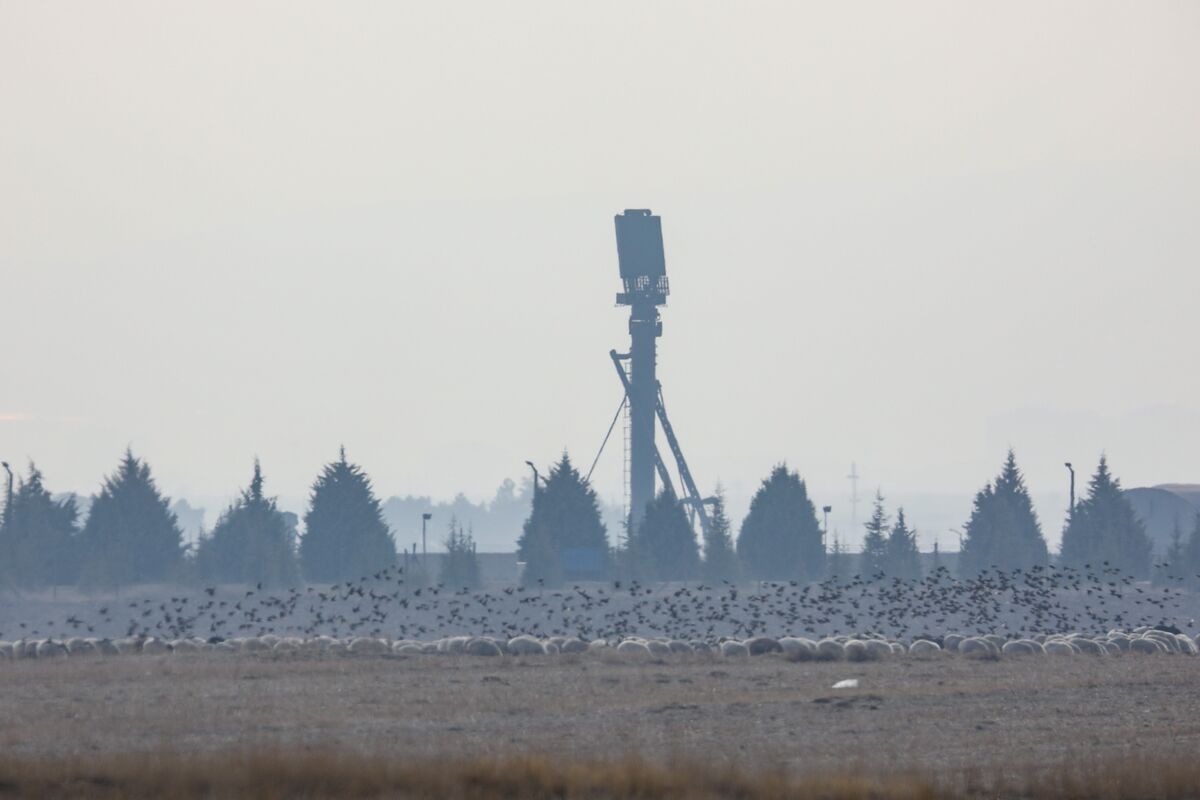
Turkey is seeking Russia’s approval to transfer its S-400 air-defense systems to a third country, aiming to remove a key obstacle to purchasing US-made F-35 jets. The discussions began in recent weeks and follow Erdogan’s earlier proposal to return the S-400 to Russia, which drew limited traction. The development heightens geopolitical and sanctions/export-control uncertainty around major defense procurement.
The market impact is less about near-term revenue and more about optionality: if Turkey’s procurement path reopens, the signal is that export controls can be bent for strategic reasons, which modestly improves the odds of future U.S. defense sales into politically sensitive geographies. That is mildly constructive for LMT and, to a lesser extent, the wider U.S. defense complex (NOC, RTX) because it keeps NATO-interoperability spending and sustainment dollars anchored in U.S. systems rather than European substitutes. The second-order winner may be the Turkish sovereign/financial complex if this is interpreted as a broader de-risking of U.S.-Turkey relations, potentially tightening CDS and supporting banks via a lower geopolitical discount rate.
The key issue is timing: even a favorable political decision is a months-to-years process, not a days-to-weeks earnings event. The binding constraints are not engineering but diplomacy and congressional tolerance; any headline-driven move in defense names is likely to fade unless there is a concrete U.S. waiver path, a verified transfer of the S-400s, and a follow-on contract announcement. Conversely, failure to secure Russian consent is the most immediate failure mode, which would leave the whole setup as rhetoric with little balance-sheet impact.
Contrarian view: the consensus may be overestimating the incremental value of the F-35 angle to U.S. primes. LMT already trades on a deep backlog and geopolitical scarcity premium, so this is not a clean earnings rerating catalyst unless it opens a broader pipeline of exports and sustainment work. The more durable trade, if any, is on normalization of Turkey risk, not on the jet itself; if that normalization stalls, the likely outcome is no change rather than a downside shock for defense primes.
Watch for falsifiers: public Russian rejection, U.S. congressional pushback, or any statement that the transfer mechanism is legally/technically impossible. If there is no concrete progress within 1-3 months, fade the headline premium; if there is a formal waiver process or tranche-level defense agreement, the trade shifts from noise to a real, 6-18 month repricing of Turkey-related risk assets.
AI-powered research, real-time alerts, and portfolio analytics for institutional investors.
Request DemoOverall Sentiment
mildly negative
Sentiment Score
-0.15
