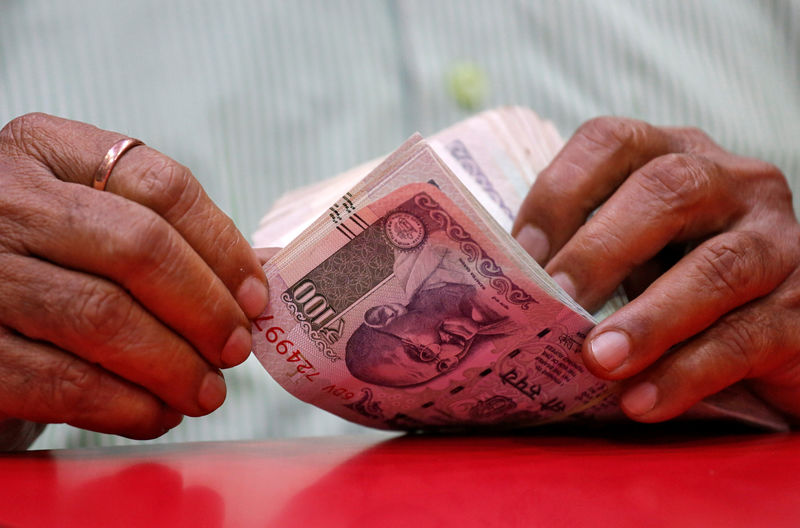
The Indian rupee fell to a record low of 96.305 versus the dollar before recovering to 95.700, leaving it down 6.5% year to date amid oil-import pressure, capital outflows, and dollar strength. Capital Economics said RBI intervention has limited the decline, with FX reserves near $700bn and the forward book around $100bn, but warned that persistent pressure could force interest-rate hikes. The article also notes a weaker rupee could modestly support exports and add only limited incremental inflation, though inflation is still likely to breach the RBI's 2%-6% target band.
The market is treating rupee weakness as a linear EM-balance-of-payments story, but the more important second-order effect is policy transmission: once the currency starts doing some of the inflation-fighting for the RBI, domestic rates may not need to rise as aggressively as the market fears. That creates a narrow window where imported inflation is visible in headlines but not yet fully reflected in earnings downgrades, especially for sectors with local pricing power and limited FX debt. The bigger macro risk is not the rupee itself; it is a sustained oil shock forcing a simultaneous deterioration in the trade balance, consumer confidence, and capital flows.
The contrarian read is that a controlled, gradual depreciation could actually be net supportive for India over a 6-12 month horizon because it improves export competitiveness while shielding the sovereign and corporate sectors from classic emerging-market FX debt stress. The key distinction is between a disorderly move and a managed one: if the RBI keeps the forward book as the primary defense, the macro cost is mostly higher inflation expectations rather than a credit event. That means the market may be overpricing tail risk in banks and underpricing the resilience of domestic exporters and IT services.
For global cross-asset positioning, this is a warning sign for anything levered to imported energy, discretionary consumption, and high-beta EM FX sentiment. It is also a subtle positive for U.S. dollar strength and rate volatility: sustained safe-haven demand plus EM intervention tends to keep USD funding conditions tighter than consensus expects. If oil headlines improve, the rupee can snap back quickly, but absent that, the path of least resistance remains gradual depreciation with intermittent central bank smoothing rather than a one-way collapse.
AI-powered research, real-time alerts, and portfolio analytics for institutional investors.
Request DemoOverall Sentiment
moderately negative
Sentiment Score
-0.30
Ticker Sentiment
