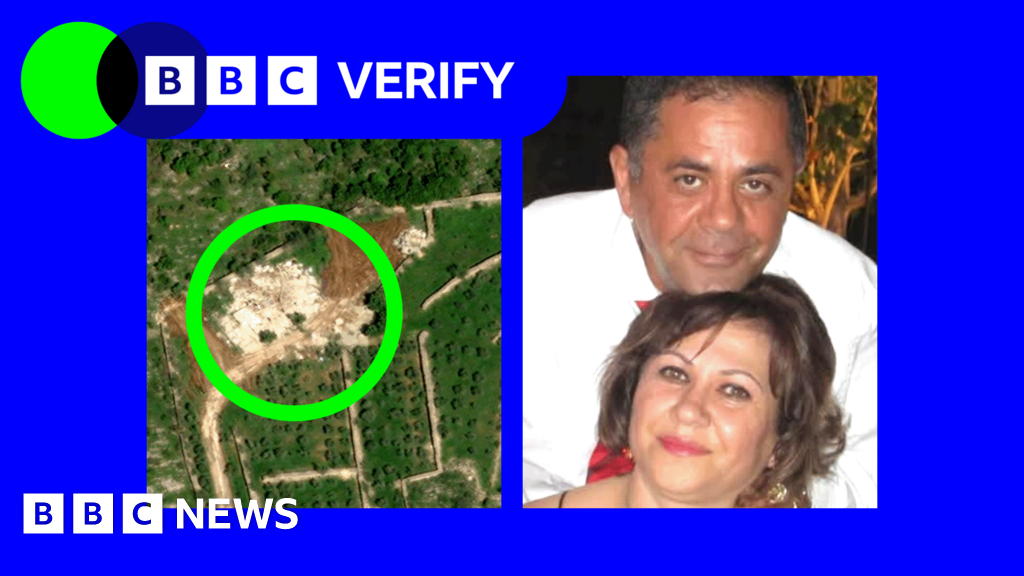
Satellite imagery shows the Elias family home in Qouzah, southern Lebanon, was flattened, with several olive trees destroyed as Israeli forces expanded operations in the border area. BBC Verify says nearly one-third of buildings in the village’s main residential area were demolished between 3 March and 16 April, while more than 1.2 million people have been displaced across Lebanon since 2 March. The article highlights significant civilian damage amid the Israel-Hezbollah conflict and continued Israeli occupation of towns up to 10 km beyond the border.
The market implication is less about the immediate destruction itself and more about the normalization of “persistent control” as a policy tool. That matters because reconstruction risk is now being pushed out from a short-duration event into a multi-quarter or multi-year capital sink: even after any ceasefire, areas within tactical depth of the border may remain economically unusable, suppressing housing demand, agricultural output, and local credit performance well beyond the headlines.
Second-order effects likely show up first in logistics and insurance rather than in headline war proxies. Repeated infrastructure strikes and de facto occupation close to the border increase the probability of delayed reconstruction funding, higher political-risk premia, and tighter underwriting for regional property, agricultural, and municipal exposure; that can ripple into contractors, cement/materials, and banks with Lebanese sovereign or diaspora-linked lending books. A prolonged displacement cycle also deepens labor-force disruption, which is bearish for local consumption and any remittance-dependent recovery path.
The key catalyst is whether the ceasefire evolves into a durable border arrangement or merely a pause before renewed strikes. Over the next 2-8 weeks, any verified escalation or expansion of the occupied zone would reprice tail risk quickly; over 3-12 months, the more important variable is whether external donors and insurers treat southern Lebanon as non-bankable, effectively locking in economic fragmentation. The consensus may be underestimating how long “temporary” military control can freeze real estate values even without formal annexation.
A contrarian take: the sell-off in regional risk assets may be too broad if investors are already pricing in worst-case destruction but not the eventual rebound from reconstruction and diaspora capital. The better expression is not a directional macro short, but a relative-value trade that distinguishes local property destruction from beneficiaries of defense spending, hardening borders, and reconstruction logistics.
AI-powered research, real-time alerts, and portfolio analytics for institutional investors.
Request TrialOverall Sentiment
strongly negative
Sentiment Score
-0.85
