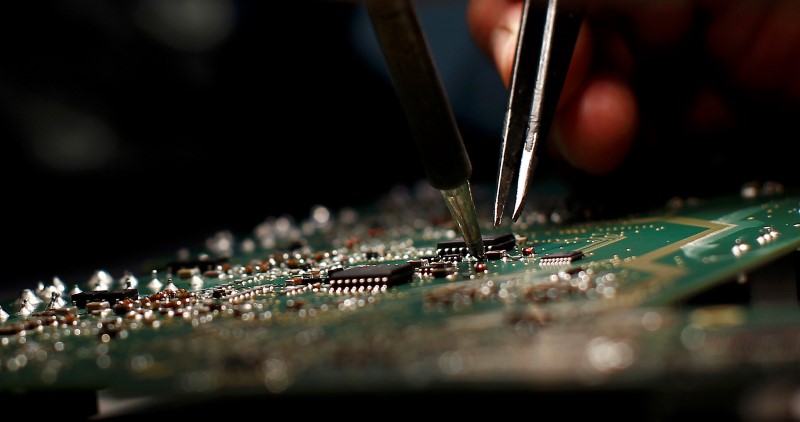
Oil jumped more than 3% after the US-Iran peace deal fell through, signaling renewed geopolitical risk premiums in energy markets. Separately, Chinese chipmaking stocks rallied sharply, with SMIC up 5.6%, Hua Hong up, Hygon up 6.4%, and NAURA up 7.2%, as investors stayed optimistic about AI-driven semiconductor demand and spillover strength from record-high U.S. chip stocks.
The clean read is that this is not just a sympathy rally in Chinese semis; it is a positioning event around the AI capex loop. When US leaders in the semiconductor stack re-rate, China-linked names usually catch a faster marginal bid because investors are hunting for cheaper beta to the same demand theme, but that tends to compress dispersion and briefly ignore export-control risk. The immediate winner is the domestic equipment and foundry layer, while the subtle loser is any adjacent China tech name without a direct AI monetization path, because capital gets crowded into the narrowest “AI winners” basket.
The second-order effect is on supply-chain expectations: a stronger AI tape raises the odds of follow-on orders for wafer fab equipment, advanced packaging, and design tools, even if near-term revenue conversion lags by a few quarters. That matters because the market often prices AI demand as if it is linear, while the actual benefit accrues in steps when customers commit to multi-quarter capacity builds. If this momentum persists for 2-6 weeks, expect incremental multiple expansion in semiconductor capital equipment to outpace pure-play chip manufacturers.
The contrarian risk is that this is becoming crowded and increasingly headline-dependent. A single policy signal from Washington, a disappointing earnings guide from a large US AI name, or any pause in DeepSeek-related enthusiasm could unwind the move quickly, especially in higher-beta Chinese names where sentiment dominates fundamentals in the short run. Over 3-12 months, the better differentiator is not who can manufacture chips, but who can monetize AI software demand and secure supply under tighter geopolitical constraints.
BABA is effectively a financing and distribution optionality trade here rather than a direct semiconductor expression. If investors start treating it as a backdoor AI beneficiary, that can help sentiment, but absent clearer capex linkage it risks becoming a crowded proxy with limited upside capture versus the more levered hardware names.
AI-powered research, real-time alerts, and portfolio analytics for institutional investors.
Request DemoOverall Sentiment
mildly positive
Sentiment Score
0.35
Ticker Sentiment
