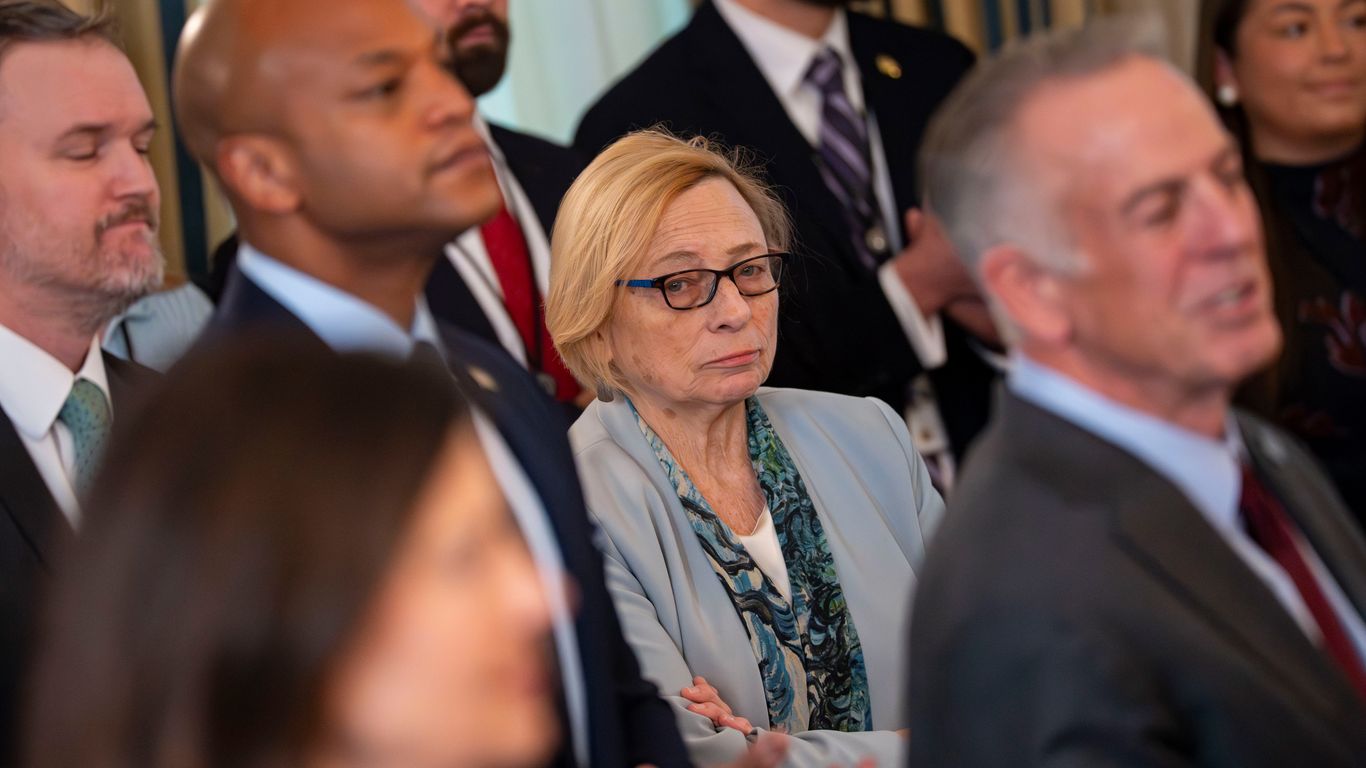
Maine Gov. Janet Mills suspended her Senate campaign five weeks before the June 9 primary, saying she lacked the financial resources to win. Her exit clears the field for Democrats to concentrate on challenging five-term GOP Sen. Susan Collins, after Mills was outraised and outpolled by Graham Platner. The move is politically notable but likely has limited direct market impact.
The immediate market read is not about Maine; it is about resource allocation inside the Democratic machine. With one candidate effectively consolidating the anti-Collins lane, outside money and field infrastructure should get redeployed faster, raising the odds of a cleaner general-election fight and reducing the risk of an expensive, divisive primary that drags down turnout. That is a subtle negative for Collins: incumbents benefit most when opponents are forced to burn cash intra-party rather than on persuasion.
The second-order effect is on donor psychology. When the party’s preferred, establishment-backed option exits for funding reasons, it signals that small-dollar energy and online enthusiasm are still outperforming legacy fundraising networks, which may encourage more insurgent-style recruiting in other Senate races. That dynamic is mildly bearish for consultants and traditional campaign vendors, but bullish for digital ad and grassroots organizing platforms that capture last-minute capital flows.
From a timing perspective, the catalyst window is the next 2-6 weeks as the Democratic field re-prices and national committees decide whether to go defensive or offensive. The main tail risk is that the race stops being a proxy for party unity and becomes a general-election weakness story if the nominee is too ideologically extreme for Maine’s electorate. If Collins can reframe herself as the stability candidate while Democrats spend the next month defining each other, the apparent Democrat advantage could reverse quickly.
The contrarian view is that the headline may be overread as a Collins disaster. In a state with a strong independent streak, a less polarizing Democratic nominee could actually improve the party’s general-election odds versus a well-funded establishment figure who struggles to inspire turnout. The real variable is not fundraising pedigree but whether the eventual nominee can avoid being tagged as nationally progressive; that label would matter more than the primary money race in a low-turnout November environment.
AI-powered research, real-time alerts, and portfolio analytics for institutional investors.
Request DemoOverall Sentiment
mildly negative
Sentiment Score
-0.15
