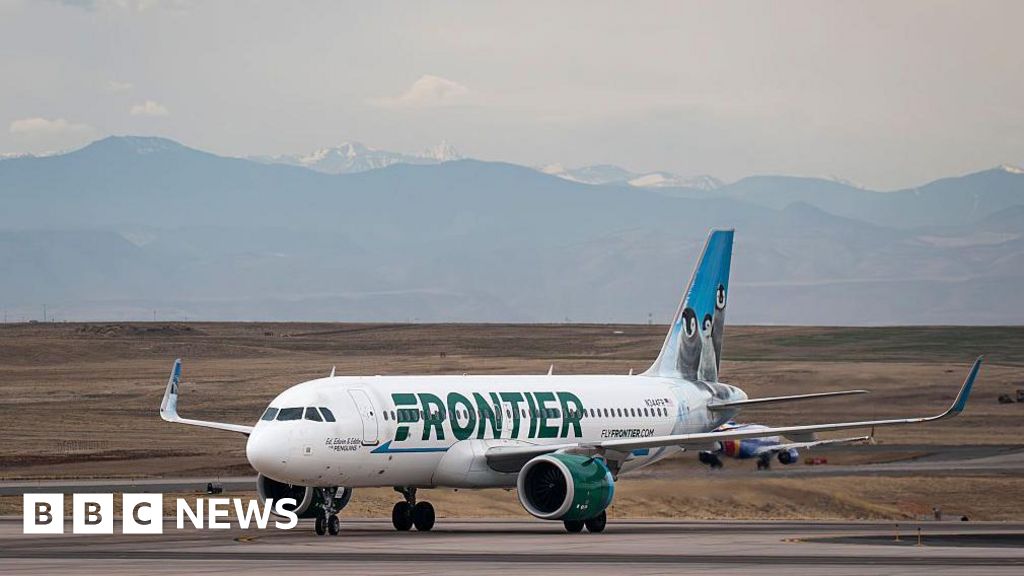
A Frontier Airlines plane struck and killed a trespasser on a runway at Denver International Airport during takeoff, triggering a brief engine fire and evacuation of all 224 passengers. Twelve passengers reported minor injuries, and five were taken to hospitals. The runway is closed while the FAA and NTSB investigate, creating operational disruption but limited direct market-wide impact.
This is less a one-off headline than a near-term sentiment shock for low-cost carriers, where the market is already paying a premium for operational reliability and ancillary revenue growth. Even if the direct financial hit is manageable, the second-order issue is that a runway fatality triggers a multi-week overhang in booking behavior around the carrier, the airport, and potentially the entire ULCC cohort as casual travelers react disproportionately to safety headlines. The most likely immediate loser is ULCC, but the spillover trade is into any name whose demand is concentrated in price-sensitive leisure travelers and short booking curves.
The bigger mechanism is not compensation costs; it is schedule disruption, incremental maintenance scrutiny, and the possibility of elevated insurance premiums or tighter operating procedures if regulators lean in. That combination can pressure unit costs for several quarters, even if the incident itself is isolated. In an environment where airlines are trading on improving yield discipline, a safety event also raises the probability that management teams across the sector become more conservative on capacity growth to protect brand equity.
Contrarian-wise, the market may fade this quickly if investigators frame it as a trespass/security event rather than an airline systems failure. If so, the opportunity is in the timing: front-end weakness in ULCC and peers can reverse within days, while the more durable effect would only emerge if there is evidence of procedural or airport-security gaps that broaden the liability regime. The asymmetry is therefore skewed toward a sharp but temporary de-rating unless there are follow-on revelations from FAA/NTSB that imply recurring operational risk.
AI-powered research, real-time alerts, and portfolio analytics for institutional investors.
Overall Sentiment
strongly negative
Sentiment Score
-0.80
Ticker Sentiment
