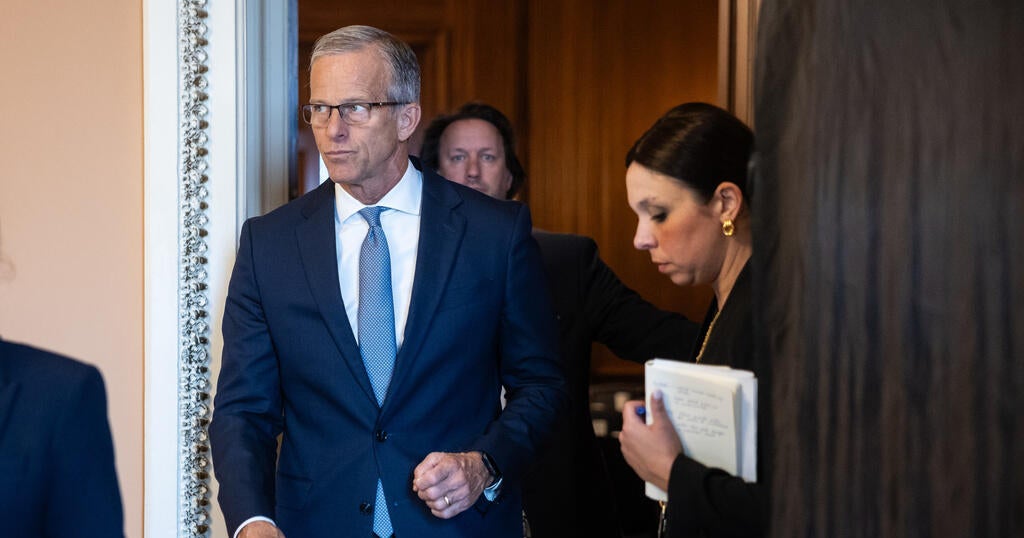
A $1.776 billion Justice Department 'anti-weaponization fund' has triggered sharp GOP backlash, with senators saying the administration failed to explain how the fund will work or who will qualify for payouts. The controversy has complicated Senate reconciliation work and helped stall a Border Patrol/ICE funding vote that had been expected Friday. While politically significant, the story is primarily a Washington-policy dispute with limited direct market impact.
This is less about the dollar amount and more about governance contagion. The immediate market implication is a higher probability that the White House keeps spending political capital on intra-party repairs, which raises execution risk for the broader reconciliation agenda and any adjacent fiscal items that need tight Senate discipline. In practice, that means more legislative delay premium for sectors levered to near-term federal appropriations and less confidence that management teams with Washington exposure can treat June/July as a clean catalyst window.
The second-order effect is reputational rather than budgetary: once a controversial compensation mechanism is framed as a precedent, every future settlement, waiver, or special fund becomes politically fragile. That should matter most for firms with meaningful regulatory overhang or government contracting exposure, because the probability distribution shifts toward slower approvals, more oversight hearings, and sharper headline risk even if underlying policy does not change. The market usually underprices this kind of procedural drift until it shows up in bill timing.
The contrarian read is that the fund itself is probably not the investable issue; the investable issue is the damage to coalition management. If the administration is forced to spend the next several weeks defending messaging rather than advancing votes, the likely winners are procedural blockers and issue-driven incumbents, while the losers are any trade that depends on a smooth summer legislative calendar. Tail risk is that additional amendments force members to take politically toxic votes, extending the freeze into late summer and making a clean reconciliation path materially less likely.
AI-powered research, real-time alerts, and portfolio analytics for institutional investors.
Request DemoOverall Sentiment
mildly negative
Sentiment Score
-0.35
