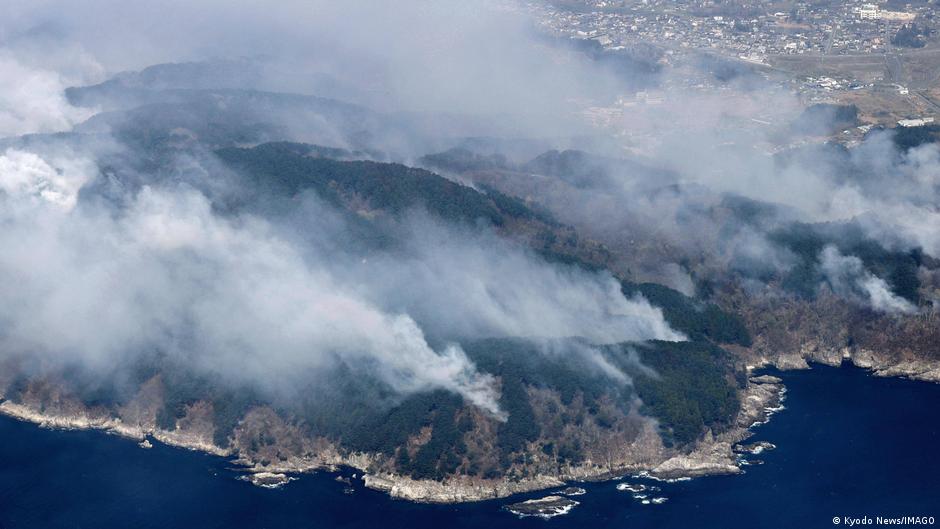
Two large wildfires in Japan's Iwate region have burned about 700 hectares and forced evacuations of 3,233 people across 1,541 households, with flames threatening the town of Otsuchi. At least eight buildings have burned, and more than 1,300 firefighters, about a dozen helicopters, and Self-Defense Forces troops were deployed to contain the fires. The article highlights increasingly dry winters and climate change as contributing factors to worsening wildfire conditions.
The immediate market read is not “Japan fire = catastrophe beta” so much as a localized stress test for logistics, municipal finance, and utility resilience. The first-order equity winners are sparse, but second-order beneficiaries could show up in domestic contractors, debris/remediation, temporary housing, and emergency-response suppliers; the losers are regional insurers, small-cap logistics operators, and any company with concentrated rural exposure in Tohoku. The fact that evacuation orders are broad but damage appears geographically contained suggests a days-to-weeks trading window rather than a durable macro shock.
The more interesting angle is policy optionality: repeated wildfire episodes in northern Japan can accelerate capex into forest management, firefighting aviation, drones, sensors, and grid hardening. That creates a medium-term earnings tailwind for infrastructure and defense-adjacent names, especially firms with exposure to Japan’s public works budget and disaster-response procurement. A single event likely won’t move national fiscal policy, but a cluster of incidents can re-rate “resilience” spending from discretionary to quasi-mandatory.
Contrarian risk: markets may over-discount climate damage while underpricing the political response. If this turns into a recurring seasonal pattern, the bigger trade is not shorting Japan broadly but owning the balance-sheet strength to absorb higher insurance premiums, capex, and supply-chain redundancy. Conversely, if rainfall normalizes and containment is swift, any knee-jerk rally in disaster beneficiaries should fade quickly because the spend is episodic, not recurring enough to support multiple expansion on its own.
AI-powered research, real-time alerts, and portfolio analytics for institutional investors.
Request DemoOverall Sentiment
strongly negative
Sentiment Score
-0.65
